
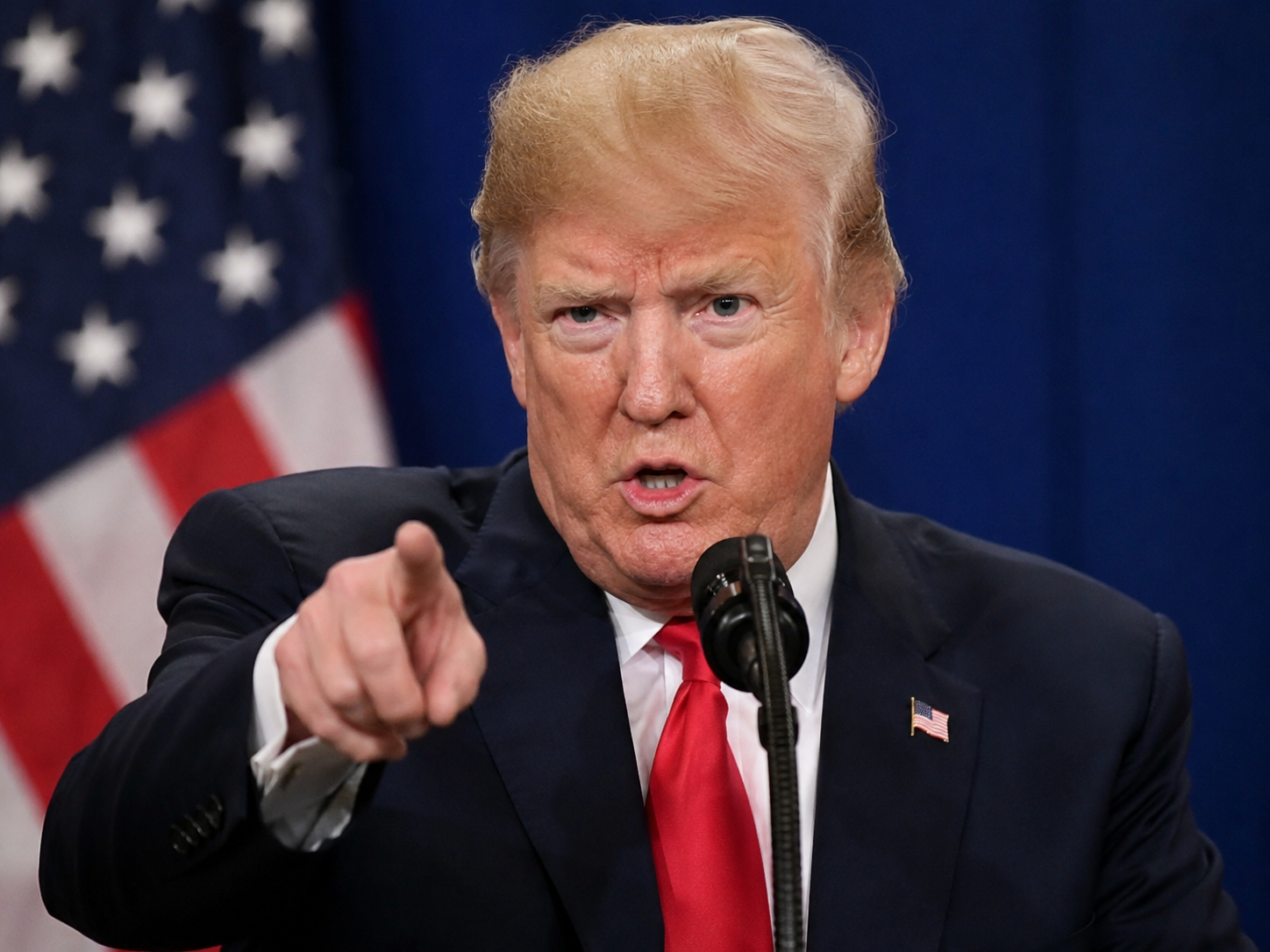
The conflict between the United States and Iran has become more serious after US President Donald Trump warned that stronger military action could happen if Iran refuses to return to negotiations. Speaking in a television interview, Trump said that if talks do not restart, the United States may attack important infrastructure in Iran, including bridges and power plants.
Trump claimed that the coming week could be very difficult for Iran if no agreement is reached. He said the US wants Iran to return to the negotiating table, but warned that military action would continue if that does not happen.
These comments came as the United States and Iran exchanged attacks for the fourth straight day. The fighting has increased tensions across the Middle East and raised fears that the conflict could spread to more countries.
Trump also changed an earlier plan to charge a 20% fee on cargo ships passing through the Strait of Hormuz. Instead, he said the United States would seek major trade and investment agreements with Gulf countries such as Saudi Arabia, Qatar, the UAE, Bahrain, and Kuwait. According to Trump, these deals would benefit both the United States and its Gulf partners.
However, despite removing the shipping fee, the US continued its blockade of Iranian ports. The blockade is meant to increase economic pressure on Iran and reduce its ability to trade with other countries.
The Strait of Hormuz remains one of the world's most important waterways because around one-fifth of global oil supplies pass through it every day. Any disruption in this area can quickly affect oil prices around the world.
Because of the ongoing conflict, many shipping companies have slowed or delayed their operations in the Strait of Hormuz. As a result, global oil prices have risen as traders worry about possible supply shortages.
The US military also announced that it had launched another round of strikes against Iranian military targets. According to US Central Command, these operations are intended to weaken Iran's ability to attack commercial ships operating in the Gulf.
US officials accused Iran of attacking commercial vessels and putting civilian lives at risk. They said several crew members were killed, injured, or reported missing during recent incidents.
The United Arab Emirates also reported that two of its oil tankers were hit by Iranian cruise missiles. According to UAE officials, one Indian crew member was killed while several others were injured.
Iran's Islamic Revolutionary Guard Corps later confirmed that it had targeted the tankers. Iranian officials claimed the ships had ignored warnings, switched off their navigation systems, and entered a dangerous area despite military instructions.
The conflict has also spread to nearby countries. Kuwait announced that its air defense systems intercepted Iranian drones, while Bahrain activated air raid sirens as a precaution. Iran has also said it targeted US military facilities in Bahrain and Jordan in response to earlier American attacks.
The situation has increased fears that more countries in the Gulf region could become involved if the fighting continues.
Trump also said the United States is now protecting shipping in the Strait of Hormuz and described America as the "guardian" of the important waterway. He argued that the US should receive support from wealthy Gulf countries because American forces are protecting international shipping routes.
Iran rejected Trump's statements and said it would continue to defend its own interests. Iranian Deputy Foreign Minister Kazem Gharibabadi said that increasing military pressure and economic blockades would not force Iran back to negotiations.
He stated that Iran believes the United States is making a mistake if it thinks military threats alone will change Tehran's position.
The latest tensions have also raised legal and humanitarian concerns. Earlier this year, when Trump first suggested attacking Iran's civilian infrastructure, the United Nations High Commissioner for Human Rights warned that intentionally targeting civilian facilities could violate international law. The Geneva Conventions protect infrastructure that civilians depend on, such as power plants, unless they are being used for military purposes.
Many international observers are now calling for both sides to reduce tensions and restart diplomatic talks before the conflict grows into a larger regional war.
As fighting continues, the world is closely watching developments in the Middle East. The conflict is affecting global energy markets, international trade, and regional security. Any further escalation could have serious consequences not only for the countries directly involved but also for the global economy.
For now, both the United States and Iran remain firm in their positions. While Washington is demanding new negotiations, Tehran says it will not accept pressure through military action or economic blockades. The coming days are expected to be critical in determining whether the crisis moves toward diplomacy or further conflict.
Summary
US President Donald Trump has warned that the United States could target Iran's bridges, power plants, and other infrastructure if Tehran does not return to negotiations. The warning comes as fighting between the US and Iran continues, with both sides carrying out military attacks. The conflict has also affected oil shipping through the Strait of Hormuz, causing global concern about energy supplies and regional stability.
Content
×
![]()