
More than 65,000 people have been forced to leave their homes and holiday destinations as powerful wildfires continue to spread across France and Spain. The fires have destroyed forests, homes, campsites, and large areas of land, while thousands of firefighters are working day and night to stop the flames. Authorities say the combination of extreme heat, dry weather, and strong winds has created very dangerous conditions, making the fires spread quickly.
Spain has declared a national emergency after several major wildfires broke out near Madrid and surrounding areas. Officials say about 25,000 people have been evacuated, while more than 20,000 others have been placed under lockdown and told to remain inside their homes for safety. Regional President Isabel Díaz Ayuso described the disaster as the worst wildfire in the history of the Madrid region.
The largest fires are burning west of Madrid in areas including Villa del Prado, San Martín de Valdeiglesias, Burgohondo, Fresnedillas de la Oliva, and Robledo de Chavela. Emergency officials said two large fires merged together, creating an even bigger wildfire that is harder to control. Authorities also fear another nearby fire could join the existing blaze, increasing the danger even further.
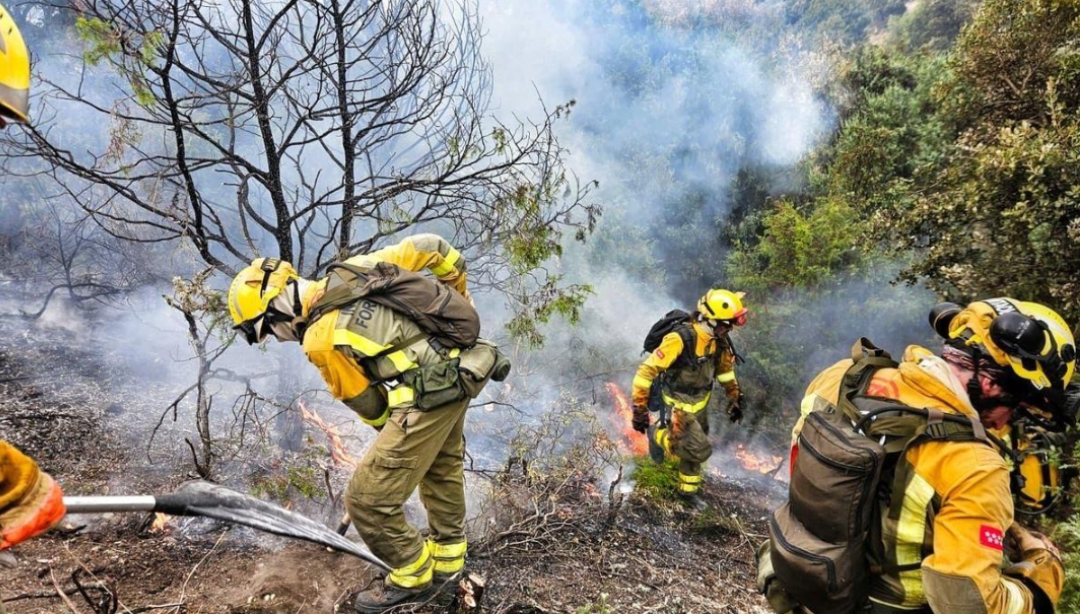
To fight the fires, Spain has deployed helicopters, amphibious firefighting aircraft, forest brigades, and coordination teams. Emergency buses have also been sent to help evacuate residents and transport them to safe shelters and nearby military facilities. Firefighters continue working under extremely difficult conditions as temperatures remain high and winds push the flames toward new areas.
Many families were forced to leave with very little warning. One 86-year-old resident said his family tried to protect their home by spraying it with garden hoses until firefighters arrived and ordered everyone to leave immediately. He said he had never experienced anything like the wildfire in his lifetime and described how quickly the flames spread through the area.
France is also facing a major wildfire emergency, especially in the southwestern regions of Gironde and Landes. More than 44,000 people have been evacuated in the Gironde region over the past two days as fires continue to spread through forests and communities. The wildfire has already burned more than 12,500 hectares of forest and destroyed dozens of homes along with a campsite.
One of the biggest evacuations took place on the Cap Ferret peninsula, a popular tourist destination where thousands of tourists and local residents escaped by boat after authorities ordered everyone to leave. Officials described the fire as an "XXL fire" because of its enormous size and rapid spread.
French authorities have expanded evacuation orders to several nearby towns as the wildfire continues moving across the region. Residents have been urged to follow emergency instructions immediately and leave their homes when ordered to do so.
Another major fire is burning near Biscarrosse in the Landes region, where around 23,000 people have already been evacuated. Thousands more are expected to leave nearby communities as a precaution. More than 100 properties have been damaged or destroyed, while around 500 firefighters continue battling the flames. Several firefighters have suffered minor injuries, but officials say no civilian deaths have been reported so far.
Weather conditions continue to make firefighting efforts very difficult. Temperatures have reached around 36 to 37 degrees Celsius, while strong winds of up to 50 kilometers per hour are helping the fires spread rapidly across forests and open land.
Experts say Europe has experienced three consecutive heatwaves this summer, making wildfire conditions much worse. After a wet winter and sunny spring, large amounts of vegetation grew across many regions. Weeks of hot and dry weather then dried out this vegetation, creating ideal fuel for fast-moving wildfires.
France, Spain, and Italy have all been affected by major fires in recent weeks. In Italy, thousands of emergency workers are also fighting wildfires, and authorities recently paid tribute to a firefighter who lost his life while responding to a blaze in Sicily.
Meteorologists say changing weather conditions may bring some relief during the weekend. Rain and thunderstorms are expected in parts of Spain, Portugal, southern France, and later Italy, which could help firefighters slow the spread of some fires. However, officials warn that many wildfires remain active and dangerous.
Emergency services continue to urge residents and tourists to follow evacuation orders, avoid affected areas, and stay informed through official updates. Firefighters, rescue teams, aircraft, and helicopters remain fully deployed as authorities work to protect lives, homes, forests, and critical infrastructure. Officials also warn that with rising temperatures and more frequent heatwaves, severe wildfires could become more common across Europe in the future.
Summary
More than 65,000 people have been evacuated across France and Spain as massive wildfires continue to spread. Spain has declared a national emergency, while France has evacuated thousands of residents and tourists from affected areas. Extreme heat, strong winds, and dry conditions have made the fires difficult to control, with firefighters working around the clock to protect lives and property.
Content




×
![]()