
India's Education Minister, Dharmendra Pradhan, has resigned after weeks of large protests across the country over exam paper leaks that affected millions of students. His resignation came after 36 days of demonstrations led mainly by young people who demanded accountability and major reforms in India's education system.
The protests began after several important entrance examinations were reportedly affected by paper leaks and other irregularities. Many students had spent months or even years preparing for these exams, only to see them cancelled or questioned because of cheating scandals. This caused anger, frustration, and disappointment among students and their families.
A major role in the protests was played by a satirical political movement called the Cockroach Janta Party (CJP). The group was created after comments made by India's chief justice, which many young people felt insulted them by comparing them to "cockroaches" and "parasites." Instead of feeling discouraged, students adopted the "cockroach" symbol and turned it into a movement calling for justice and change.
The movement quickly gained attention on social media. Thousands of young people from different parts of India joined the campaign and shared their experiences with the education system. What started as an online movement soon became a nationwide protest.
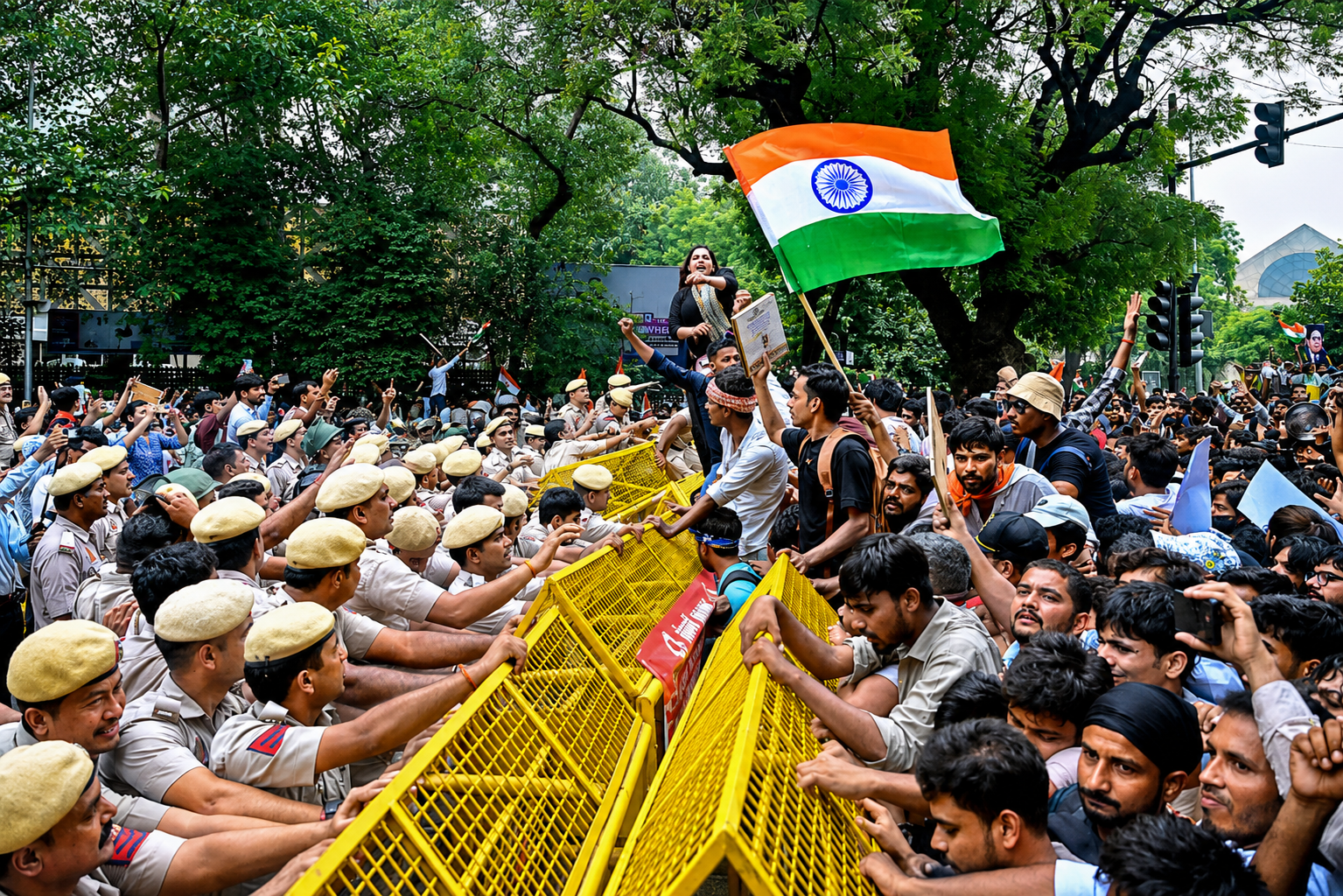
The main protest site was Jantar Mantar in New Delhi, where thousands of students gathered every day. Many protesters travelled long distances from different states to take part. Some stayed at the protest site for several weeks, hoping their voices would be heard.
As news spread, demonstrations also took place in cities including Mumbai, Bengaluru, Jaipur, Lucknow, Patna, and others. Protesters carried banners, shouted slogans, and demanded the resignation of the education minister. They also called for a fair investigation into the exam paper leaks and stronger measures to prevent such incidents in the future.
The protests became more intense after clashes between demonstrators and security forces. During one march towards Parliament, police used tear gas, batons, and water cannons to stop protesters. More than 100 people were reportedly injured. Videos of the clashes were widely shared online, leading to even greater public support for the student movement.
Many protesters said they were not only fighting against paper leaks but also against a system they believed had failed young people. They argued that students should not lose opportunities because of corruption or poor management.
Finally, after more than a month of continuous demonstrations, Education Minister Dharmendra Pradhan announced his resignation. His decision was welcomed with celebrations at the protest site.
When the news was announced, thousands of protesters cheered, hugged each other, and celebrated what they described as a historic victory. The founder of the Cockroach Janta Party told the crowd that their peaceful movement had succeeded and dedicated the victory to students who had suffered because of the exam scandals.
Some protesters also remembered students who had reportedly died by suicide after repeated exam cancellations and paper leak controversies. They said the movement was not only about politics but also about protecting the future of young people.
After the resignation, the Cockroach Janta Party asked supporters to end the protests peacefully and return home. The movement said the government had accepted several of its demands.
According to protest leaders, these demands included compensation for the families of students who had died, assurances that protesters would not face legal action, and a public apology for the police response during earlier demonstrations.
However, many students believe that the resignation of one minister is only the beginning. They say India still needs major reforms in its education system to restore trust among students.
Many protesters called for stronger security during examinations, faster investigations into cheating scandals, and stricter punishment for those responsible for paper leaks. They also demanded greater transparency in the examination process so students can compete fairly.
Political observers say the resignation is an important moment because it is one of the biggest political setbacks for Prime Minister Narendra Modi's government in recent years. It also shows how social media and youth-led campaigns can influence public opinion and put pressure on political leaders.
Analysts noted that the movement was driven mainly by Generation Z, with students using videos, posts, and online campaigns to organize protests and spread information across the country. Their online presence helped keep public attention focused on the issue throughout the demonstrations.
Many protesters said the movement gave young people confidence to speak openly about problems they face. They believe the protests showed that peaceful public pressure can bring change when people unite around a common cause.
Although celebrations followed the minister's resignation, students say they will continue to watch the government's next steps closely. They want concrete reforms instead of promises, hoping future examinations will be fair, transparent, and free from corruption.
The resignation marks a significant political event in India and highlights the growing influence of young citizens in shaping public debate. Whether it leads to lasting reforms will depend on how the government responds to the concerns raised during weeks of nationwide protests. For many students, the resignation is an important victory, but they say the real goal remains building an education system that gives every student an equal and fair chance to succeed.
Summary
India's Education Minister, Dharmendra Pradhan, has resigned after 36 days of nationwide student protests over exam paper leaks. The demonstrations were led by young people and a satirical movement called the Cockroach Janta Party (CJP). Protesters demanded accountability, education reforms, and justice for students affected by repeated exam scandals. The minister's resignation was celebrated as a major victory, though many protesters say more changes are still needed.
Content

×
![]()