
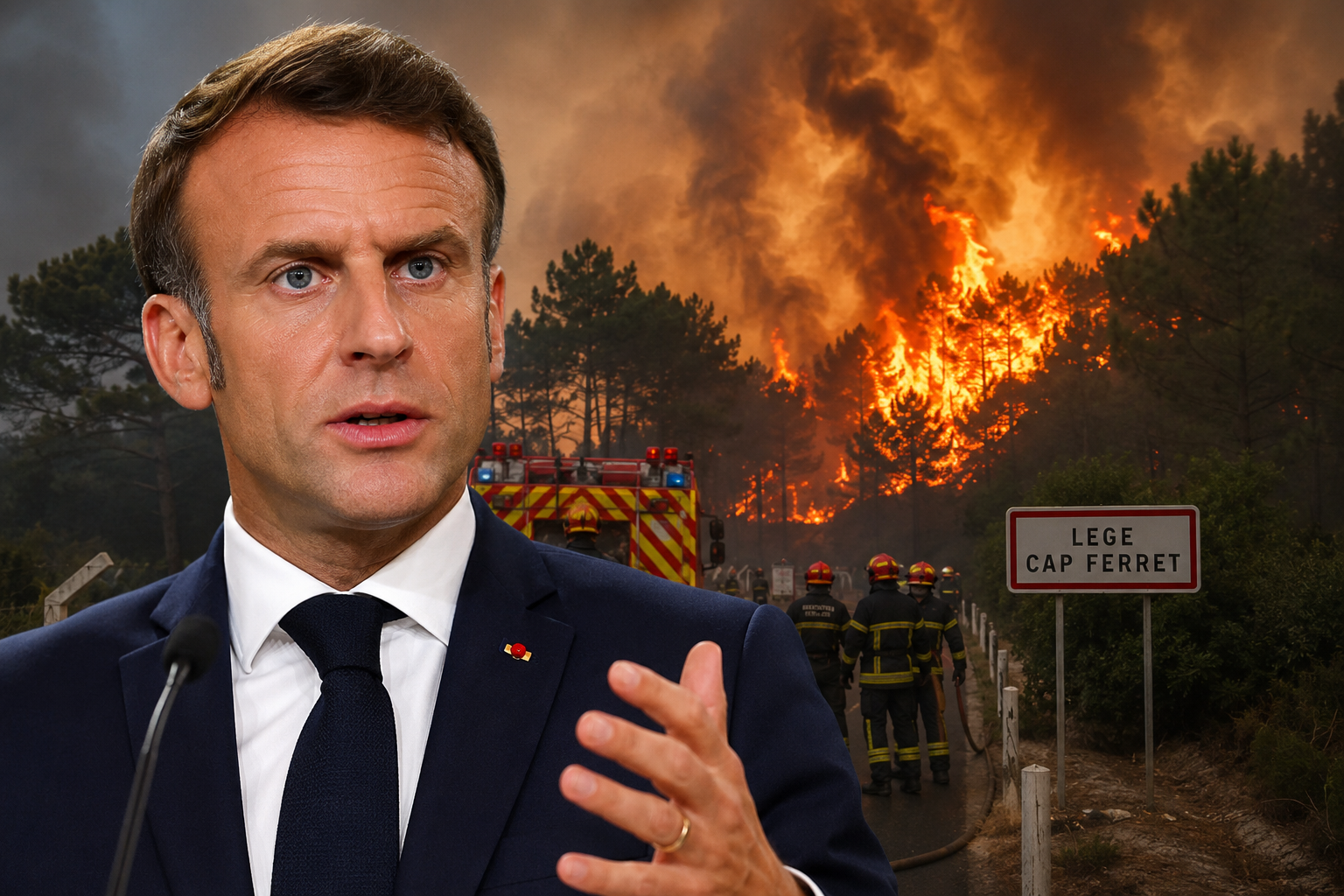
France is facing one of its worst wildfire disasters in recent years. Large fires are spreading quickly in the south-west of the country, especially near the city of Bordeaux. The fires have become so dangerous that French President Emmanuel Macron has called an emergency cabinet meeting to discuss the crisis and decide what more can be done to protect people and property.
The wildfire is now only about 15 kilometers (9 miles) away from Bordeaux, a city with around 850,000 people. Although the flames are getting closer, local officials have said there are currently no plans to evacuate the city itself. However, people living in nearby towns and villages have already been asked to leave for their safety.
More than 220,000 people have been evacuated from the south-west region of France. Emergency shelters have been opened to help families who had to leave their homes with little time to prepare. Many people have only been able to take a few personal belongings before escaping the fast-moving fires.
French Interior Minister Laurent Nuñez said the situation remains very dangerous. According to him, strong winds are causing the fire to change direction often, making it difficult for firefighters to predict where the flames will move next. This makes the job of controlling the fire much harder.
Firefighters from across France are working day and night to stop the wildfire from reaching more communities. Hundreds of fire engines, aircraft, and helicopters are being used to fight the flames. Despite these efforts, officials say the fire is still spreading because of hot weather, dry forests, and strong winds.
Experts say this wildfire has created a rare weather event called a "pyrocumulonimbus." This is a huge storm cloud created by the heat of the fire itself. These clouds can produce strong winds and even lightning, making the wildfire even more powerful and unpredictable.
Eric Brocardi, a spokesman for France's National Firefighters Federation, said firefighters cannot attack the fire directly in many areas because it is too dangerous. Instead, they are trying to slow its spread and guide it toward places where it can burn out naturally, such as open land or the coastline. He said heavy rain lasting several days would be needed to fully control the fire.
So far, around 42,000 hectares of land have burned in the Gironde region near Bordeaux. Across France, nearly 98,000 hectares have been destroyed by wildfires since the beginning of the year. Many forests, farms, wildlife habitats, and homes have been damaged or completely destroyed.
The situation could become even worse because weather forecasts predict another heatwave. Temperatures in some parts of France may reach 40 degrees Celsius during the week. Hot and dry weather creates perfect conditions for wildfires to spread quickly, especially when strong winds are also present.
President Macron has promised that the French government will continue helping affected communities. He said France will rebuild damaged areas and support families who have lost homes, businesses, or property because of the fires. Emergency services will remain in the region for as long as needed.
Spain is also dealing with severe wildfires. Large fires are burning near the eastern city of Valencia and in areas around Madrid and Ávila. Around 15,000 people have been evacuated near Valencia alone, while more than 90,000 people have left their homes around Madrid and Ávila because of the growing danger.
Spanish officials say the fires have been extremely intense, and weather conditions are expected to become worse. Firefighters are using helicopters and other equipment to slow the flames, but progress has been difficult because of high temperatures and dry conditions.
Spanish Prime Minister Pedro Sánchez visited one of the affected areas and warned that difficult days still lie ahead. He called for stronger action to deal with climate change, saying that extreme weather events such as heatwaves and wildfires are becoming more common.
King Felipe VI also visited people staying in emergency shelters. He said the fires have caused enormous damage to Spain's natural environment and expressed support for everyone affected by the disaster.
One resident, Olga Congacha, described the fear she felt when she was ordered to leave her home. She said she did not know whether to cry because everything happened so quickly. When she briefly returned to collect medicine, she found the streets empty and her house covered in ash.
In Spain, around 77,000 hectares of land have been affected by wildfires this year. Officials say the wildfire in the Ávila region is one of the largest in the country's recent history.
Scientists have warned that hotter temperatures, longer dry periods, and stronger heatwaves are increasing the risk of large wildfires across southern Europe. Countries such as France, Spain, Portugal, Greece, and Italy have all experienced destructive fires in recent years.
Emergency workers continue risking their lives to protect communities, forests, and wildlife. Governments in both France and Spain are asking people to follow evacuation orders, avoid dangerous areas, and stay updated through official emergency warnings.
As firefighters continue their battle against the flames, millions of people across Europe are hoping for cooler weather and rainfall that could finally help bring these devastating wildfires under control.
Summary
French President Emmanuel Macron is holding an emergency meeting as huge wildfires move closer to the city of Bordeaux. Thousands of firefighters are working to stop the flames, while a new heatwave is expected to make the situation even worse. At the same time, Spain is also battling major wildfires that have forced thousands of people to leave their homes.
Content


×
![]()