
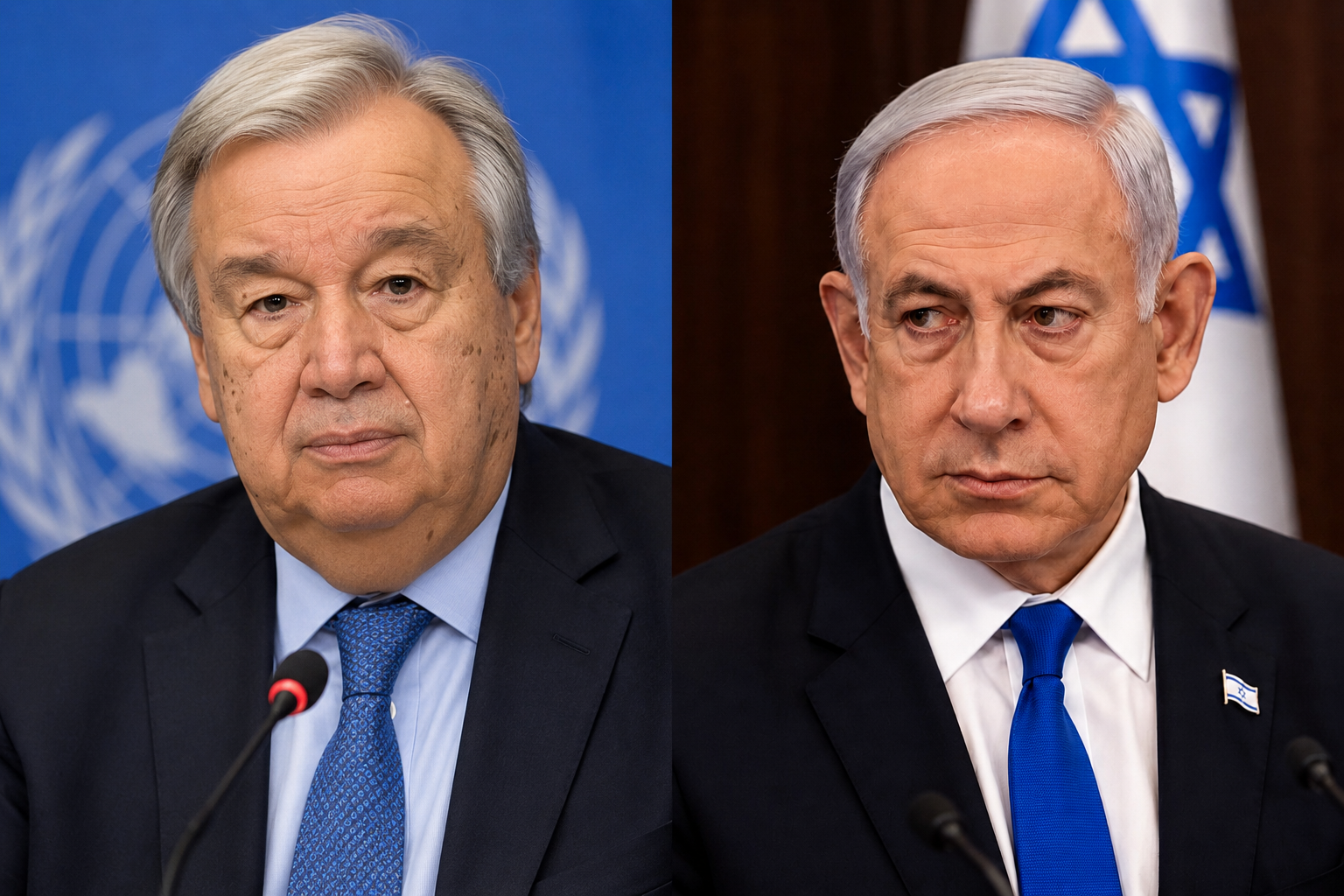
The United Nations has criticized Israel for planning to speed up the expansion of settlements in the occupied West Bank. UN Secretary-General Antonio Guterres said these settlements are illegal under international law and should not be expanded. He warned that building more settlements will make it much harder to achieve peace between Israelis and Palestinians.
In a statement, Guterres said that Israeli settlements have "no legal validity." He described them as a serious violation of international law. He also said that continuing to build settlements creates more tension and makes the possibility of a two-state solution much more difficult. A two-state solution is the idea of creating an independent Palestinian state alongside Israel so that both peoples can live in peace.
The UN chief made these comments after the Israeli government announced plans to increase settlement activities in the occupied West Bank. Israeli Prime Minister Benjamin Netanyahu said his government would move faster to legalize existing farm outposts and build new ones. Outposts are small settlements that were often built without official approval under Israeli law, although the government now plans to legalize some of them.
The United Nations has repeatedly said that all Israeli settlements in the occupied West Bank, including East Jerusalem, are illegal under international law. The International Court of Justice also gave an advisory opinion in 2024 saying that Israel's continued occupation of Palestinian territory is unlawful. Many countries and international organizations continue to support this legal position.
Guterres said settlement expansion is one of the biggest obstacles to lasting peace. He believes that adding more settlements reduces the chances of reaching an agreement between Israelis and Palestinians. The UN has called on all sides to respect international law and avoid actions that increase conflict.
Violence has also been increasing in the occupied West Bank. According to reports, at least eight Palestinians, including one child, and two Israelis have been killed in recent days. The violence has involved attacks, military operations, and clashes in different areas of the territory.
Reports also say that some Israeli settlers damaged Palestinian homes, farms, public buildings, and other civilian property. In several places, buildings and agricultural structures were burned or vandalized. Because of these attacks, at least 10 Palestinian families were forced to leave their homes and move to safer places.
The UN Office for the Coordination of Humanitarian Affairs (OCHA) has reported a large number of settler-related incidents this year. Since January, the agency has documented more than 1,330 cases involving injuries, deaths, or damage to Palestinian property. The UN says these incidents have created fear and made daily life more difficult for many Palestinian communities.
OCHA also said that Israeli security measures have increased movement restrictions across the West Bank. Many checkpoints and road closures have made it difficult for Palestinians to travel between towns and villages. These restrictions have affected access to hospitals, schools, workplaces, and other important services. Some people have struggled to reach emergency medical care because of these travel limits.
Earlier this year, Guterres also criticized Israel's decision to restart land registration processes in parts of the West Bank. Human rights organizations warned that this could lead to more settlement expansion and make it even harder for Palestinians to keep ownership of their land.
UN officials have also linked the rise in West Bank violence with the broader conflict in Gaza. They said both areas are experiencing increasing civilian suffering, including deaths, injuries, displacement, and damage to homes and infrastructure. The United Nations has repeatedly called for better protection of civilians and respect for international humanitarian law.
The UN is urging accountability for anyone responsible for attacks against civilians. It has called on all parties to avoid violence and to protect innocent people. International organizations have stressed that civilians should never be targeted during conflict and that those responsible for violations should be held accountable.
Israel argues that some of its actions are necessary for security reasons. Israeli officials have often said that military operations and security measures are aimed at preventing attacks and protecting Israeli citizens. However, many international organizations continue to criticize settlement expansion and other policies in the occupied territories.
The situation in the West Bank remains tense, with concerns that further settlement expansion and continued violence could make future peace negotiations even more difficult. International leaders have repeatedly urged both sides to avoid actions that increase tensions and instead support dialogue and peaceful solutions.
Antonio Guterres once again called for renewed efforts to achieve a just, lasting, and comprehensive peace. He said that respecting international law and protecting civilians are essential steps toward reducing violence and building trust between both sides. The United Nations continues to support diplomatic efforts aimed at ending the long-running conflict and achieving a peaceful future for Israelis and Palestinians.
Summary
UN Secretary-General Antonio Guterres has strongly criticized Israel's plan to expand settlements in the occupied West Bank. He said these settlements are illegal under international law and make peace between Israelis and Palestinians more difficult. The statement comes as violence continues in the West Bank, with deaths, injuries, property damage, and the displacement of Palestinian families.
Content


×
![]()