
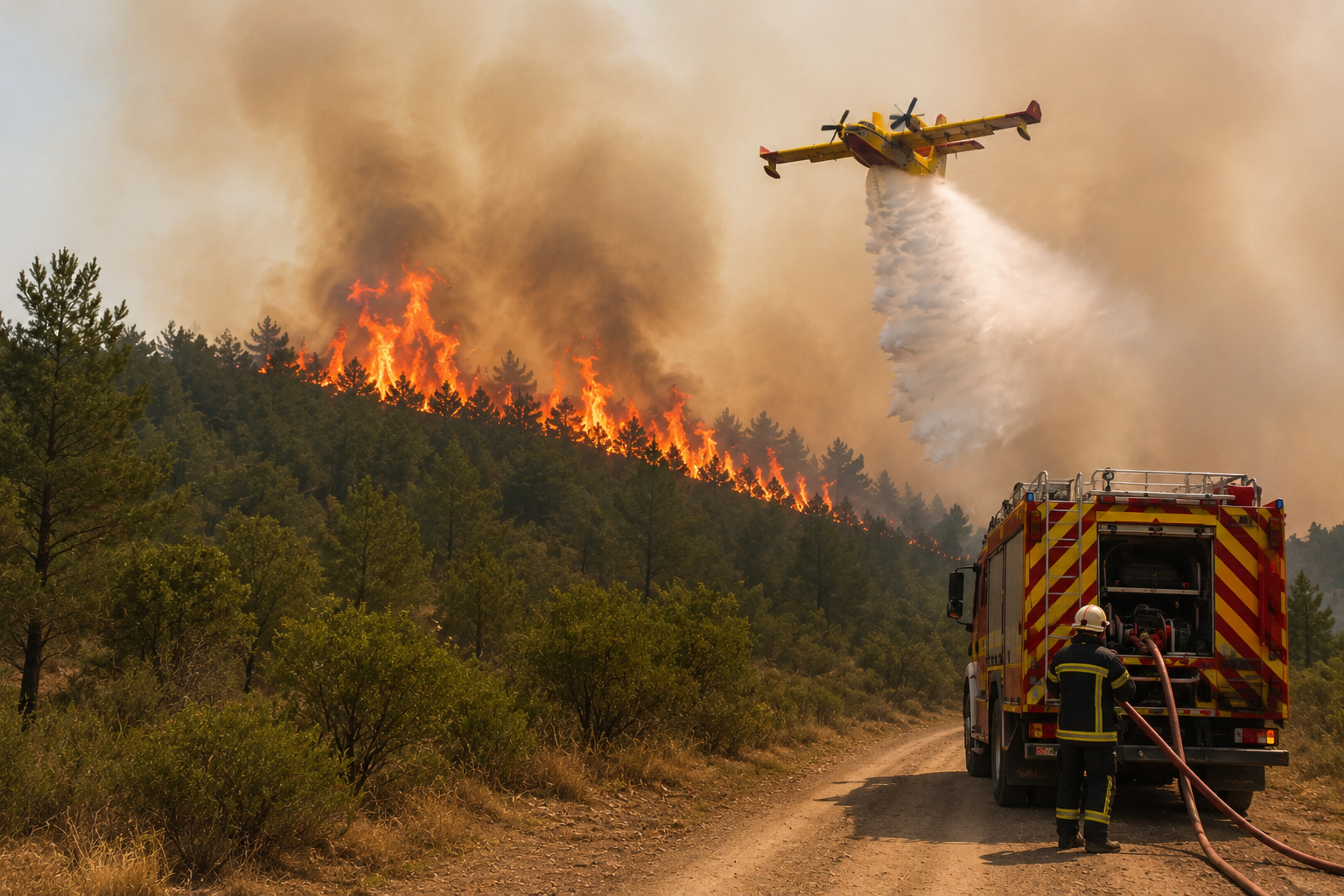
Firefighters are continuing to battle large wildfires across parts of France and Spain as another powerful heatwave brings extremely high temperatures. Authorities warn that hot, dry weather and strong winds could make the fires spread even faster over the coming days.
The worst fires are burning in the Gironde region of southwestern France, near the city of Bordeaux. The wildfire has already burned more than 42,000 hectares of land and destroyed at least 240 homes. Thick smoke has covered nearby towns, making it difficult for people to breathe. Many residents have described the situation as frightening, with some saying it looks like a disaster scene.
French officials have evacuated around 220,000 people from areas at risk. Many families had to leave their homes quickly with only a few belongings. Evacuation centers have been opened, while local people are also offering their homes to those who have nowhere else to stay. Volunteers have collected blankets, baby supplies, food, and other essential items for displaced families.
French President Emmanuel Macron visited the Gironde region to meet firefighters and emergency teams. He said these are the toughest wildfires France has faced since the Second World War. Macron explained that the government has sent every available resource to fight the fires, including more than 2,700 firefighters, 1,500 military personnel, aircraft, and firefighting equipment. Crews are also digging firebreaks to stop the flames from spreading into new areas.
Although firefighters reported a calmer night near Bordeaux and managed to stop several new outbreaks, officials said the fire is only stabilized and is still not under control. They fear that rising temperatures and changing winds could quickly restart flames from burning vegetation.
Across the border in Spain, firefighters are also dealing with dangerous wildfires west of Madrid. Around 105,000 people have been evacuated from the Madrid, Ávila, and Toledo regions. Fires have already affected about 77,000 hectares of land, damaging forests, farmland, and local communities.
Spain's national weather service has warned of an extreme wildfire risk because of the intense heat and dry conditions. Temperatures are expected to stay close to 39°C or even 40°C in some areas, with very little chance of rain until later in the week. Officials believe Monday and Tuesday are especially important days for controlling the fires before conditions become even worse.
People living in towns near Madrid say entire areas have turned black after the fires. Burned trees, damaged vehicles, and destroyed campsites can be seen across affected regions. Emergency workers continue to protect homes while aircraft drop water and fire retardant on the flames.
The weather is making firefighting much more difficult. Strong sunshine, dry vegetation, and low humidity allow fires to spread rapidly. Winds can carry burning embers over long distances, creating new fires far from the original blaze. Firefighters are working around the clock to prevent these new outbreaks while protecting towns and villages.
Experts say wildfires also create serious health problems. Smoke from burning forests contains harmful particles that reduce air quality and can cause breathing difficulties, especially for children, older people, and those with lung or heart conditions. Residents in several areas reported seeing ash covering roads, cars, and homes, while smoke traveled many kilometers away from the fires.
The fires have also affected tourism during the busy summer holiday season. Some campsites and tourist attractions have closed, while roads have been blocked because of safety concerns. Travelers planning to visit parts of France and Spain are being advised to check local travel updates before leaving.
Local communities have shown strong support for those affected. Many people have volunteered to help evacuation centers, donated food and supplies, and opened their homes to families forced to leave. Officials praised this community spirit, saying it has helped thousands of people during the emergency.
Firefighters remain hopeful that they can slow the fires, but weather forecasts offer little relief. Temperatures are expected to remain very high throughout the week, with only a small chance of rain by Friday. Even then, experts say the rainfall may not be enough to stop the fires completely.
Scientists have long warned that hotter and drier weather increases the risk of severe wildfires. While climate change does not directly start fires, it creates conditions that allow them to spread more quickly and burn more intensely. Longer heatwaves, dry forests, and stronger winds are making wildfires more common in many parts of Europe.
For now, emergency crews in both France and Spain continue their difficult work. Thousands of firefighters, soldiers, pilots, police officers, and volunteers are risking their lives to protect people, homes, forests, and wildlife. Authorities are asking residents to follow evacuation orders, avoid dangerous areas, and stay updated through official emergency announcements.
As Europe faces another period of extreme heat, officials remain focused on protecting lives and bringing the devastating wildfires under control. The coming days are expected to be critical in determining whether firefighters can stop the flames before more land, homes, and communities are lost.
Summary
Firefighters are working day and night to control massive wildfires in France and Spain as another heatwave brings extreme temperatures. More than 300,000 people have been evacuated, thousands of firefighters have been deployed, and many homes have been destroyed.
Content


×
![]()