
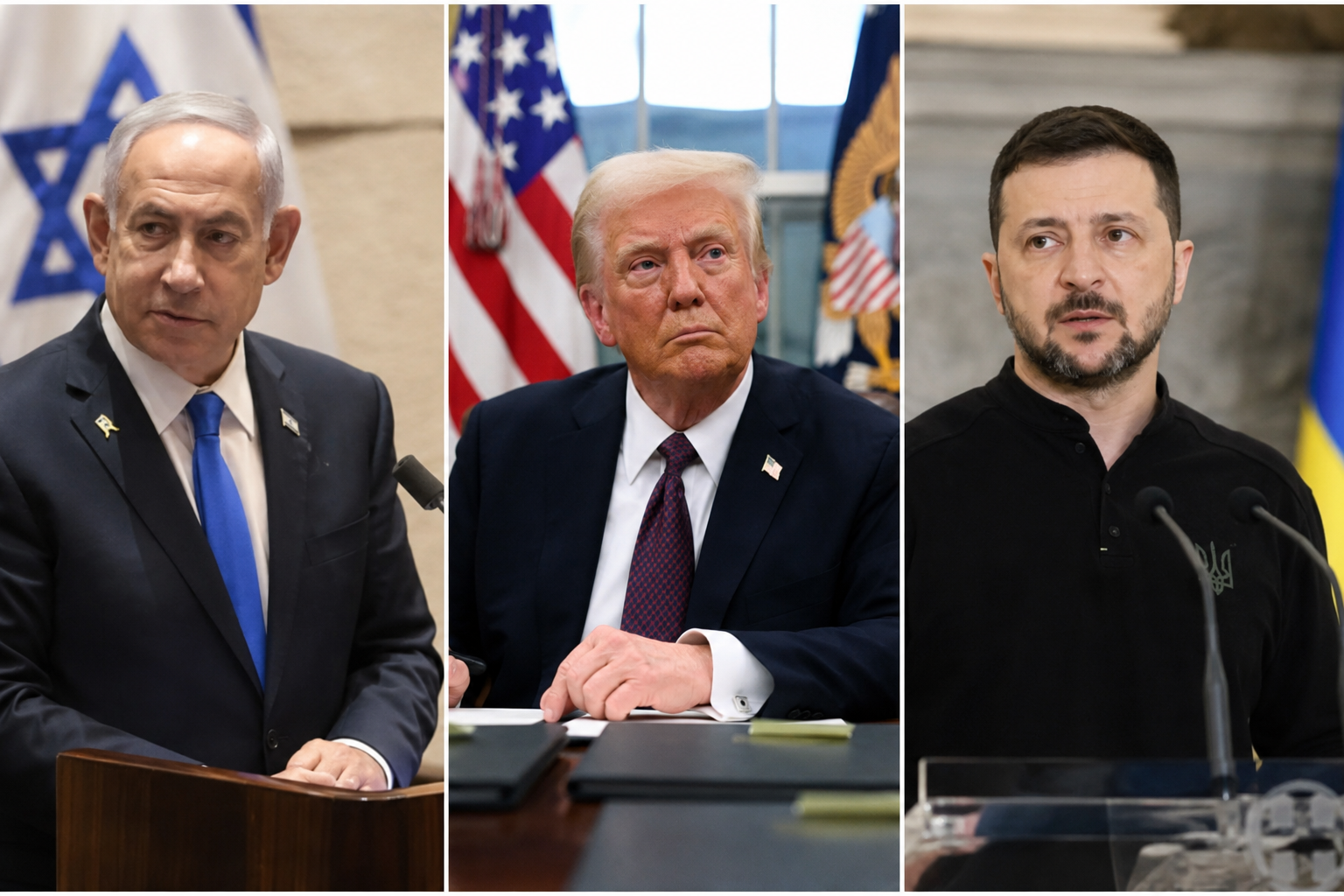
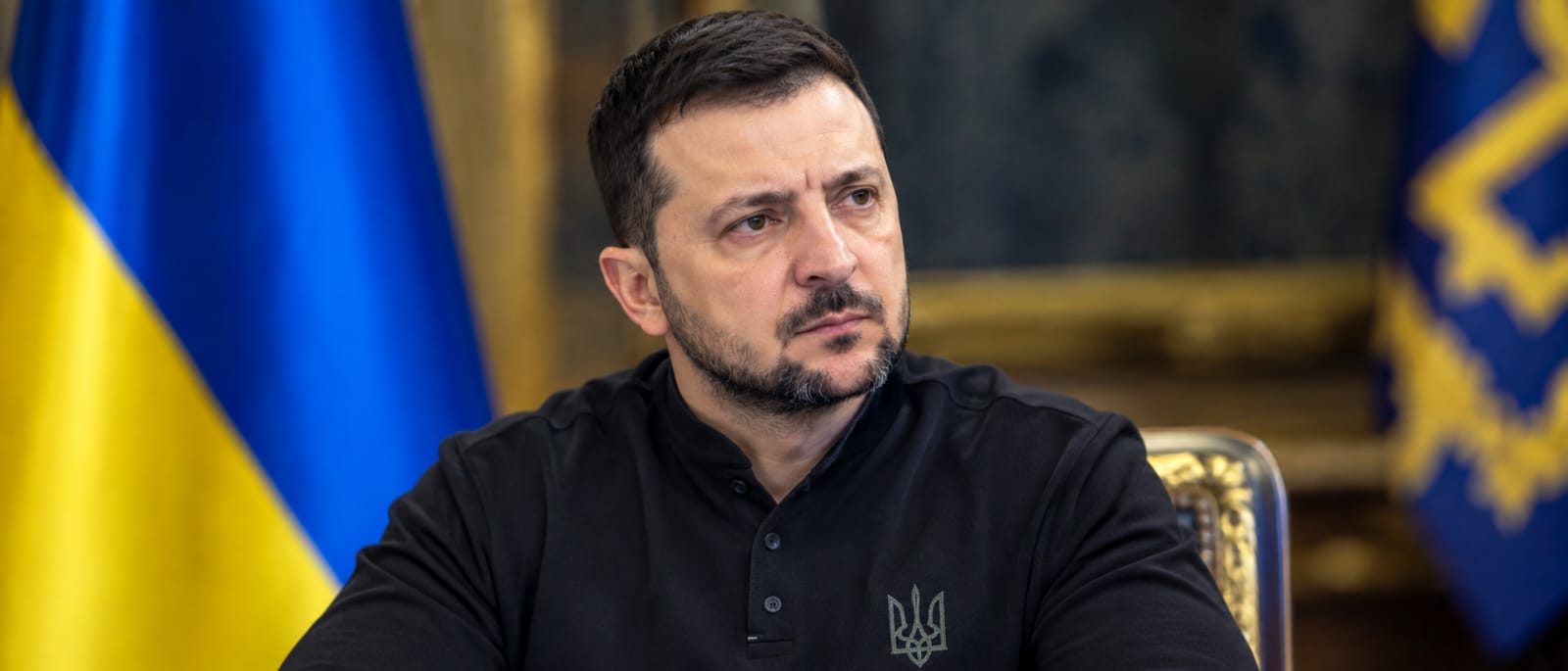
US President Donald Trump held separate meetings with Ukrainian President Volodymyr Zelensky and Israeli Prime Minister Benjamin Netanyahu at the White House during their visit to Washington. The meetings came as the war in Ukraine continues and tensions involving Iran remain high. According to the White House, both discussions were positive and productive.
Zelensky and Netanyahu traveled to Washington to attend the funeral of US Senator Lindsey Graham, who died earlier this month. Graham was known for strongly supporting Israel and for backing US military and financial aid to Ukraine. Many American and international leaders attended the funeral to honor his long political career.
During his meeting with Trump, Zelensky focused on Ukraine's defense needs. He asked for more support to protect Ukrainian cities from increasing Russian missile and drone attacks. Ukraine has been requesting more Patriot air defense systems for a long time, saying they are one of the best ways to stop incoming missiles.
One of Zelensky's main goals was to discuss a plan that would allow Ukraine to produce Patriot interceptor missiles under license. He had hoped that the United States would move forward with an idea that Trump mentioned during the recent NATO summit. Producing some of the missiles in Ukraine could help the country strengthen its air defenses more quickly.
However, after the meeting, there was no official announcement about new US military aid or approval for the missile production plan. Even without a formal agreement, Zelensky described the talks as useful and thanked Trump for the cooperation between the two countries.
In a message shared on social media, Zelensky said he appreciated everything the United States was doing to help protect Ukrainian lives. He said the leaders discussed Patriot systems and several new ideas that could improve Ukraine's ability to defend itself. He also said they talked about diplomacy and the importance of restarting serious efforts to find a peaceful solution to the war.
While in Washington, Zelensky also met representatives from Lockheed Martin, the American company that manufactures the Patriot air defense system. He said the meeting focused on expanding cooperation between Ukraine and the company. According to Zelensky, both sides discussed ways to begin co-producing defense equipment as quickly as possible. He said this would help increase Ukraine's ability to protect its people from future attacks.
In addition to meeting Trump, Zelensky planned to speak with a bipartisan group of US senators. Some lawmakers are working on legislation that would place new sanctions on countries that continue buying Russian oil and gas. Supporters of the proposal believe stronger economic pressure could reduce Russia's ability to finance the war.
After Zelensky left the White House, Prime Minister Benjamin Netanyahu arrived for his own meeting with President Trump. Their discussion mainly focused on Iran and security issues in the Middle East.
Relations between Trump and Netanyahu have become more complicated in recent months. Although the two leaders have often worked closely together, they have publicly disagreed over Israel's military actions in the region. Trump has criticized Israel for continuing strikes in Lebanon and for not fully respecting a ceasefire.
Despite those differences, Netanyahu said his meeting with Trump went very well. After the talks, he told Israeli media that the two leaders shared the same goal of making sure Iran does not develop nuclear weapons. He added that they also discussed several other important issues related to regional security.
Netanyahu described the meeting as one of the best conversations he had ever had with an American president. A photograph shared on his official social media account showed both leaders smiling together in the Oval Office.
The discussions came at a time when concerns about Iran remain high. Although recent fighting between the United States, Israel, and Iran has slowed, diplomatic efforts are continuing. Leaders are trying to prevent further conflict while also addressing concerns over Iran's nuclear program and regional influence.
For Ukraine, the meetings were another opportunity to seek continued American support as the war with Russia enters another difficult phase. Russian missile and drone attacks have continued across many parts of Ukraine, damaging infrastructure and causing civilian casualties. Ukrainian officials believe stronger air defenses are essential to protect cities, power stations, hospitals, and other important facilities.
For Israel, the talks highlighted ongoing cooperation with the United States despite recent disagreements. Both countries continue to view Iran's nuclear program as a major security concern, even as diplomatic discussions continue.
The separate meetings with Zelensky and Netanyahu show that the United States remains deeply involved in two major international conflicts at the same time. Washington continues to play an important role in supporting Ukraine against Russia while also working closely with Israel on security issues in the Middle East.
Although neither meeting resulted in major public announcements or new agreements, both leaders said the discussions were constructive. Ukraine hopes future talks will lead to greater military cooperation, while Israel expects continued coordination with the United States on regional security and Iran.
As the conflicts in Ukraine and the Middle East continue, the outcomes of these diplomatic meetings could influence future military cooperation, peace efforts, and international relations in the months ahead. World leaders will continue watching closely to see whether these discussions lead to concrete actions or new agreements aimed at improving security and reducing tensions.
Summary
US President Donald Trump held separate meetings with Ukrainian President Volodymyr Zelensky and Israeli Prime Minister Benjamin Netanyahu at the White House during their visit to Washington. Zelensky discussed Ukraine's need for stronger air defenses, while Netanyahu focused on Iran and regional security. Both meetings took place as the wars in Ukraine and tensions involving Iran continue.
Content
×
![]()