
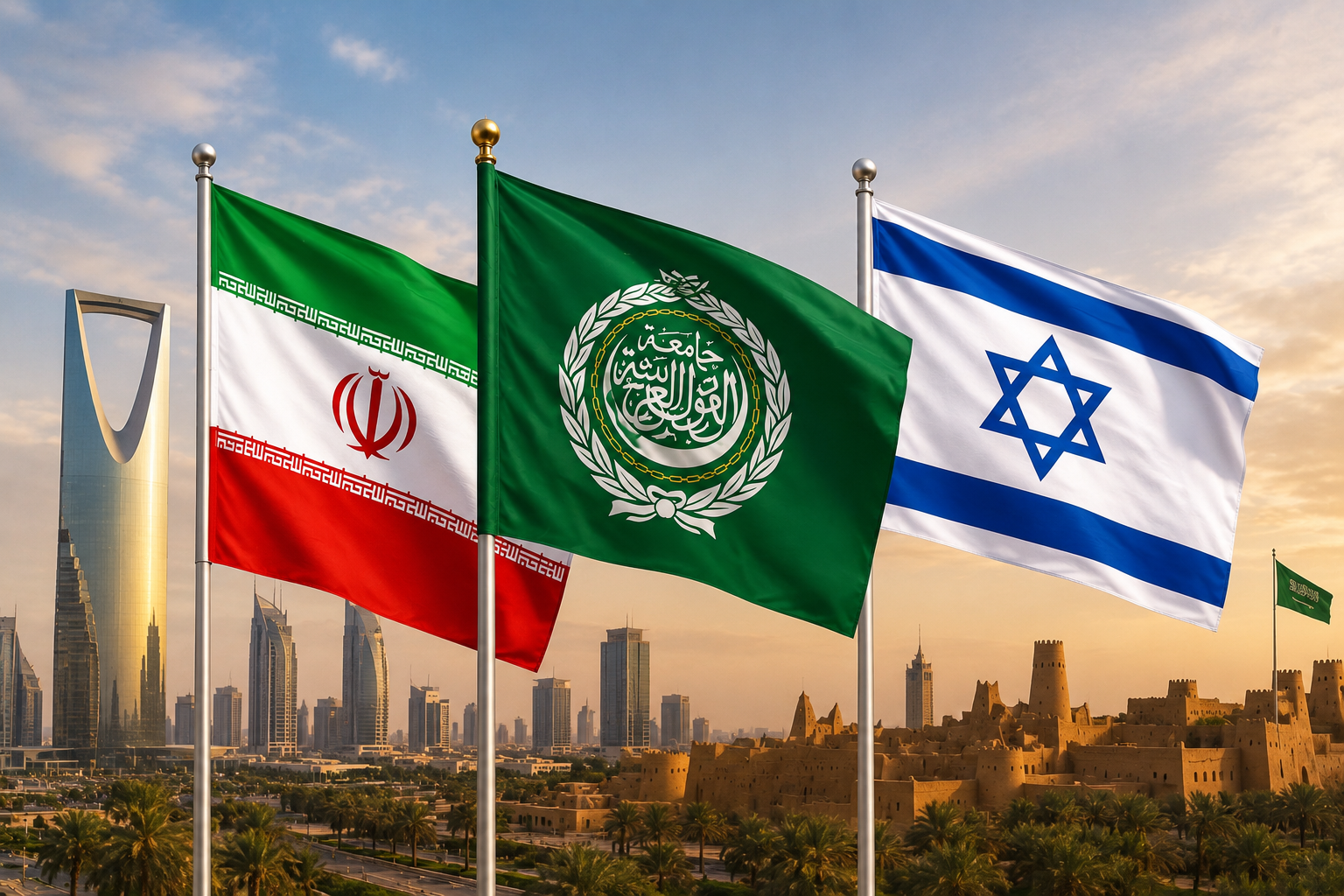
Arab countries located close to the ongoing conflict between Iran and Israel are making every effort to avoid becoming directly involved in the fighting. While tensions continue to rise across the Middle East, many governments in the region are focusing on protecting their own security, keeping their borders safe, and preventing the conflict from expanding into a larger regional war.
According to Zeidon Alkinani, the founding director of the Arab Perspectives Institute and a non-resident fellow at the Middle East Council on Global Affairs, avoiding direct military involvement has become the top priority for Arab states that are geographically close to the conflict.
Speaking to Al Jazeera, Alkinani said that these countries have made their position clear through both public statements and diplomatic efforts. Their shared goal is to stay out of the fighting and avoid becoming targets or participants in the growing conflict between Iran and Israel.
He explained that Arab governments do not want to be pulled into a cycle of attacks and retaliation. Instead, they are trying to maintain stability, protect their economies, and prevent further violence from spreading across the region.
Many Gulf countries have invested heavily in economic growth, tourism, technology, and infrastructure over the past few years. A wider regional war could threaten these plans by disrupting trade, damaging investor confidence, increasing oil price uncertainty, and putting millions of people at risk. For this reason, these governments continue to call for restraint and peaceful solutions.
Alkinani also pointed out that while Arab states are trying to keep the conflict contained, both Iran and Israel appear to have strategic reasons that could lead to a broader regional confrontation.
According to his analysis, Iran wants neighboring Arab Gulf countries to understand that their security is closely connected to what happens in the conflict. If tensions continue to grow, Gulf states could face risks to shipping routes, energy infrastructure, and regional stability. Iran may believe that increasing these concerns could encourage Arab countries to play a larger role in diplomatic efforts or pressure other international actors.
On the other hand, Alkinani said Israel is also sending a broader geopolitical message through its actions. He argued that Israel wants to demonstrate that developments across the Levant and nearby regions are directly connected to its national security. By taking a firm military position, Israel aims to show both Iran and the wider international community that it considers threats in the region to be matters of vital importance.
Despite their different goals, both Iran and Israel may unintentionally increase pressure on neighboring countries by allowing the conflict to affect a wider area. This creates a difficult situation for Arab governments that are trying to remain neutral while protecting their national interests.
Several Arab countries have repeatedly called for de-escalation and dialogue instead of military confrontation. Regional leaders have urged all sides to avoid actions that could trigger a larger war involving multiple countries. Diplomatic meetings and international discussions continue as governments search for ways to reduce tensions before the situation becomes even more dangerous.
The conflict has already created concerns about energy supplies, international shipping, and regional trade. Important waterways in the Middle East play a major role in global oil and gas exports. Any disruption could affect international markets and increase economic uncertainty around the world.
Security experts also warn that if more countries become involved, the humanitarian impact could grow significantly. A wider conflict could lead to more civilian casualties, displacement of families, damage to infrastructure, and greater pressure on humanitarian organizations working across the region.
For Arab governments, staying out of direct military confrontation does not mean ignoring the crisis. Instead, many are balancing diplomacy, national security, and economic interests while encouraging peaceful solutions. They continue to strengthen border security, monitor regional developments, and cooperate with international partners to prevent the conflict from spreading.
As the Iran-Israel conflict continues, the coming weeks may prove critical for the Middle East. Whether diplomatic efforts succeed or tensions continue to rise will likely determine if the region can avoid a much larger and more destructive war. For now, the clear message from many Arab states is that they want peace, stability, and to avoid being drawn into a conflict that could have serious consequences for the entire region.
Summary
Arab countries near the Iran-Israel conflict are trying to avoid becoming directly involved. Experts say these nations want to protect their security and prevent the war from spreading across the region. At the same time, both Iran and Israel appear to be taking actions that could draw more countries into the conflict, increasing the risk of a wider regional crisis.
Content


×
![]()