
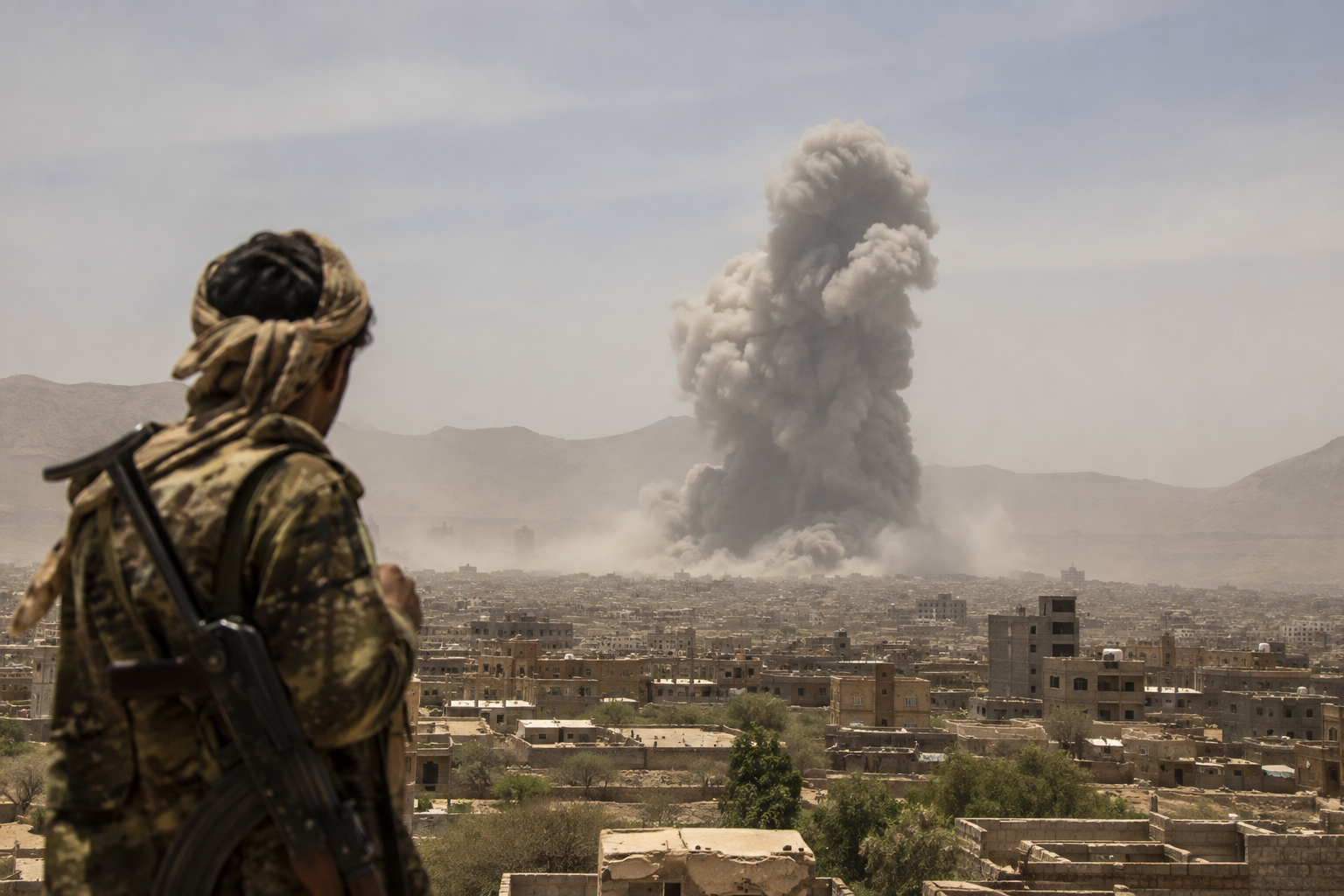
Yemen’s conflict could be heading toward a dangerous new phase after the Houthi group launched missile and drone attacks against government military positions.
The attacks took place on Thursday in the provinces of Marib and Hadramout. According to reports, at least 30 government soldiers were killed and 15 others were injured.
The Houthis said their attacks targeted military camps, gatherings, weapons depots and other military positions. Houthi military spokesperson Yahya Saree claimed that the attacks caused much heavier losses, although those claims could not be independently verified.
The Houthis said they launched the attacks after detecting what they described as a major military mobilisation by Saudi Arabia and forces supporting the Yemeni government.
The latest attacks are significant because fighting between the Houthis and government forces has been largely reduced in recent years. However, the latest escalation suggests that the fragile calm may now be coming to an end.
Yemen’s civil war began after the Houthis and their allies took control of the capital, Sanaa, in 2014.
In 2015, a Saudi-led coalition entered the conflict in support of Yemen’s internationally recognised government. The war caused widespread destruction and created a major humanitarian crisis.
Fighting decreased significantly after a United Nations-supported truce in 2022. Although the truce officially ended, large-scale fighting did not immediately return.
For several years, Yemen remained in an uncertain situation. There was no full peace agreement, but there was also no return to the intense fighting seen during earlier years of the war.
The latest Houthi attacks could change that situation.
Analysts believe the Houthis are increasingly prepared to fight government forces again.
Yemeni researcher Fuad Mussed said the latest attacks show that the Houthis may have made a decision to move toward a more open confrontation with their opponents.
The group has also become involved in the wider regional conflict. In recent weeks, the Houthis have carried out attacks linked to Saudi Arabia and shipping routes in the Red Sea and the Bab al-Mandeb Strait.
This means the conflict inside Yemen is now connected to wider tensions across the Middle East.
The Houthis have also warned against any Saudi military presence inside Yemen. They say they have the right to respond to what they consider threats to their territory and security.
One of the biggest concerns is the situation in Marib, a strategically important province in central Yemen.
Marib is important because of its oil and gas resources and its strategic location. The area has been a major battlefield during Yemen’s civil war.
Researchers say the Houthis may be preparing to increase their military pressure on Marib.
Adel Dashela, a researcher at the Sanaa Center for Strategic Studies, said the latest attacks indicate that the Houthis could be moving toward a major military operation targeting areas around Marib and other important energy-producing regions.
If the Houthis launch a large ground offensive, government forces could respond with their own military operations.
That could turn the current escalation into a much larger war.
Saudi Arabia and the internationally recognised Yemeni government have so far appeared more interested in containing the situation than immediately starting a major military response.
This approach is aimed at preventing the conflict from becoming another long and destructive war.
However, analysts warn that continued Houthi attacks could make it increasingly difficult for Saudi Arabia and government forces to remain restrained.
Ahmed Nagi, a senior analyst at the International Crisis Group, said there is still a possibility that both sides could return to a policy of limiting the fighting. But every new attack makes such an outcome more difficult.
If the Houthis continue expanding their attacks, the chances of a new round of war could rise significantly.
Some officials supporting Yemen’s government are calling for a stronger response.
Sheikh Othman Majali, a member of the Saudi-backed Presidential Leadership Council, said lasting peace and stability would not be possible while the Houthi movement continues to threaten Yemen and the wider region.
Other Yemeni political commentators have also argued that the latest Houthi attack sends a clear message that the group is prioritising military action.
They say years of negotiations have failed to produce a final peace agreement, while the Houthis have continued developing their military capabilities.
However, a major military response could also carry serious risks.
The Houthis have developed significant missile and drone capabilities. This could give them an advantage in long-range attacks.
At the same time, government forces and their allies have military capabilities of their own.
If fighting spreads across several parts of Yemen, the result could be much more destructive than the limited clashes seen in recent years.
A major war could also affect civilians who have already suffered from years of conflict, displacement, poverty and shortages.
There are also concerns that renewed fighting could affect important shipping routes, including the Bab al-Mandeb Strait, which is one of the world’s important maritime routes.
For ordinary Yemenis, the latest escalation has brought back memories of the intense fighting that took place before the 2022 truce.
Residents in Sanaa have reported hearing explosions and following reports of deaths and injuries.
Many fear that the country could once again enter a period of widespread violence.
Analysts say there is still a possibility for both sides to step back and prevent a full-scale war. However, the space for compromise is becoming smaller.
If the Houthis continue attacking government forces and Saudi-linked targets, pressure will increase on Saudi Arabia and the Yemeni government to respond.
For now, Yemen remains in a dangerous situation between peace and war. But the latest attacks suggest that the balance could be shifting toward renewed conflict.
The coming days and weeks will be important. If both sides continue increasing their military activities, Yemen could face its most serious escalation since the 2022 truce.
Summary
Yemen’s Houthi group has carried out major missile and drone attacks against government forces in the provinces of Marib and Hadramout, killing at least 30 soldiers and injuring 15 others. The attacks are among the deadliest between the two sides in years and have increased fears that Yemen’s long-running conflict could turn into a full-scale war again. Analysts say the Houthis appear to be preparing for a wider military confrontation, while Saudi Arabia and Yemen’s internationally recognised government are still trying to avoid a major escalation.
Content

×
![]()