
A powerful 7.4-magnitude earthquake has struck Colombia, killing at least 132 people and injuring more than 480 others. The earthquake caused buildings to collapse, damaged roads and airports, and forced many people to leave their homes.
The earthquake struck at around 7:34 in the morning on Monday. It happened at a depth of about 103 kilometres below the ground. The epicentre was near San José del Palmar in Chocó province, but the strong shaking was felt across a large part of Colombia.
The earthquake was one of the strongest Colombia has experienced in several years. The shaking was felt hundreds of kilometres away, including in the capital Bogotá. People in neighbouring countries, including Venezuela, Ecuador and Panama, also reported feeling the earthquake.
One of the worst-hit areas was Pereira, a city in Colombia's coffee-growing region. The city is about 55 kilometres from the earthquake's epicentre.
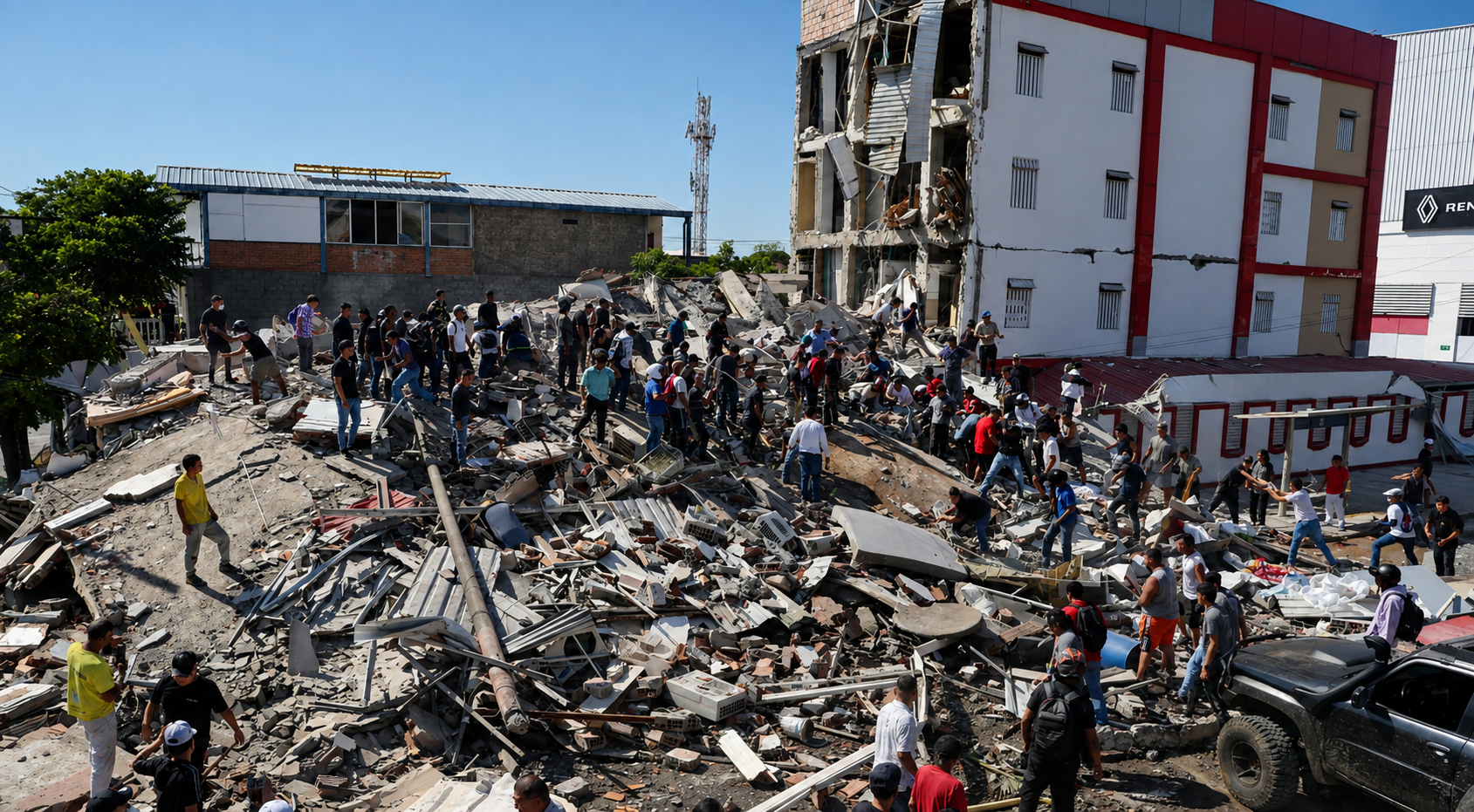
Videos showed buildings collapsing in Plaza Bolívar, a main square in Pereira. Large amounts of dust and broken concrete covered the area after buildings came down.
Local officials reported at least 40 deaths in the Pereira metropolitan area. Around 65 buildings collapsed, and people are believed to be trapped inside about 15 of them.
Rescue workers are searching through the rubble for survivors. Emergency teams are working carefully because some damaged buildings may still collapse.
A curfew has also been introduced in parts of Pereira to help authorities control the situation and allow rescue operations to continue.
The earthquake also caused serious damage in Cali, Colombia's third-largest city. At least 32 buildings collapsed there.
People rushed outside as the ground began shaking. Buildings developed cracks, while walls, windows and other parts of structures were damaged.
A British visitor staying in Cali said he had never experienced anything like the earthquake. He and his partner quickly ran outside after being woken by the shaking.
Their hotel remained standing, but cracks appeared in the walls. Paint and plaster also fell from the building.
Manizales was another badly affected city. At least two people were reported dead there.
Residents described the earthquake as a terrifying experience. One woman said cracks appeared in the walls of the hotel where she was staying. She saw dust coming from nearby buildings and bricks falling from walls.
A journalist from Manizales said the earthquake knocked hundreds of books from his shelves. He also heard glass breaking and people screaming.
Manizales has strict rules for earthquake-resistant buildings because the city has experienced earthquakes in the past. These rules helped some buildings withstand the powerful shaking.
The earthquake also damaged roads and other infrastructure. Several regional airports, including those in Pereira, Manizales, Quibdó, Armenia, Cartago and Buenaventura, were affected.
Roads around San José del Palmar were damaged, making it harder for emergency teams to reach some areas.
Although the earthquake's epicentre was in Chocó province, local officials said there were no reported deaths or injuries in San José del Palmar itself. However, roads leading into and out of the area were damaged.
Colombian President Abelardo de la Espriella declared a national disaster situation. This allows the government to take special measures and move money quickly toward rescue and emergency operations.
The president said more than 1,500 homes had been damaged.
Rescue teams are continuing to search collapsed buildings because people may still be trapped under the rubble. Emergency workers are also treating injured people and helping families who have lost their homes.
The death toll could rise as rescue workers reach more damaged areas and continue their searches.
Several countries have offered support to Colombia. US Secretary of State Marco Rubio said the United States was closely monitoring the situation and was ready to help.
European Commission President Ursula von der Leyen said the European Union's Copernicus satellite system was being used to support rescue and emergency operations.
El Salvador's President Nayib Bukele also expressed support for Colombia and offered rescue workers and equipment.
The US Geological Survey estimated that around 1.5 million people experienced strong shaking from the earthquake.
Experts said the earthquake was very deep, which can sometimes make it less dangerous than earthquakes that happen closer to the surface. However, deep earthquakes can still release a huge amount of energy and cause serious damage to buildings.
Authorities are also watching for aftershocks. Some aftershocks could still be strong and may create additional risks for damaged buildings.
For now, rescue teams are focused on finding survivors, helping injured people and providing assistance to families whose homes have been damaged.
The full extent of the destruction may not be known until rescue workers reach more affected communities. Authorities are continuing emergency operations across the hardest-hit parts of Colombia.
Summary
A powerful 7.4-magnitude earthquake has struck Colombia, killing at least 132 people and injuring more than 480. Buildings collapsed in several cities, including Pereira, Cali and Manizales. Rescue teams are searching for people trapped under the rubble, while the government has declared a national disaster.
Content



×
![]()