
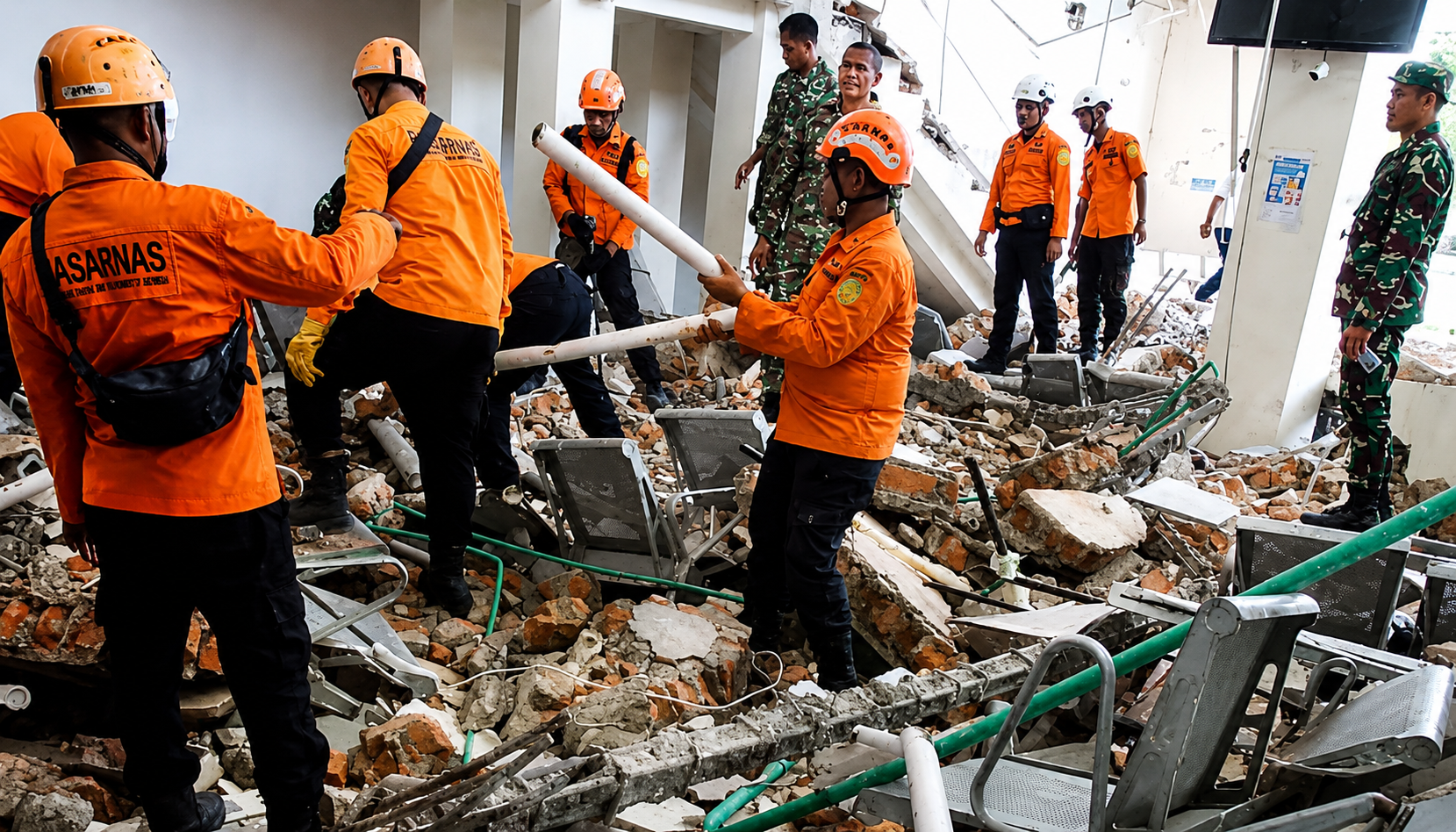
A powerful earthquake has struck Indonesia’s Flores island, killing at least 51 people and forcing thousands of residents to leave their homes. Rescue teams are continuing to search through damaged buildings for people who may still be trapped under the rubble.
The magnitude 7.7 earthquake happened shortly before 05:00 local time on Saturday. The earthquake was very shallow, occurring about 15 kilometres below the surface. Because it was so close to the ground, the shaking caused serious damage in several areas.
Indonesia’s National Disaster Management Agency, known as BNPB, said that around 5,000 people had been displaced following the earthquake. More than 900 homes and hundreds of other buildings were badly damaged. The agency also reported hundreds of aftershocks, with 341 aftershocks recorded after the main earthquake.
The hardest-hit areas include parts of East Nusa Tenggara province. Early reports said that 24 people had died in Manggarai, while 17 deaths were reported in East Manggarai. Other deaths were reported in Sikka, Ngada, Ende and West Manggarai.
Thousands of people have been forced to move to safer locations. More than 3,300 people were displaced in Sikka, while over 2,000 people were evacuated in Manggarai.
Many people were injured. Officials said that 36 people suffered serious injuries in East Nusa Tenggara, while another 77 people had minor injuries. Rescue workers and medical teams are treating victims, but reaching some areas is difficult because the region is mountainous and remote.
Several important buildings were also damaged. Homes, schools, healthcare facilities and government offices suffered heavy damage. Ruteng Regional Hospital in Manggarai was among the damaged buildings. Parts of the hospital, including ceilings in treatment areas, collapsed. Because of fears that more buildings could collapse during aftershocks, some patients were moved outside and treated in temporary medical tents.
The earthquake also caused problems at the port in Maumere, one of the largest towns on Flores. Video from the area showed large pieces of concrete falling from a terminal building. A gangway leading to a ferry also collapsed, causing some people to fall into the sea.
Some residents said the earthquake happened while they were sleeping. Several people were killed when buildings and other structures collapsed around them. Others were suddenly thrown out of their beds by the strong shaking.
One resident, Arnold Welianto, said he woke up suddenly and immediately went to check on his child. He also said that many people had moved towards the hills after the earthquake because the sea appeared to have moved back from the coastline.
A tsunami warning was issued shortly after the earthquake. The warning caused around 2,000 people to leave their homes and move to safer areas. However, the warning was cancelled about three hours later after authorities found no major increase in sea levels.
Although the tsunami threat has passed, authorities are still warning people to remain careful. Residents have been told to stay away from damaged buildings and coastal areas, especially while aftershocks continue.
Landslides have also blocked roads and made it harder for rescue teams to reach some villages. Emergency workers are working to clear roads and deliver food, water, medicine and other supplies to people who have been evacuated.
The BNPB said that providing basic necessities and emergency supplies to displaced people is one of its main priorities. Large amounts of emergency supplies have already been sent to some of the worst-hit areas.
The full extent of the damage is still being assessed. Officials say it could take time to understand how badly remote communities have been affected because of the difficult mountain terrain and damaged roads.
The earthquake is one of Indonesia’s deadliest in recent years. Indonesia is particularly vulnerable to earthquakes and volcanic eruptions because it lies along the meeting point of several major tectonic plates. The country is part of the Pacific Ring of Fire, an area known for frequent earthquakes and volcanic activity.
Rescue teams are expected to continue searching damaged buildings and helping injured people in the coming days. Authorities are also monitoring the many aftershocks and warning residents to stay alert.
For thousands of people who have lost their homes or been forced to evacuate, the immediate focus is finding safe shelter, receiving medical care and getting food and other essential supplies. Officials say the emergency response will continue as teams work to reach the most affected communities and determine the full scale of the disaster.
Summary
A powerful magnitude 7.7 earthquake struck Indonesia’s Flores island early Saturday, killing at least 51 people and forcing thousands to leave their homes. More than 900 homes and many schools, hospitals and government buildings were badly damaged. Rescue teams are still searching damaged areas for survivors, while hundreds of aftershocks continue. A tsunami warning was issued after the earthquake but was later lifted because no major rise in sea levels was detected.
Content




×
![]()