
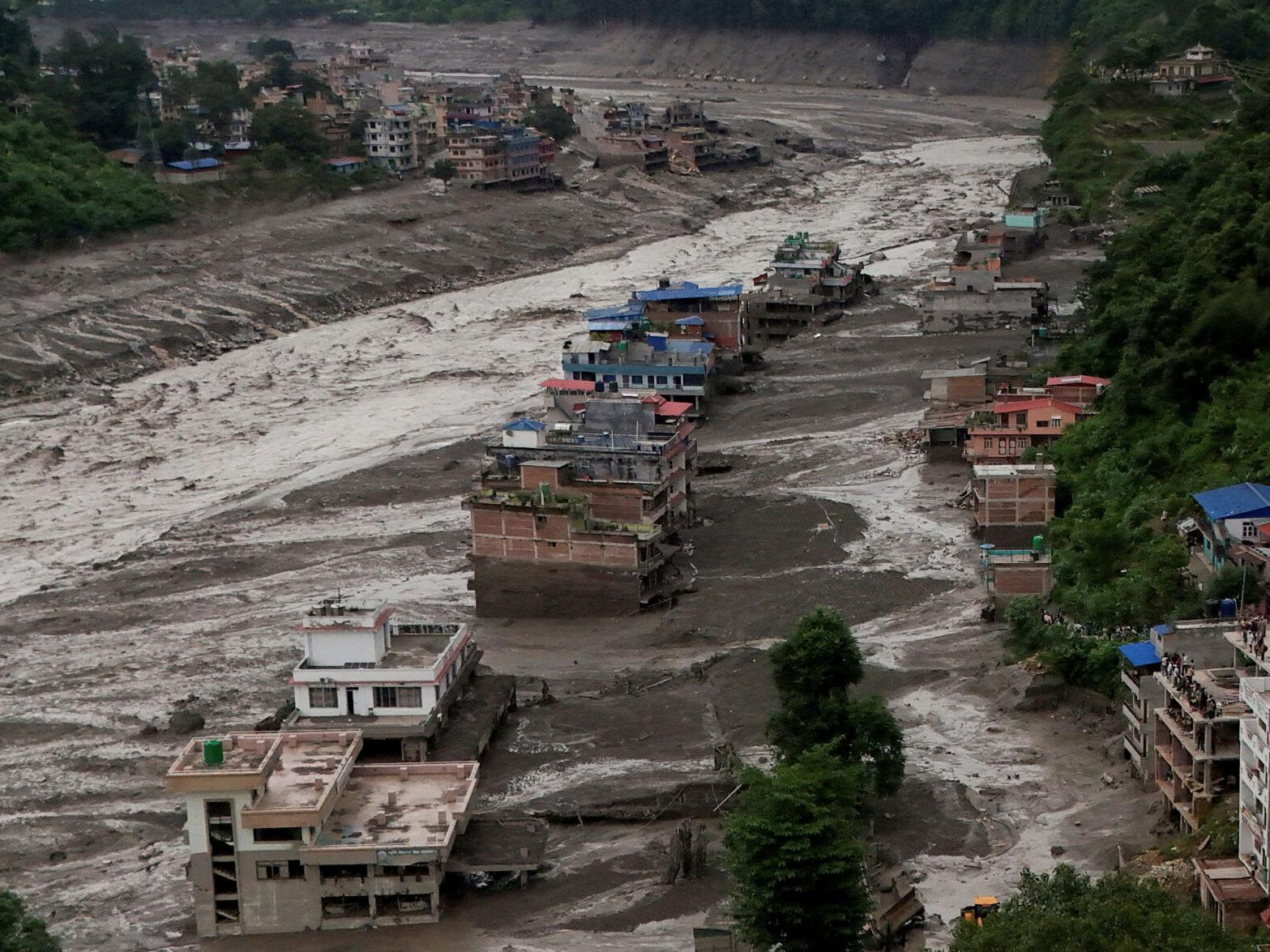
A massive flash flood and mudslide has caused widespread destruction in Nepal near the border with Tibet, leaving at least 177 people dead and more than 800 people missing.
Nepalese police said 177 bodies had been recovered from areas hit by the disaster. The country's disaster management authority reported that 826 people were still missing, including local residents, tourists and security personnel.
The disaster struck after what scientists believe was a major glacier collapse high in the mountains. The US Geological Survey said the event was first believed to be a magnitude 4.4 earthquake. However, further analysis of seismic data and satellite images showed that no earthquake had occurred. Instead, a large section of glacier and debris collapsed, sending huge amounts of ice, rocks, mud and water down into the valleys below.
The powerful flood destroyed homes, roads and bridges and covered many communities with thick mud. In some areas, entire buildings were swept away or buried. The disaster has also damaged power infrastructure and cut off electricity, internet and road access in several affected areas.
Rescue teams are working day and night to find survivors. The Nepalese Army has deployed thousands of personnel and is using helicopters to rescue people trapped in remote locations. Helicopters have become especially important because many roads and bridges have been destroyed.
Rescuers have already saved dozens of people, including tourists who were travelling through the region. Seven people trapped inside a tunnel at a hydroelectric project were also rescued alive. However, rain, dangerous mountain conditions and damaged roads are making the search operation extremely difficult.
Hundreds of foreign tourists remain out of contact. Nepal's Tourism Board said those missing include tourists from India, Nepal, the United States, Australia, the United Kingdom, Ukraine and Malaysia. Many were travelling through the area as part of pilgrimages to Mount Kailash in Tibet, an important religious site for Hindus and Buddhists.
Several tour groups have also lost contact with their members. The Isha Foundation said 77 pilgrims travelling back from the Kailash Mansarovar pilgrimage were missing. Other tour operators reported missing British, American, Australian and other international travellers.
On the Tibetan side of the border, Chinese authorities reported that hundreds of people were also missing. Rescue efforts there have been slowed by continuing rain, remote mountain terrain and deep mud.
Officials are also worried about the possibility of a second flood. Debris from the disaster has blocked parts of rivers and created a barrier lake upstream, which could become dangerous if water breaks through suddenly.
Scientists say climate change may be making high mountain areas more unstable. Rising temperatures can weaken glaciers, melt ice and thaw frozen ground that helps hold mountain slopes together.
As rescue teams continue searching for survivors, families across Nepal and several other countries are anxiously waiting for news about their missing loved ones.
Summary
A devastating flash flood and mudslide near the Nepal-Tibet border has killed at least 177 people, while more than 800 others remain missing. Authorities say a massive glacier collapse and debris flow triggered the disaster, destroying homes, roads and bridges. Hundreds of tourists from several countries are also missing as rescue teams continue searching in difficult weather and mountainous conditions.
Content




×
![]()