
Six months after the United States and Israel launched their major military campaign against Iran, the conflict has entered a new and uncertain phase. The war began on February 28, 2026, and has since developed into a much longer confrontation than many expected. Instead of producing a quick collapse of the Iranian government, the conflict has turned into a prolonged struggle involving military strikes, economic sanctions, attacks on shipping, diplomatic efforts and pressure over Iran’s nuclear programme.
An opinion article published by Al Jazeera argues that President Donald Trump’s current strategy is beginning to show signs of progress. Republican political strategist and foreign policy analyst Adolfo Franco says Washington is increasingly relying on economic pressure instead of continuing large-scale military attacks. In his view, this approach could eventually force Iran to make concessions.
However, the situation remains far from a clear US victory. Other recent assessments say Iran has survived the initial military campaign and continues to resist American pressure. The conflict has also created serious economic and security problems for the United States, Iran and countries across the Middle East.
The conflict began on February 28, when the United States and Israel launched a major attack on Iran. Their stated objectives included damaging Iran’s military capabilities and nuclear and missile programmes, while also seeking a major change in Tehran’s policies. The opening strikes were followed by Iranian attacks against US and Israeli interests and targets in several countries across the region.
One of the biggest developments came at the very beginning of the war. Iran’s Supreme Leader Ayatollah Ali Khamenei was killed in the February 29 airstrikes. Iran subsequently selected his son, Mojtaba Khamenei, as his successor. Despite the loss of its longtime leader and severe damage to military infrastructure, Iran’s government did not collapse.
The fighting then spread beyond Iran’s borders. Iranian attacks affected neighbouring Arab states and increased concerns among Gulf countries that the conflict could become a much wider regional war. Countries that had previously relied heavily on US security guarantees began reassessing their security plans as the conflict continued.
Another major part of the conflict has been the Strait of Hormuz.
The strait is one of the world’s most important energy routes. Before the war, around one-fifth of global oil and liquefied natural gas shipments passed through the waterway. After the conflict intensified, Iran announced that it would close the strait, while the United States imposed a counter-blockade around Iranian ports. As a result, normal shipping through the waterway dropped dramatically.
The disruption has affected oil and gas supplies, shipping companies, insurance costs and economies across the Gulf. Oil-dependent countries have faced higher uncertainty because they depend heavily on energy exports and international shipping. The conflict has also affected plans by Gulf states to attract investment and diversify their economies.
During the conflict, the United States also attempted diplomacy.
A major effort came in June, when Pakistan helped mediate a memorandum of understanding between Washington and Tehran. The agreement was intended to create a period for negotiations and help restore shipping through the Strait of Hormuz. However, the arrangement did not produce a lasting end to the fighting. Both sides later accused the other of violating the agreement.
By August, the diplomatic process had largely stalled. Recent reporting says the United States and Iran currently have no active talks aimed at ending the conflict, while Washington has increased economic sanctions against Tehran.
The Strait of Hormuz has remained one of the most difficult issues.
Iran and Oman have recently discussed creating a temporary navigation corridor through the strait. The proposed arrangement could allow some commercial ships to pass safely while longer-term negotiations continue. Iran and Oman have also discussed mine-clearing efforts.
Iran has also said it is preparing conditions for reopening the strait. Iranian officials have linked reopening the waterway to demands including an end to what Tehran calls the US blockade, compensation and the removal of economic sanctions.
The Trump administration has increasingly turned toward economic pressure. Sanctions and restrictions are intended to reduce Iran’s ability to earn money, trade internationally and finance its military and government.
The opinion article argues that this strategy is slowly weakening Iran. It says the Iranian economy has suffered from reduced oil exports, a sharply weakened currency, higher poverty and damage to energy infrastructure. Trade with China, Iran’s most important remaining major trading partner, has also been affected.
The wider economic effects are not limited to Iran. Higher energy and transportation costs have affected countries throughout the region, while Gulf states have faced pressure to increase defence spending.
Iran’s nuclear programme remains a major issue.
Iran’s nuclear programme is another central part of the conflict.
The United States previously carried out major strikes against Iranian nuclear facilities at Fordow, Natanz and Isfahan. In June 2025, US forces attacked those three facilities during an earlier escalation with Iran. The Pentagon said the sites suffered extremely serious damage, although the full long-term effect on Iran’s nuclear programme remained difficult to determine.
During the current 2026 conflict, the nuclear issue has remained unresolved. Iran’s nuclear infrastructure has suffered damage, but there is uncertainty over how much of its programme can be rebuilt.
One location receiving particular attention is Pickaxe Mountain, a heavily fortified underground site near Natanz. In July, Trump threatened to destroy the facility, raising fears of another major military escalation. Analysts have suggested that the site could potentially play a role in rebuilding parts of Iran’s nuclear programme.
The lack of complete international access to Iran’s nuclear facilities has made it harder to determine exactly what remains of the programme. Reuters reported that Iran’s nuclear ambitions may have been delayed by the strikes, but the full condition of the programme remains unclear.
Trump’s approach has changed several times during the six-month conflict.
At the beginning, the strategy focused heavily on military force. The expectation was that powerful attacks could quickly weaken Iran and force its leaders to accept major demands.
Later, Washington moved toward negotiations. A June memorandum offered a possible path toward reducing the fighting and addressing the Strait of Hormuz and Iran’s nuclear programme.
That diplomatic effort failed to produce a lasting settlement.
Trump has now moved toward stronger economic pressure. His administration is using sanctions and financial restrictions to increase the cost of continuing the conflict for Iran. Recent reporting describes this as a shift away from relying primarily on further major military attacks.
This is where Franco’s opinion is more positive than some other assessments.
Franco argues that the United States does not need an immediate military victory. Instead, he believes Washington can gradually weaken Iran by limiting its economic resources, maintaining pressure around the Strait of Hormuz and threatening further military action if Tehran continues rebuilding sensitive nuclear facilities.
He describes this as strategic patience rather than failure.But there is still no clear winner.
Despite the damage caused to Iran, the country has not collapsed. Iran’s leadership remains in power and continues to resist US demands. The Strait of Hormuz also remains heavily disrupted, and the two countries have not reached a lasting peace agreement.
At the same time, the war has created costs for the United States. Recent reporting says US military resources have been strained, weapons stocks have been reduced and the conflict has generated growing political opposition at home. Reuters reported that public support for the war has fallen significantly, while concerns about economic costs and rising energy prices have increased.
The conflict has also changed the wider Middle East. Gulf countries are facing increased security risks, higher economic uncertainty and pressure to strengthen their military capabilities. Some regional governments are also looking for new security partnerships as they reconsider their dependence on the United States.
The next stage of the conflict could depend heavily on the Strait of Hormuz, Iran’s nuclear programme and the possibility of new negotiations.
If a temporary shipping corridor can be established, some pressure on global energy markets could ease. Oman has been working with Iran on a possible arrangement to restore safe navigation.
However, a permanent solution will be much harder. Iran wants sanctions relief and an end to the blockade, while Washington continues to demand major changes from Tehran, especially concerning its nuclear programme.
For now, Trump’s strategy is based on the belief that continued pressure will eventually force Iran to negotiate from a weaker position.
The Fyrim opinion article argues that this approach is beginning to work. But other recent assessments are much more cautious. Six months into the war, Iran remains standing, the Strait of Hormuz remains a major flashpoint and there is no final peace agreement.
The conflict has therefore moved from expectations of a quick victory to a long contest of pressure and endurance. Whether Trump’s strategy ultimately succeeds will depend on whether economic pressure can force Iran to change its policies without triggering another major military escalation.
For now, the United States has not won the war, Iran has not been defeated, and the Middle East remains in a highly unstable situation. The next few months could determine whether the conflict moves toward a negotiated settlement or enters another dangerous phase of escalation.
World News
Six Months Into the U.S.-Iran War, Trump’s Strategy Shows Signs of Progress — But the War Is Far From Over
Summary
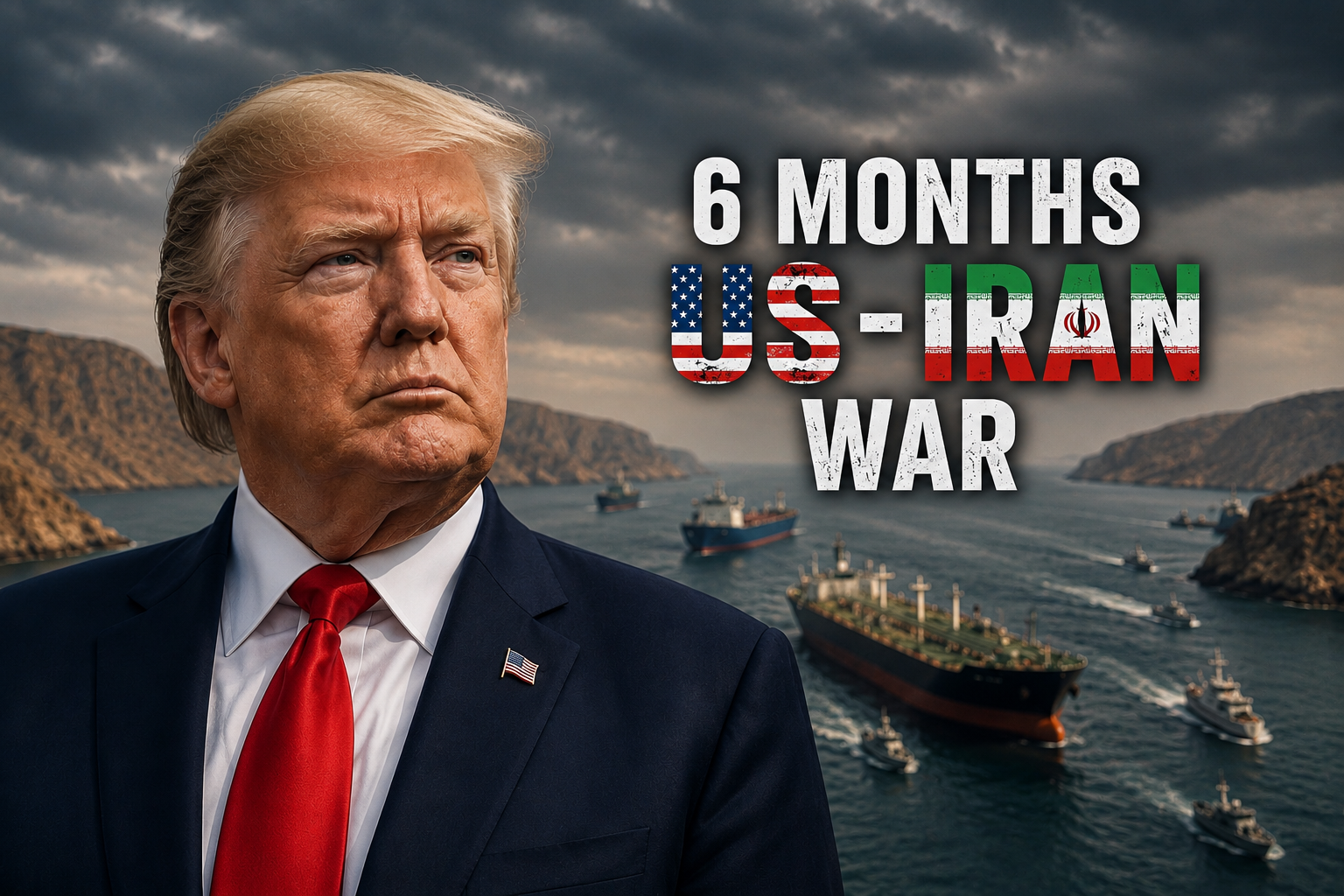
Six months into the US-Israel war with Iran, the conflict remains unresolved. President Donald Trump’s strategy has changed several times, moving from military attacks and threats to negotiations and now toward stronger economic pressure and sanctions. An opinion article by Republican strategist Adolfo Franco argues that this long-term pressure is weakening Iran and giving Washington greater leverage. However, other recent reporting shows that Iran remains capable of resisting pressure, the Strait of Hormuz remains heavily disrupted, and there is still no clear winner. The future of Iran’s nuclear programme, the reopening of the Strait of Hormuz and the possibility of renewed negotiations remain major questions.
Content

×
![]()