
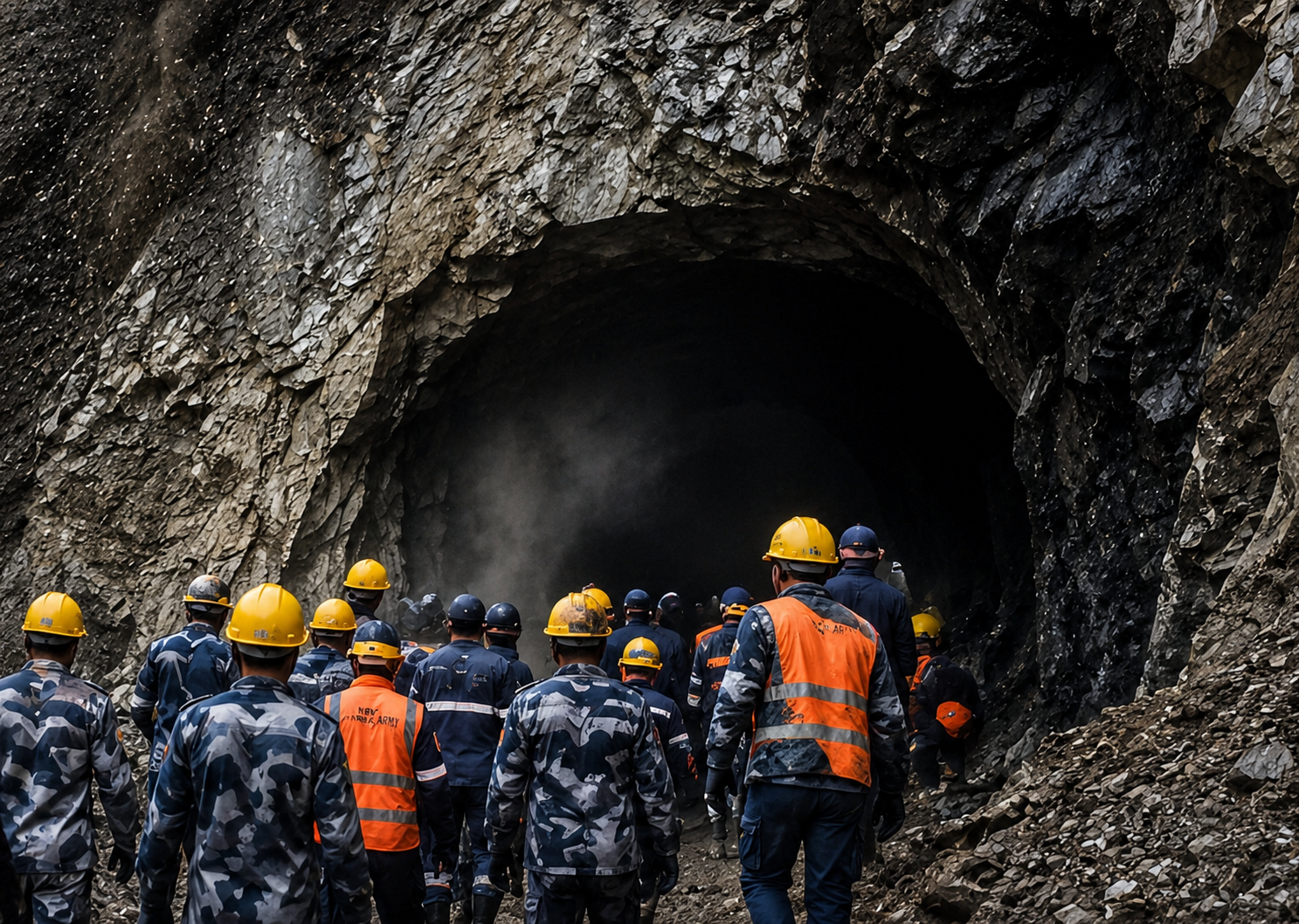
Rescue teams in Nepal are racing against time to find hundreds of workers believed to be trapped inside tunnels following devastating floods and landslides along the Trishuli River.
More than 600 workers are thought to be trapped inside a large network of tunnels connected to hydropower projects in the affected area. Many of the tunnels have been filled with mud, rocks and debris after powerful floods swept through the mountainous region.
Rescuers are using explosives to break through the hillside and large rocks blocking their way. They are also pumping air into some tunnels to improve the chances of survival for anyone still trapped underground.
Families of the missing workers are waiting anxiously for news. Many continue to hope that their relatives are alive.
Anushila Bhandari, whose 33-year-old husband Aurus Bhandari was working as an engineer at one of the project sites, said she wanted nothing more than to see him return home.
Other families have also said they are still hopeful because some of the tunnels may have oxygen systems. Sita Pandey, whose husband was working at a hydropower plant, said she still believed there was a chance he was alive because an oxygen system was available inside.
The rescue operation has become extremely difficult because the floods dramatically changed the landscape. Huge amounts of mud, rocks and other debris have covered roads, buildings and entrances to the hydropower facilities.
Australian tunnelling expert Arnold Dix, who has been supporting the rescue operation remotely, described the area as looking like a "lunar landscape." He said rescuers have struggled to identify where some of the tunnels and power stations are located.
According to Dix, some of the rocks blocking access are extremely large, with some reportedly bigger than houses. Rescuers therefore have to carefully identify possible routes before digging or using controlled explosions.
Nepalese Prime Minister Balendra Shah said rescue operations had been intensified. Authorities said 279 people had been rescued from hydropower sites, while more than 11,000 people had been rescued across the wider disaster area.
The rescue effort involves Nepalese and Chinese military personnel, with experts from India, South Korea and Australia also helping.
Nepal has been heavily affected by the disaster. The country's disaster management authority said the death toll had reached 939, while the number of missing people was revised to 3,925. The missing include hundreds of foreign nationals.
Hydropower workers make up a significant part of the missing population because many power projects are located along Nepal's mountain rivers. Authorities said at least 11 hydropower projects, either operating or under construction, were damaged by the floods.
Farther downstream, the disaster has created another serious problem. In Chitwan district, nearly 300 bodies were reportedly brought to riverbanks by floodwaters. Many of the bodies have not yet been identified.
Because there are not enough facilities to store the bodies, authorities have temporarily buried some unidentified victims. Medical workers and volunteers are collecting DNA samples so families can eventually identify their loved ones.
The disaster has also affected the Tibet side of the border. Chinese state media reported 16 deaths and 546 missing people in Tibet. Information about the disaster there has been tightly controlled, with authorities taking action against some people accused of spreading unverified casualty figures online.
In Nepal, authorities have also warned against misinformation about the floods.
For the families waiting outside the damaged hydropower sites, however, the focus remains on the rescue operation. They are urging authorities to move as quickly as possible, fearing that every passing hour could reduce the chances of finding survivors.
Rescuers continue working through dangerous conditions, hoping to break through the debris and reach the trapped workers before it is too late.
Summary
Rescue teams in Nepal are working urgently to reach more than 600 workers believed to be trapped inside mud-filled tunnels at hydropower projects along the Trishuli River. Rescuers are using explosives to break through rocks and debris and are pumping air into the tunnels in the hope that people are still alive. The disaster has killed hundreds of people across Nepal and Tibet, while thousands remain missing.
Content




×
![]()