
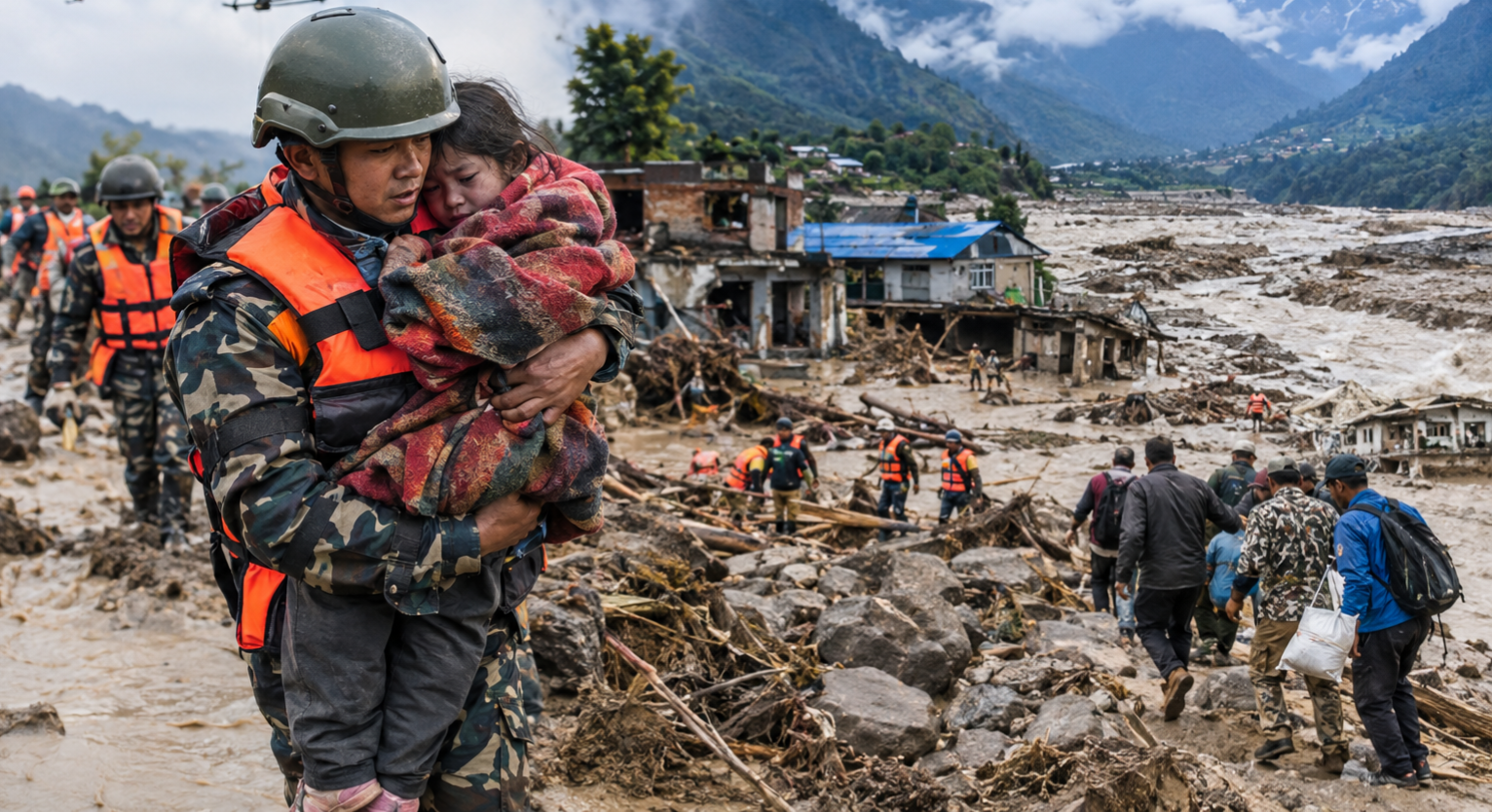
Nepal is continuing a major rescue and relief operation after deadly flash floods struck areas near the Nepal-Tibet border. The disaster caused widespread destruction, swept away villages and left thousands of people dead or missing.
According to Nepal's disaster agency, at least 1,200 people have died and more than 4,200 people are still missing. Thousands of families have been affected, while many people are searching for relatives who disappeared in the floods. The disaster has also separated some children from their families, making family reunification an important part of the relief effort.
On the Tibetan side of the border, Chinese state media has reported that 21 people have died and more than 540 people remain missing. Rescue teams are continuing their search, but the situation is difficult because of the remote location and heavy damage caused by the floods.
Nearly 12,000 people have been rescued in Nepal since the disaster began. However, rescuers are still searching for survivors in areas that are difficult to reach. Hundreds of workers may be trapped inside hydropower tunnels, and rescue teams are working to reach them.
The floods caused serious damage to roads and bridges. The United Nations says that more than 40 bridges were destroyed, making it difficult to move food, medicine and other emergency supplies to remote communities. In some areas, helicopters are the only way to deliver essential supplies.
Rescue workers from Nepal, China and India are helping with the operation. Heavy machinery is being used to remove mud, rocks and other debris from roads. Temporary bridges are also being built so that rescuers and aid workers can reach isolated communities. Drones are being used to search areas that are too dangerous or difficult for rescue teams to reach on foot.
The disaster has also created a serious humanitarian problem. Nearly 3,500 people in Nepal have been displaced and are staying at 27 temporary sites, many of them schools. The use of schools as shelters is also disrupting education for children.
People living in crowded shelters face other dangers. Floodwater has contaminated sources of drinking water, while health facilities have been damaged. These conditions could increase the spread of diseases, especially during Nepal's monsoon season.
Nepal's Prime Minister Balendra Shah said the government is focusing on saving survivors, providing medical treatment and offering psychological support. He described the disaster as a tragedy that suddenly took away parents, children, brothers and sisters.
The government has also explained that warnings were sent after officials received information about the flood. Authorities said mobile phone warnings were issued in affected areas before the flood reached them. However, the prime minister said the event was extremely difficult to predict.
Scientists believe the flash flood was likely caused by a glacial collapse in the Himalayan region. A large amount of water suddenly moved through the valley, creating a powerful flood that destroyed homes, roads and other infrastructure.
Experts have warned that climate change is making the Himalayan region more vulnerable. Rising temperatures are causing glaciers and frozen ground, known as permafrost, to become less stable. Scientists say better monitoring and early-warning systems could help communities prepare for similar disasters in the future.
Nepal has declared a disaster in 15 affected areas for three months. This will allow authorities to provide financial support to families of victims, help displaced people and use the army in rescue and relocation operations.
The Nepalese government and the United Nations are also preparing a four-month humanitarian appeal to raise support for affected communities.
The immediate priority remains finding survivors, helping displaced families and providing food, clean water, medicine and shelter. At the same time, the disaster has highlighted the growing dangers faced by communities living in the Himalayan region and the need for stronger early-warning systems and international support.
Summary
Nepal is increasing rescue and relief work after devastating flash floods near the Nepal-Tibet border. At least 1,200 people have died in Nepal, while more than 4,200 are still missing. On the Tibetan side, at least 21 people have died and more than 540 remain unaccounted for. Nearly 12,000 people have been rescued in Nepal, but difficult roads, destroyed bridges and damaged infrastructure are making rescue operations extremely challenging. Authorities are also trying to reach workers believed to be trapped inside hydropower tunnels. The disaster has displaced thousands of people and increased the risk of disease. Experts say a collapse of a glacier likely triggered the floods and warn that climate change is increasing risks in the Himalayan region.
Content




×
![]()