
A major rescue operation is continuing in Nepal after devastating flash floods struck the Nepal-Tibet border last week. Rescuers have successfully pulled two workers alive from a flooded tunnel at the Trishuli 3A Hydropower Project, raising hopes that more people may still be found alive.
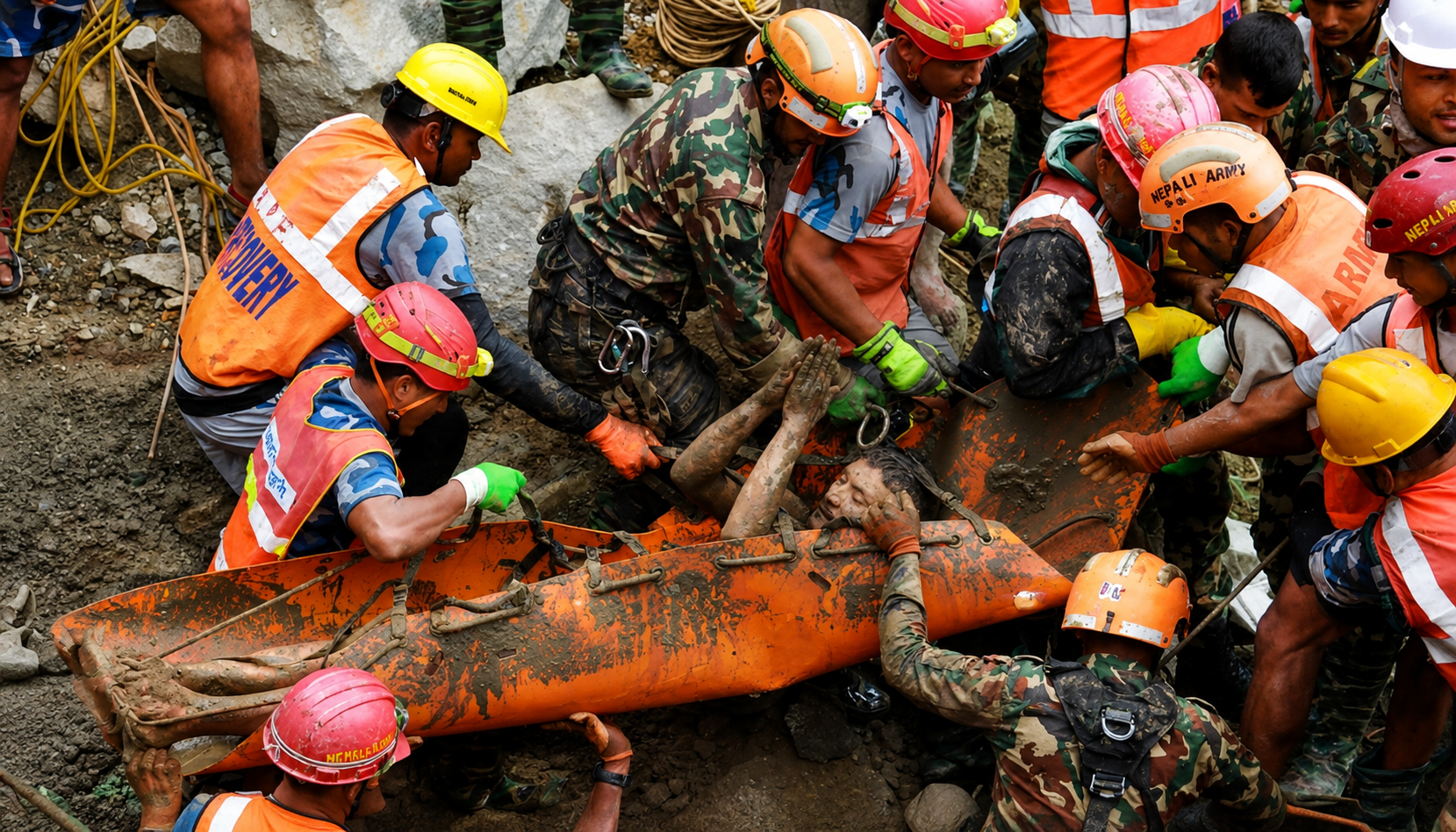
The two rescued workers, Sanjaya Shah and Kabir Maharjan, had been trapped underground after floodwater and huge amounts of mud and rocks entered the tunnel system. Rescue teams managed to reach them after digging through blocked sections of the tunnel. Both men were taken to hospital for medical treatment.
The rescue operation has been extremely difficult. Large rocks, mud and debris have blocked parts of the tunnels, while much of the heavy machinery needed for the operation was swept away by the floods. Rescuers have had to dig new access points and carefully clear the underground passages.
An expert advising the Nepalese government, Arnold Dix, said rescuers had already moved about 60 metres through one tunnel, with another 150 metres still to go. He described a section deeper inside as a possible “Goldilocks zone”, where conditions could be more suitable for people to survive.
Officials believe around 39 more people could still be trapped inside the tunnel where the two workers were rescued. Oxygen is also being pumped into the tunnel to help anyone still alive breathe while rescue teams work to reach them.
However, the operation suffered a setback when rescuers discovered the body of a third person inside the tunnel. Authorities said the person may have died after being caught in the floodwater while trying to escape. The body was badly swollen, making identification difficult.
The tunnel rescue is only one part of a much larger disaster across Nepal and Tibet. According to figures reported by the BBC, more than 1,300 people have died on both sides of the border, while more than 5,300 people remain missing. Hundreds of foreigners from dozens of countries are also believed to be among those missing.
The floods caused widespread destruction along rivers and mountain valleys. Roads, bridges, buildings and other infrastructure were damaged or completely washed away. In some areas, rescue workers have struggled to reach isolated communities because normal roads are no longer usable.
The United Nations has described the scale of destruction as enormous. Aid workers are considering using helicopters, cargo drones and people carrying supplies on foot to reach communities cut off by the disaster.
Nepal's army has deployed troops across several tunnel sites and other affected areas. Soldiers and rescue workers are using helicopters, excavators, drones, boats and other equipment to search for missing people and provide emergency supplies.
China has also been helping Nepali citizens who became stranded in Tibet. Officials said another 155 Nepalis were rescued and returned to Nepal, following an earlier group of 144 people who were brought back.
The disaster is believed to have been triggered by a glacial collapse, which sent a huge amount of water, mud and debris down the mountains. The powerful flood swept through valleys and caused severe damage along the Trishuli and Bhote Koshi river systems.
Families across Nepal are still waiting for information about missing relatives. Many have travelled to affected areas or contacted emergency hotlines hoping to learn whether their loved ones have survived.
Despite the enormous challenges, the rescue of Shah and Maharjan has given families and rescuers new hope. Teams are continuing to work inside the tunnels, pumping oxygen and removing mud and rocks in the hope of finding more survivors.
Authorities are also warning that further rain could cause additional flooding and make rescue efforts even harder. For now, emergency teams remain focused on saving lives, helping survivors and reaching communities that remain cut off by the disaster.
Summary
Rescuers in Nepal have saved two workers who were trapped inside a hydropower tunnel after massive flash floods struck the Nepal-Tibet border. A third person was found dead, while dozens of others are still believed to be trapped. More than 1,300 people have died in Nepal and Tibet, and thousands remain missing. Rescue teams are facing mud, rocks, damaged roads and more rain as they continue searching for survivors.
Content




×
![]()