
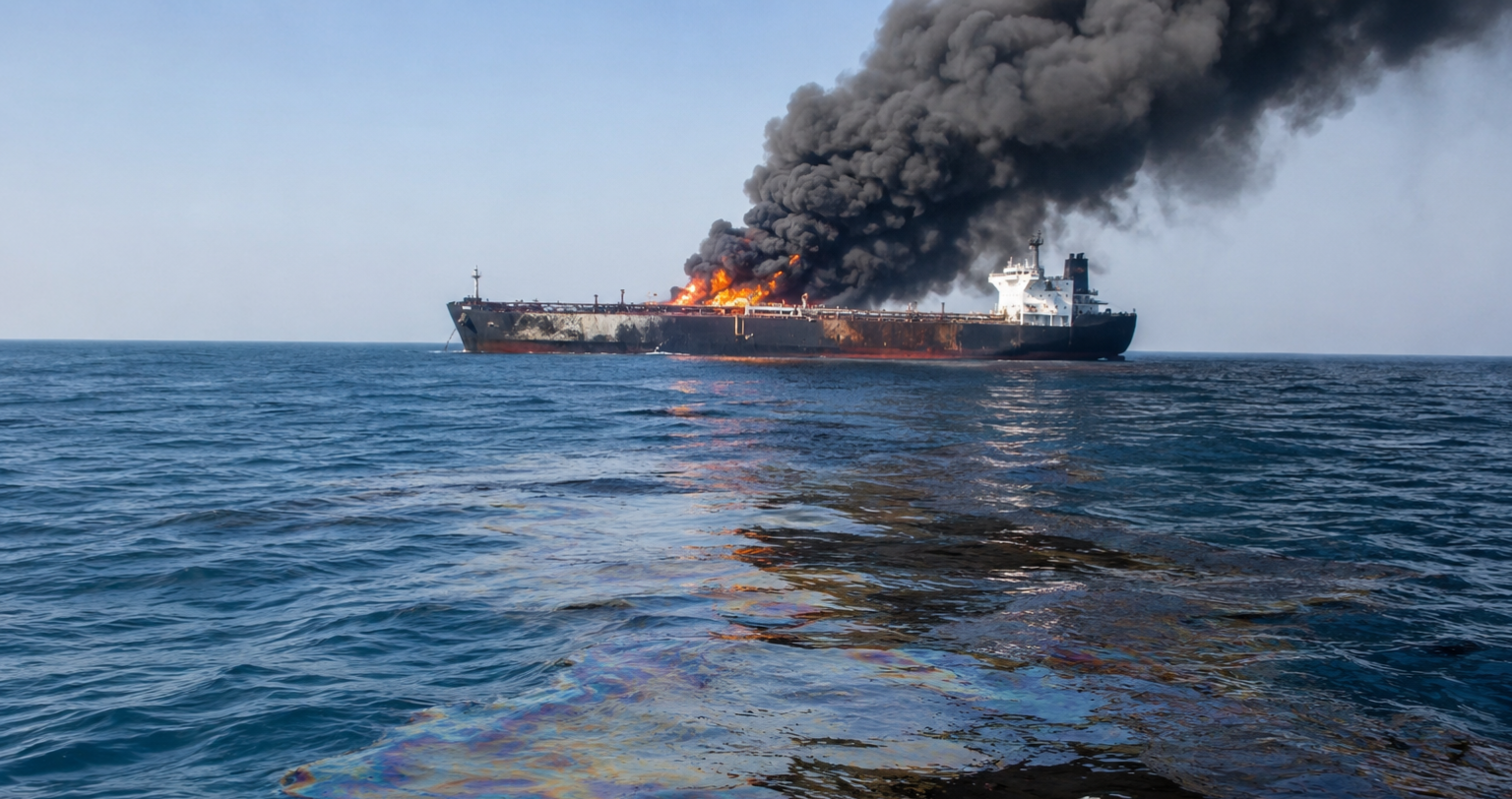
The war between the United States and Iran is increasingly spreading to the sea, especially around the Strait of Hormuz. Both sides have attacked oil tankers and other ships, raising fears that a major attack could cause a huge oil spill in the Gulf.
On September 8, US forces reportedly struck five Iranian oil tankers. Three days earlier, the US had also attacked three Iranian tankers. Iran has also targeted ships, saying some were using routes that were not authorised. These attacks have made the busy waterway much more dangerous for commercial shipping.
The Strait of Hormuz is one of the world's most important oil routes. Large numbers of tankers use the waterway to transport crude oil and petroleum products. Because so many ships are now delayed or trapped in the area, the environmental risks are growing.
As of September 7, around 42 tankers were waiting to pass through the Strait of Hormuz, according to MarineTraffic data. Eighteen of them were carrying oil. Their combined estimated capacity was about 1.76 million cubic metres of oil and petroleum products, equal to roughly 11.1 million barrels. This is around 11 percent of the world's daily oil demand.
If one of these tankers is badly damaged or sinks, millions of litres of oil could enter the sea. Oil could spread across a large area because of wind and ocean currents. It could reach coastlines, fishing areas and important marine habitats far from the original accident.
The danger is already visible. At least 75 ships have reportedly been attacked since the beginning of the war, with at least 21 seafarers killed. Several incidents have also caused fires and smaller oil spills.
One damaged tanker, the Caroline Bezengi, has been leaking oil after running aground off the coast of Oman. The tanker was reportedly carrying around 800,000 barrels of oil. Omani authorities warned that the pollution could affect parts of the coastline and nearby Masirah Island.
Another vessel, the Minoan Pioneer, was struck by a projectile off Oman in August and caught fire. Satellite images later showed oil slicks near islands in the region, although the exact sources could not be independently confirmed.
A major oil spill could have serious consequences for the Gulf's marine environment. The Gulf contains coral reefs, mangrove forests, seagrass beds, mudflats and salt marshes. These areas provide food and shelter for fish, turtles, dugongs and many birds.
Oil pollution can poison marine organisms and damage coral reefs and mangroves. Fish eggs and young fish can be especially vulnerable. Oil can also become trapped in sand and sediments, allowing pollution to remain for a long time.
Fishing communities could also suffer. Pollution may reduce fish populations, make fishing more difficult and increase costs for coastal communities that depend on the sea for income.
There is another major concern: drinking water. Gulf countries depend heavily on desalination plants, which turn seawater into fresh water. Millions of people across the region rely on these systems.
If a large oil spill reaches a desalination plant's seawater intake, it could reduce the quality of the water entering the facility and make treatment more difficult. In serious cases, plants could face temporary restrictions or shutdowns.
Experts say the actual danger depends on where an oil spill happens, ocean currents, the distance from desalination facilities and the technology used to treat the water. Early detection and quick action can help reduce the risk.
The Gulf has suffered serious environmental damage from oil pollution before. During the 1991 Gulf War, oil released into the northern Gulf severely damaged coastlines and marine ecosystems.
The current fighting around Hormuz has created a new threat. Continued attacks on tankers could turn the region into a major environmental disaster zone, putting marine life, fishing communities and water supplies at risk.
Summary
Fighting between the US and Iran around the Strait of Hormuz is putting oil tankers and marine life at serious risk. Attacks on ships could cause large oil spills, damage coastal ecosystems and threaten fisheries and desalination water supplies across the Gulf.
Content



×
![]()