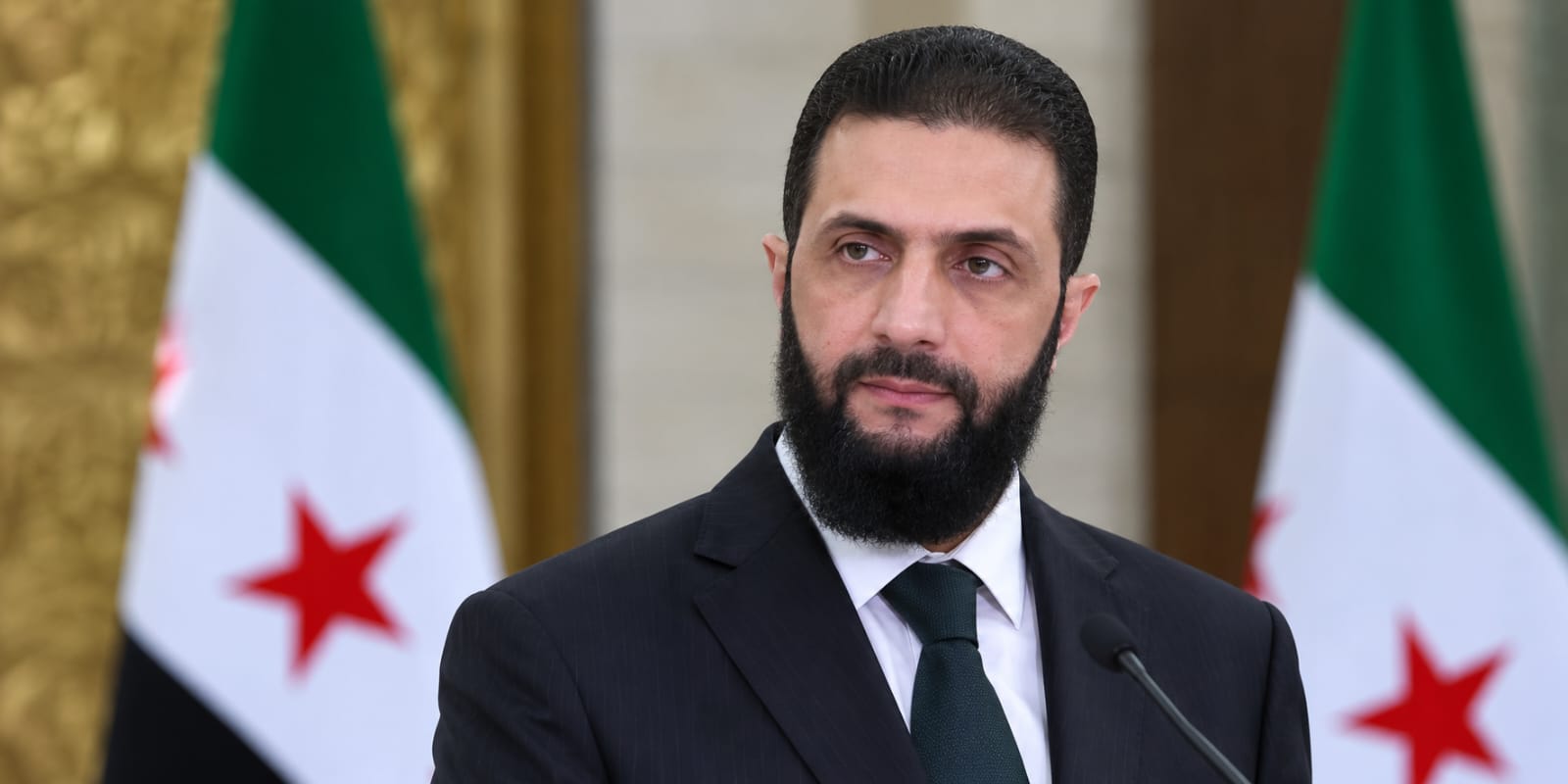
Al-Sharaa Warns Against Revenge
Al-Sharaa said there had been concern that events following the revolution could develop into a cycle of revenge, particularly in areas that had suffered significant damage and loss.
He said people needed to avoid allowing the excitement and emotion surrounding victory to lead to retaliatory actions. He specifically referred to areas such as Hama that had experienced severe suffering.
According to al-Sharaa, preventing revenge was an important consideration from the beginning. He said the leadership understood that a political or military victory could be followed by disputes and internal conflicts if those risks were not addressed.
He presented restraint and careful communication as important parts of the approach taken during the transition.
Focus on Treatment of Civilians
Al-Sharaa said discussions with military groups before major battles focused heavily on how people would be treated.
He explained that, in some discussions, around 70% of the conversation concerned methods of dealing with people, while approximately 30% focused on military plans and organization.
His remarks emphasized the importance he placed on the conduct of forces toward civilians alongside military objectives.
Al-Sharaa also said the leadership wanted to prevent the revolution from being viewed by other countries as a movement that could achieve victory in Syria and then attempt to expand elsewhere.
He said steps were taken from the beginning to prevent that possibility and instead focus on building state institutions and establishing mechanisms for governing the country.
Syria Seeks a Greater Regional Economic Role
Al-Sharaa also discussed Syria’s potential role in regional trade and economic integration.
He said stronger economic integration between Syria and Arab countries is necessary and should be considered separately from developments surrounding the Strait of Hormuz.
He argued that global trade should not depend on a single transportation route and that countries should develop multiple secure alternatives.
Syria’s geographical position, he said, could allow it to become an important connection between Jordan, Türkiye, Gulf countries and Europe.
The idea of Syria becoming a trade and supply-chain corridor has also been highlighted at the Arab Media Summit, where al-Sharaa described the country as having an opportunity to connect East and West.
Alternative Trade Routes
Al-Sharaa said that even if conditions around Hormuz improve, countries should continue developing alternative routes.
He argued that economic integration benefits multiple countries and that diversified transportation networks can provide additional options for international trade.
His comments come as disruptions around major regional shipping routes have increased attention on alternative land and maritime corridors. Syria has been discussed as one possible pathway connecting Mediterranean access with Gulf markets and wider regional supply chains.
For Syria, such a role could potentially support investment, transportation and commercial activity as the country attempts to rebuild its economy following years of conflict and international isolation.
Al-Sharaa Calls for Independent Media
Al-Sharaa also addressed the role of the media, saying journalism should be characterized by independence and credibility.
He said media organizations should approach developments from multiple perspectives and provide analysis of ongoing events.
He emphasized the importance of accurate information and responsible reporting, particularly during periods of political and social change.
At the Arab Media Summit, al-Sharaa described journalism as a significant responsibility and urged media professionals to avoid politicization and focus on verifying information.
He said the media has an important role in helping societies understand developments and should present information based on facts and reliable sources.
Syria’s New Direction
Al-Sharaa’s comments reflect several priorities he has presented for Syria’s new phase: preventing internal revenge, maintaining social stability, rebuilding state institutions, strengthening regional economic connections and encouraging independent media.
He has also described Syria as moving toward a new economic and political phase, with the lifting of sanctions opening opportunities for investment and economic recovery.
The Syrian government faces the challenge of translating these goals into functioning institutions, economic growth and long-term stability. Al-Sharaa’s remarks at the summit presented these objectives as interconnected parts of Syria’s future development.
Key Points
- Al-Sharaa warned against revenge following the revolution.
- He said areas that suffered heavily, including Hama, required particular attention.
- He said military discussions placed significant emphasis on how civilians would be treated.
- He said the leadership sought to prevent the conflict from expanding beyond Syria.
- Al-Sharaa emphasized state-building and careful political messaging.
- He called economic integration between Syria and Arab countries necessary.
- He said Syria could become a trade link connecting the Gulf, Türkiye, Jordan and Europe.
- He argued that global trade should have multiple secure transportation routes.
- Al-Sharaa said media organizations should remain independent and credible.
- He called for reporting based on multiple perspectives, reliable information and accurate analysis.
Source
This article is based on remarks by Syrian President Ahmad al-Sharaa during the Arab Media Summit 2026 in Dubai.