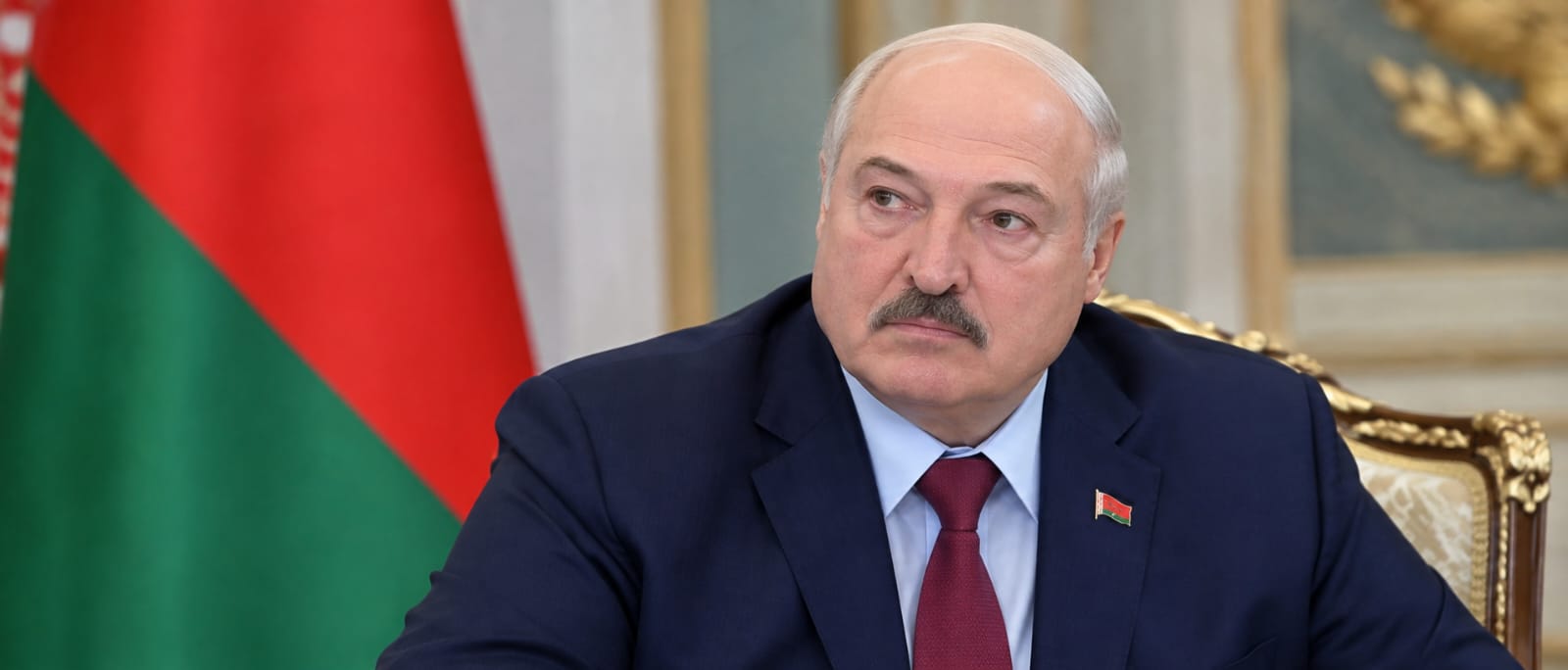
Lukashenko Questions US Motives in Iran
Speaking about Iran, Lukashenko questioned why the United States had gone to war against the country.
He described Iranians as a people with a long history who, in his view, have not traditionally submitted to foreign powers. He also referred to the 1979 U.S. Embassy hostage crisis in Tehran, saying Washington was aware of Iran’s history and past confrontation with the United States.
Lukashenko argued that past conflicts should not automatically become reasons for new wars. He compared the situation with World War II, saying that the Soviet Union lost nearly 30 million people during the conflict but did not respond by seeking another war against Germany.
Lukashenko Says Iran’s Resources Are a Factor
Lukashenko argued that the historical explanations given for the conflict do not tell the whole story.
He said, in his view, Iran’s natural wealth is an important factor behind the fighting.
His comments come amid a continuing U.S.-Iran conflict in which energy supplies and oil resources have become major issues. U.S. President Donald Trump has also publicly discussed the possibility of the United States maintaining access to Iranian oil resources, making control of energy supplies part of the broader debate surrounding the conflict.
Lukashenko characterized the situation as an ongoing battle and suggested that economic interests should be considered alongside political and security explanations.
Lukashenko Jokes About Being Called a Dictator
Lukashenko also addressed his reputation as one of Europe's longest-serving authoritarian leaders.
He said people describe him as the “last dictator” in Europe and joked that he and Russian President Vladimir Putin sometimes discuss which of them is the “bigger dictator.”
The comments were made in a lighthearted tone, but Lukashenko's government has faced continuing criticism from international organizations and Western governments over political repression and the treatment of opposition figures. Recent U.S.-Belarus negotiations have also focused on the release of political prisoners and the easing of sanctions.
Lukashenko Defends the Soviet Takeover of Western Belarus
Lukashenko also discussed the events of 1939, when Soviet forces entered eastern Poland after Nazi Germany had invaded Poland from the west.
He described the Soviet move as the Red Army “liberating” Western Belarus and Western Ukraine and argued that the territories were historically connected to Belarusian and Ukrainian populations.
Historical accounts, however, describe the September 17, 1939 Soviet military entry into eastern Poland as an invasion and occupation. The Soviet Union's actions were connected to the secret protocol of the Molotov-Ribbentrop Pact with Nazi Germany, which divided parts of Eastern Europe into German and Soviet spheres of influence.
Debate Over How Local Populations Viewed the Red Army
Lukashenko said people in western Belarus welcomed Soviet troops with flowers because they viewed them as liberators from Polish rule.
There is historical evidence that some Belarusians and Ukrainians welcomed the Soviet advance, particularly because of ethnic and political tensions under interwar Polish rule. However, the population was mixed, and historical accounts also document resistance, repression and Sovietization following the Red Army's arrival.
The description of the 1939 events therefore remains contested, with Soviet and Belarusian official narratives emphasizing reunification or liberation, while Polish and many international historical accounts describe the military action as Soviet aggression and annexation.
Lukashenko Links Belarus’s 2020 Crisis to Ukraine
Lukashenko also returned to the political crisis in Belarus following the 2020 presidential election.
He said attempts to “tear” Belarus away from Russia could have resulted in a situation similar to the conflict that later developed in Ukraine.
His comments reflect his broader argument that maintaining close political, economic and security ties with Moscow is necessary for Belarus's stability. Belarus has remained closely aligned with Russia, including through extensive military and economic cooperation.
Belarus and Russia Remain Closely Connected
Lukashenko's comments connect several historical and contemporary issues: Belarus's relationship with Russia, the legacy of the Soviet Union, the events of 1939 and the war involving Iran.
His interpretation of history differs from accounts that describe the Soviet entry into eastern Poland as an invasion. The 1939 Soviet occupation ultimately resulted in Western Belarus being incorporated into the Byelorussian Soviet Socialist Republic, while Western Ukraine was incorporated into the Ukrainian SSR.
His remarks also show how historical events continue to influence Belarusian discussions about national identity, relations with Poland and Ukraine, and the country's close relationship with Russia.
Key Points
- Lukashenko questioned why the United States is fighting Iran.
- He argued that Iran's historical resistance to foreign pressure should be considered.
- He said Iran's natural resources are an important factor behind the conflict.
- Lukashenko compared the issue with the enormous Soviet losses during World War II.
- He joked about being described as a European dictator and about his relationship with Putin.
- He described the 1939 Soviet takeover of Western Belarus and Western Ukraine as liberation.
- Historical sources describe the Soviet military entry into eastern Poland as an invasion and occupation.
- Lukashenko said Belarus could have faced a situation similar to Ukraine if it had been separated from Russia.
Source
This article is based on remarks attributed to Belarusian President Alexander Lukashenko.