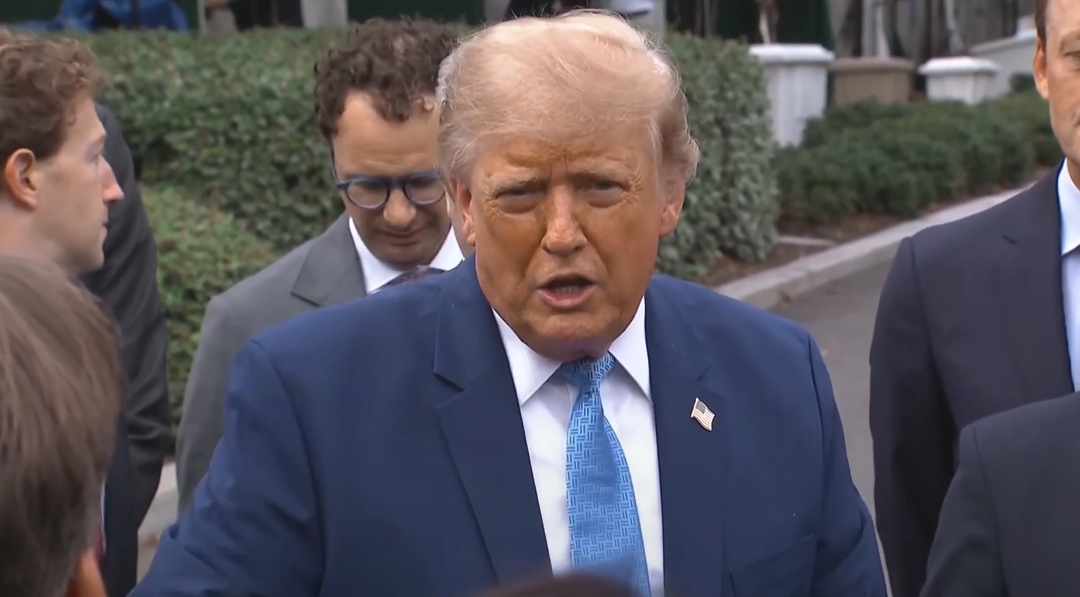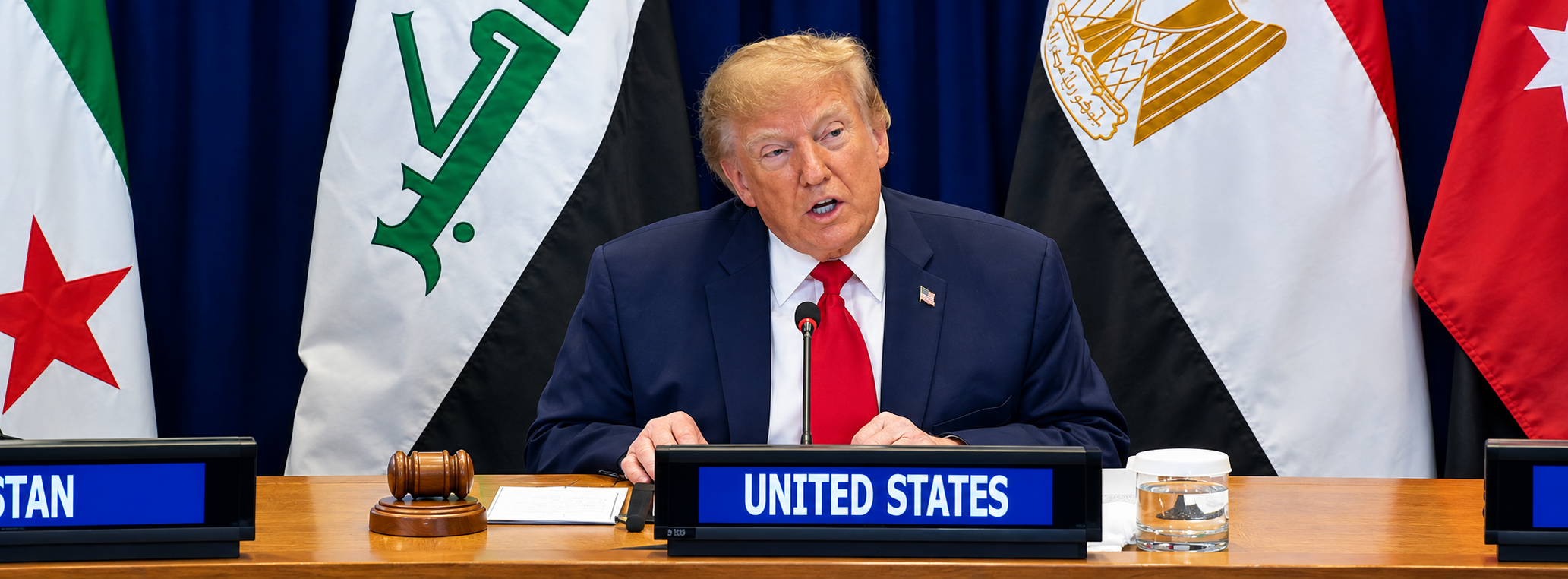
Trump Says America Is Stronger
Trump opened his remarks by presenting the United States as economically and strategically stronger. He said America was “back” and described the U.S. economy as the “envy of the world.”
He argued that the strength of the American economy was also benefiting other countries, saying global prosperity was being supported by U.S. economic strength and momentum.
Trump also presented his foreign-policy approach as one based on confronting problems rather than delaying them. He said he had acted against threats instead of allowing them to become more difficult to address.
These statements form part of Trump's broader argument that the United States should use its economic, military and diplomatic power to address international problems directly.
Trump Says Iran Must Not Have Nuclear Weapons
Iran was the central foreign-policy issue in Trump's speech. He reiterated his longstanding position that Iran must not obtain a nuclear weapon.
Trump said he had attempted negotiations with Iran after taking office and offered economic cooperation in exchange for an end to Iran's nuclear program and what he described as support for terrorism. He said Iran rejected the proposal.
Trump argued that Iran had developed ballistic missiles capable of reaching Europe and said he believed Tehran's nuclear ambitions could have allowed its government to operate behind a nuclear deterrent.
He also described Iran's leadership in highly critical terms and accused the Iranian government of repressing its own population. These claims were presented as part of his justification for the U.S. approach toward Tehran.
Trump Says Iran Is Facing Economic and Military Pressure
Trump called for countries to join the United States in imposing economic pressure on Iran until Tehran stops attacks on commercial shipping, abandons its nuclear ambitions and ends its support for militant groups.
He said Iran's behavior was a sign of weakness rather than strength.
Trump also said he was not interested in the outcome of Iran's elections when determining U.S. policy, emphasizing that his main concern was preventing Iran from obtaining a nuclear weapon.
At the same time, Trump indicated that diplomacy remained possible. He said Iranian and U.S. representatives had been communicating and suggested that another meeting was expected soon.
Later remarks from Trump indicated that he believed there was momentum toward an agreement. He said the choice facing Iran was effectively between reaching a deal and a much more severe outcome.
Strait of Hormuz and Global Energy Supplies
Trump also highlighted the Strait of Hormuz, one of the world's most important energy routes.
He said the U.S. Navy had escorted more than one billion barrels of oil through the waterway and claimed that the amount of oil moving through the strait had increased significantly since the beginning of the conflict.
Independent reporting has confirmed that U.S.-supported shipping operations have helped move substantial quantities of oil through the strait. Axios previously reported that a U.S.-led shipping corridor was moving millions of barrels per day, although volumes remained below pre-war levels.
The situation remains important for global energy markets because disruption to the Strait of Hormuz can affect oil supplies and prices worldwide.
Trump Says Ukraine War Can Be Resolved
Trump also addressed the Russia-Ukraine war, saying his administration was working closely with both Russian and Ukrainian leaders.
He said he believed the war would eventually be resolved and suggested that the process could move faster than many observers expected.
Trump also said both Russian President Vladimir Putin and Ukrainian President Volodymyr Zelenskyy wanted the fighting to end, emphasizing the number of people being killed in the conflict.
When asked whether he still believed Ukraine could regain all of its territory, as he had previously suggested, Trump did not give a direct answer. Instead, he said he expected the two sides to make a deal but declined to describe its possible terms.
Trump Discusses Ukraine's Strikes on Russia
Trump acknowledged that Ukrainian strikes against Russian refining capacity had caused significant damage to Russia.
He also pointed to a consequence for energy markets, saying the attacks had contributed to higher diesel prices.
Trump separately described Ukrainian forces as highly capable fighters and praised the country's leadership.
His remarks came as Washington continued to discuss possible measures to end the Russia-Ukraine war and limit attacks on energy infrastructure.
Trump Says Gaza War Has Ended
Trump said his administration had ended the war in Gaza and credited the development with saving thousands of lives.
The Gaza conflict remains a major issue at the UN General Assembly, where the Trump administration has been seeking progress on a broader peace arrangement involving Israel and Hamas. CBS reported that Trump was also seeking to advance a Gaza peace plan during his UN visit.
Trump's characterization of the conflict and the number of lives saved reflects his administration's assessment of its diplomatic efforts.
Trump Defends U.S. Actions in Venezuela
Venezuela was another major subject in Trump's remarks.
Trump described U.S. actions in Venezuela as evidence that Washington would not allow threats to establish a foothold in the Western Hemisphere. He said the United States would use its military power when necessary to protect what he described as vital American interests.
Trump also discussed Venezuela's oil resources and described the country's relationship with the United States as potentially one of the largest economic deals.
He further said Venezuelan military equipment supplied by other countries had failed to protect the country during U.S. operations.
These comments came after major changes in U.S.-Venezuela relations and Washington's military intervention against the government of Nicolás Maduro. Recent reporting has described Trump's administration as working with Venezuela's interim authorities while pursuing a broader security and energy strategy.
Trump Targets Drug Cartels
Trump compared drug cartels operating in the Western Hemisphere to ISIS and said his administration would treat them as major security threats.
He said cartels should be killed, expelled or detained as enemy combatants, describing them as organizations that threaten American security.
Trump also criticized the security situation along the U.S.-Mexico border and said Mexico should regain control over areas he described as being controlled by cartels.
His comments reflect his administration's broader emphasis on combating drug trafficking and organized crime as national-security issues.
Trump Says Cuba's Communist Government Is Under Pressure
Trump said his administration was seeking fundamental political change in Cuba.
He described Cuba's communist government as being under greater pressure than at any previous point and predicted that the system would eventually fall.
Trump said Secretary of State Marco Rubio was deeply involved in negotiations with Cuba.
He also said the United States would not permit Cuba to become a base for foreign adversaries that could threaten the United States.
Trump Announces Expanded U.S. Security Presence in Greenland
Greenland was another major issue discussed by Trump.
He said no U.S. adversary should be allowed to establish a military presence or make sensitive investments in Greenland without U.S. approval. He also announced plans for a larger American military presence on the island.
On September 22, Trump signed a trilateral security agreement with Denmark and Greenland. The agreement allows an expanded U.S. military presence while Greenland remains under Danish sovereignty. It includes upgrades to the existing U.S. base and plans for additional defense facilities.
The agreement marks a shift from Trump's earlier push to acquire Greenland as U.S. territory toward expanded defense cooperation with Denmark and Greenland.
Trump Calls for Greater NATO Military Access
Trump also questioned the value of NATO arrangements if the United States cannot use allied bases during a military contingency.
His comments reflect his administration's emphasis on greater burden-sharing and access to military infrastructure among NATO members.
The issue has become particularly important as the United States expands its military operations in the Middle East and seeks greater cooperation from European allies.
Trump Criticizes the International Criminal Court
Trump strongly criticized the International Criminal Court, saying the United States should not allow American service members to be investigated or prosecuted by an institution he considers to have no jurisdiction over the United States.
He called on countries belonging to the ICC to withdraw.
The remarks reflect longstanding U.S. objections to the court's jurisdiction over nationals of countries that are not parties to the Rome Statute, although the ICC maintains that it can exercise jurisdiction in certain circumstances.
Trump Discusses Britain and European Relations
Trump also spoke positively about Britain and British Prime Minister Andy Burnham.
He said he believed Burnham would be a great prime minister and said the United States was “with” Britain.
Trump also said relations between Washington and London were improving, rejecting the suggestion that they were currently at a low point.
He praised British patriotism and said he wanted positive developments for the country.
Trump on Turkey and Regional Leaders
Trump referred to Turkish President Recep Tayyip Erdoğan as a friend and described him as a tough leader.
He also praised Middle Eastern leaders as highly capable, while joking that their energy could sometimes be excessive.
Trump's comments reflected his emphasis on maintaining relationships with regional leaders while the United States deals with conflicts involving Iran, Yemen and the wider Middle East.
Trump Says U.S.-Iran Deal Remains Possible
Despite his warnings toward Iran, Trump repeatedly indicated that diplomacy remained an option.
He said U.S. representatives Steve Witkoff and Jared Kushner had held a productive meeting with Iranian mediators and that he was hearing there was momentum toward a deal.
Trump later said another meeting was scheduled soon and expressed hope that Iran would act quickly.
He warned that there could eventually be a point at which diplomatic opportunities disappear, but he also said Iran could become a “great country” if an agreement were reached.
The mixed message — combining the possibility of negotiations with warnings of severe consequences — was a recurring theme in Trump's comments on Iran.
Key Points
- Trump presented the U.S. economy and military as stronger under his administration.
- He reiterated that Iran must not obtain a nuclear weapon.
- Trump said negotiations with Iran remain possible.
- He said U.S. forces have helped move more than one billion barrels of oil through the Strait of Hormuz.
- Trump said the Russia-Ukraine war will eventually be resolved.
- He declined to describe the possible terms of a Ukraine peace agreement.
- Trump said his administration had ended the Gaza war.
- He defended U.S. actions and security policy toward Venezuela.
- Trump called drug cartels a major security threat.
- He said the Cuban government is under significant pressure.
- The U.S., Denmark and Greenland signed an Arctic security agreement expanding U.S. military cooperation in Greenland.
- Trump criticized the International Criminal Court and called on member states to leave it.
- He said U.S.-UK relations were improving.
- Trump said U.S.-Iran talks could still produce an agreement.
Source and Attribution
This article is based primarily on President Donald Trump's remarks during his address to the 81st United Nations General Assembly and subsequent comments to reporters and foreign leaders. Current developments surrounding the UN visit, Iran, Ukraine and Greenland were cross-checked against reporting from Fyrim, Associated Press and other news organizations.