
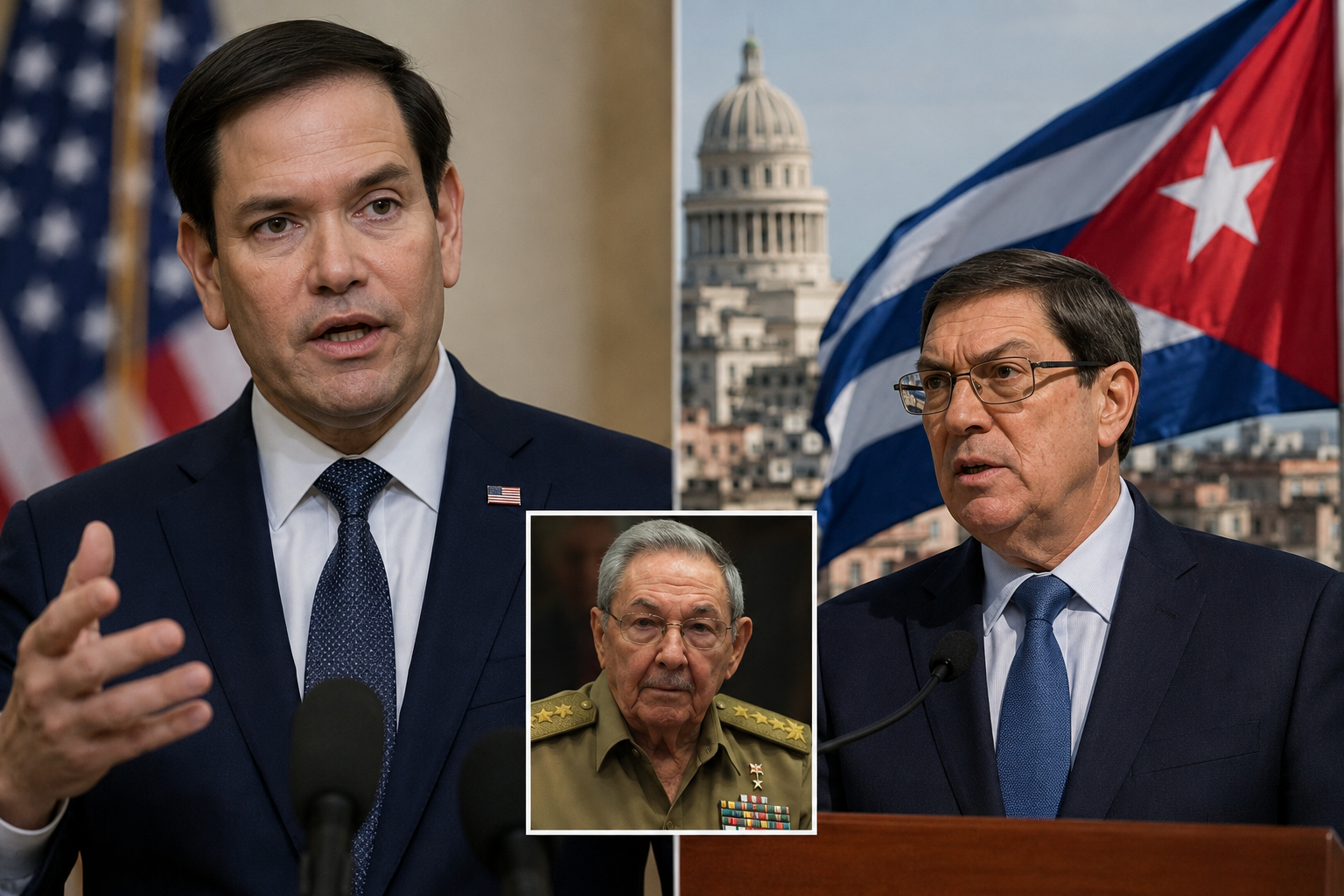
US Secretary of State Marco Rubio has said that Cuba remains a serious national security threat to the United States and warned that chances for peaceful talks between the two countries are low.
Rubio made the comments one day after US authorities charged former Cuban leader Raúl Castro with murder over the 1996 shooting down of two planes that killed several US citizens.
Speaking to reporters, Rubio said the United States still prefers a diplomatic solution with Cuba, but admitted he does not believe an agreement is likely because of the current Cuban government. He also accused Cuba of supporting terrorism in the region.
Cuba quickly rejected the accusations. Cuban Foreign Minister Bruno Rodríguez called Rubio’s statements “lies” and insisted that Cuba has never threatened the United States.
Rodríguez also accused the US government of trying to create tensions and encourage military aggression against Cuba. He said Washington has been attacking Cuba politically and economically for years.
The situation comes as Cuba faces a major economic crisis, with fuel shortages, blackouts, and food supply problems affecting daily life across the island. Cuban officials blame many of the country’s problems on US sanctions and restrictions.
Rubio said the United States had offered $100 million in humanitarian aid to Cuba. However, tensions between the two countries continue to grow under President Donald Trump, who has increased pressure on Cuba’s communist government.
Trump has openly spoken about wanting political change in Cuba and has demanded economic reforms. US officials have also raised concerns about the presence of Russian and Chinese intelligence operations on the island.
Meanwhile, the indictment against Raúl Castro has attracted international attention. When reporters asked Rubio how the US planned to bring Castro to America for trial, he refused to discuss possible actions publicly.
The US also announced the arrest of Adys Lastres Morera, the sister of a senior Cuban military-linked business official. Rubio claimed she was helping Cuba’s government while living in Florida. She is now facing deportation proceedings.
President Trump later described Cuba as a “failed country” but said his administration wanted to help the Cuban people on a humanitarian level. He added that many Cuban-Americans hope to see positive change in their homeland.
The growing conflict between Washington and Havana has raised fears of deeper political tensions between the two longtime rivals.
Summary
US Secretary of State Marco Rubio says Cuba is a national security threat to the United States, while Cuban officials strongly deny the claims and accuse Washington of spreading lies and increasing tensions.
Content
×
![]()