
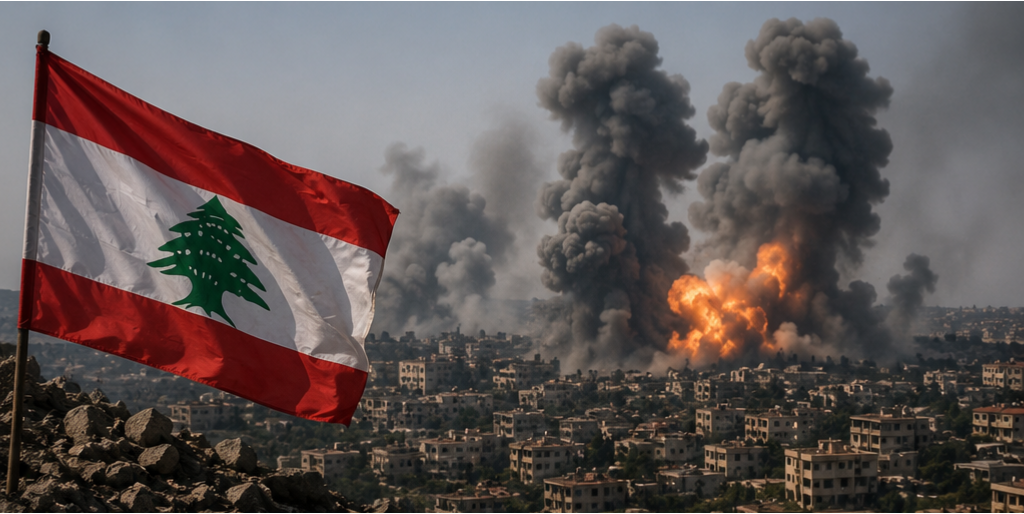
Hezbollah has strongly rejected a new ceasefire agreement reached between Israel and Lebanon with support from the United States. The Iran-backed group said the deal does not protect Lebanon's interests and instead helps Israel achieve its military goals.
The ceasefire plan was announced after several rounds of talks in Washington involving US, Israeli, and Lebanese officials. Under the agreement, special security zones would be established in southern Lebanon. Hezbollah fighters would not be allowed to operate in these areas, and the Lebanese Armed Forces would take control.
However, Hezbollah leader Naim Qassem said the negotiations were unsuccessful and humiliating for Lebanon. He argued that the agreement was unfair because it only required Hezbollah to stop its military activities while Israel would continue benefiting from the arrangement.
In a public statement, Qassem described the proposed ceasefire as a form of surrender rather than a peace agreement. He said many Lebanese people also oppose the deal and believe it does not address the country's concerns.
The reaction in parts of Beirut, especially in Hezbollah's stronghold in the southern suburbs, was also negative. Many residents expressed doubts about whether the agreement could bring peace.
One shop owner said a ceasefire cannot work if only one side follows the rules. He pointed out that Israeli strikes were still taking place in Lebanon and questioned how this could be considered a true truce.
Another resident said generations of Lebanese people have experienced conflict and disappointment. He added that many people no longer trust promises of peace because previous agreements have failed to stop violence.
According to the deal, Hezbollah fighters would leave the area between the Israeli border and the Litani River, which lies about 30 kilometers north of the border. The United States would help supervise the creation of security zones controlled only by the Lebanese military.
The agreement did not provide detailed maps or explain exactly how these zones would operate. Because of this, many questions remain unanswered about how the plan would be implemented.
The new proposal followed a partial ceasefire announced earlier in the week. Under that arrangement, Israel agreed not to strike Beirut while Hezbollah would stop attacks on Israeli territory. However, fighting has continued in several areas, showing how fragile the situation remains.
Lebanese President Joseph Aoun said the ceasefire could be put into effect quickly if all parties approved it. However, Hezbollah's rejection has made implementation much more difficult.
Israel has also indicated that military operations will continue for now. Israeli Defence Minister Israel Katz said the army would keep targeting what it calls terrorist infrastructure in southern Lebanon.
On Thursday, Lebanese media reported several Israeli air strikes across southern Lebanon. Officials said people were killed in attacks in the Bekaa Valley and near the coastal city of Tyre.
The United Nations peacekeeping mission in Lebanon, known as UNIFIL, also reported a casualty. A Serbian peacekeeper died after mortar shells hit a UN position near Marjayoun. Israel blamed Hezbollah for the attack, although the group had not commented on the accusation.
Meanwhile, Hezbollah said it had carried out attacks against Israeli troops and military vehicles using rockets and drones. This demonstrates that active fighting is continuing despite diplomatic efforts.
The conflict has caused significant suffering on both sides of the border. Lebanese authorities say thousands of people have been killed since the war began, while more than one million people have been displaced from their homes.
Israel says dozens of soldiers and civilians have also died during the fighting. Communities in northern Israel have faced repeated rocket and drone attacks, while southern Lebanon has experienced extensive air strikes and military operations.
The United States continues to push for a broader peace agreement between Israel and Lebanon. Representatives from both countries are expected to meet again later this month for further discussions.
Despite these diplomatic efforts, Hezbollah's rejection of the deal highlights the challenges facing negotiators. Without the participation of one of Lebanon's most powerful armed groups, achieving a lasting ceasefire may prove difficult.
For now, the future of the agreement remains uncertain, and many people in both Lebanon and Israel continue to hope that a more comprehensive peace deal can eventually end the violence.
Summary
Hezbollah has rejected a new US-backed ceasefire agreement between Israel and Lebanon, calling it a surrender to Israel. The deal would create security zones in southern Lebanon where Hezbollah fighters would not be allowed. While Israel and Lebanon agreed to the plan, Hezbollah says it was not involved in the negotiations and will not accept the terms. Fighting continues in southern Lebanon despite efforts to reach a lasting peace.
Content

×
![]()