
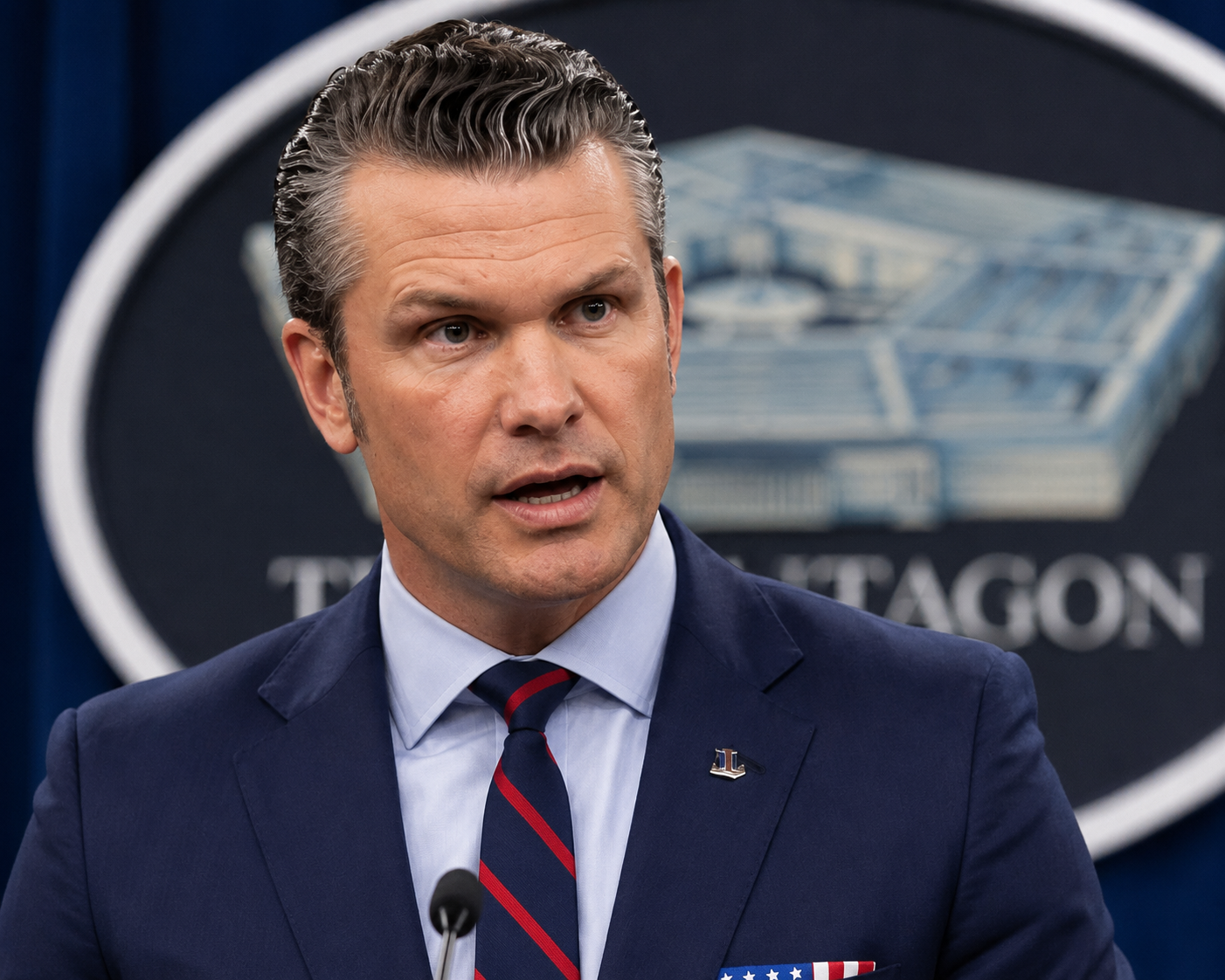
US Defense Secretary Pete Hegseth has sparked controversy after criticizing European migration policies during a speech at a D-Day anniversary event in Normandy, France. Speaking at a ceremony that honored the soldiers who fought during World War II, Hegseth said that many European countries are facing serious migration challenges and need to take stronger action to protect their borders.
The speech took place during commemorations marking 82 years since the D-Day landings. D-Day, which occurred on June 6, 1944, was one of the most important military operations of World War II. Thousands of Allied soldiers from the United States, the United Kingdom, Canada, and other countries landed on the beaches of Normandy to help liberate Europe from Nazi occupation.
While remembering the sacrifices made during the war, Hegseth shifted his focus to current issues facing Europe. He argued that some European countries are now dealing with a different kind of challenge. According to him, beaches in countries such as Spain, Italy, Greece, and Bulgaria are seeing large numbers of migrants arriving by boat.
Hegseth described the situation as an “invasion” and questioned when European governments would take stronger measures to stop illegal migration. He said that many European leaders have become too comfortable and have forgotten that freedom and security require constant protection.
According to Hegseth, the soldiers who fought during D-Day risked their lives to secure freedom for future generations. He argued that today's leaders have a responsibility to protect that freedom by addressing issues they believe could threaten stability and security.
His comments reflect a broader position taken by the Trump administration, which has made immigration and border security major priorities. Since returning to office, President Donald Trump and members of his administration have repeatedly expressed concerns about migration in both the United States and Europe.
The speech came shortly after comments made by US Vice President JD Vance, who also criticized migration policies in Europe. Vance recently linked migration to concerns about crime and social tensions, arguing that governments need to take stronger action to control borders and reduce illegal immigration.
However, these views have faced criticism from some European and British officials. Critics argue that migration is a complex issue and that many migrants are fleeing war, poverty, political instability, or persecution in their home countries. They say governments must balance border security with humanitarian responsibilities.
European countries have been dealing with migration challenges for many years. The issue gained worldwide attention during the migrant crisis of 2015, when more than one million people crossed the Mediterranean Sea into Europe. Many were escaping conflicts in countries such as Syria, Afghanistan, and Iraq.
The arrival of large numbers of migrants placed significant pressure on some European countries. Governments struggled to provide housing, healthcare, education, and employment opportunities for new arrivals. The crisis also led to political disagreements within the European Union about how responsibility for migrants should be shared.
Since then, European countries have introduced various measures to strengthen border controls and reduce irregular migration. Some nations have increased patrols at sea, signed agreements with neighboring countries, and tightened asylum rules.
Despite these efforts, migration remains one of the most debated political issues across Europe. Supporters of stricter immigration controls argue that governments must protect national borders, maintain public safety, and manage migration in an orderly way. They believe uncontrolled migration can put pressure on public services and create social tensions.
On the other hand, human rights organizations and migration advocates argue that many migrants are vulnerable people seeking safety and better opportunities. They stress that international laws require countries to protect refugees and asylum seekers. These groups often call for more legal pathways for migration and stronger support for people fleeing conflict and persecution.
Migration has also become an important issue in elections across Europe. Political parties that support tougher immigration policies have gained support in several countries. Many voters have expressed concerns about border security, integration, and the economic impact of migration.
At the same time, others argue that migration can provide benefits. Some European countries face aging populations and labor shortages, and migrants can help fill jobs in sectors such as healthcare, agriculture, construction, and technology.
The debate has become increasingly polarized, with strong opinions on both sides. While some leaders call for stricter border controls, others emphasize international cooperation and humanitarian assistance.
Hegseth’s remarks are likely to add to these ongoing discussions. Supporters of his comments may view them as a warning about the need for stronger migration policies. Critics, however, may argue that comparing migration to an invasion oversimplifies a complex issue and risks increasing divisions.
The D-Day anniversary itself is usually focused on remembering the bravery and sacrifice of the Allied forces who fought during World War II. For many people, the event serves as a reminder of the importance of freedom, democracy, and international cooperation.
However, Hegseth’s speech shows how historical events are sometimes connected to modern political debates. By linking the sacrifices of D-Day soldiers to current concerns about migration, he brought attention to one of the most important and controversial issues facing Europe today.
As migration continues to shape politics across the continent, discussions about border security, humanitarian responsibilities, and national identity are expected to remain at the center of public debate. Hegseth’s comments have once again highlighted the differences in opinion over how governments should respond to migration and what steps should be taken in the years ahead.
Summary
US Defense Secretary Pete Hegseth used a speech marking the anniversary of D-Day in Normandy, France, to criticize European countries over migration. He said some European nations are facing an “invasion” of migrants arriving by sea and urged leaders to take stronger action. His comments have sparked debate about immigration, border security, and Europe’s response to migration challenges.
Content

×
![]()