
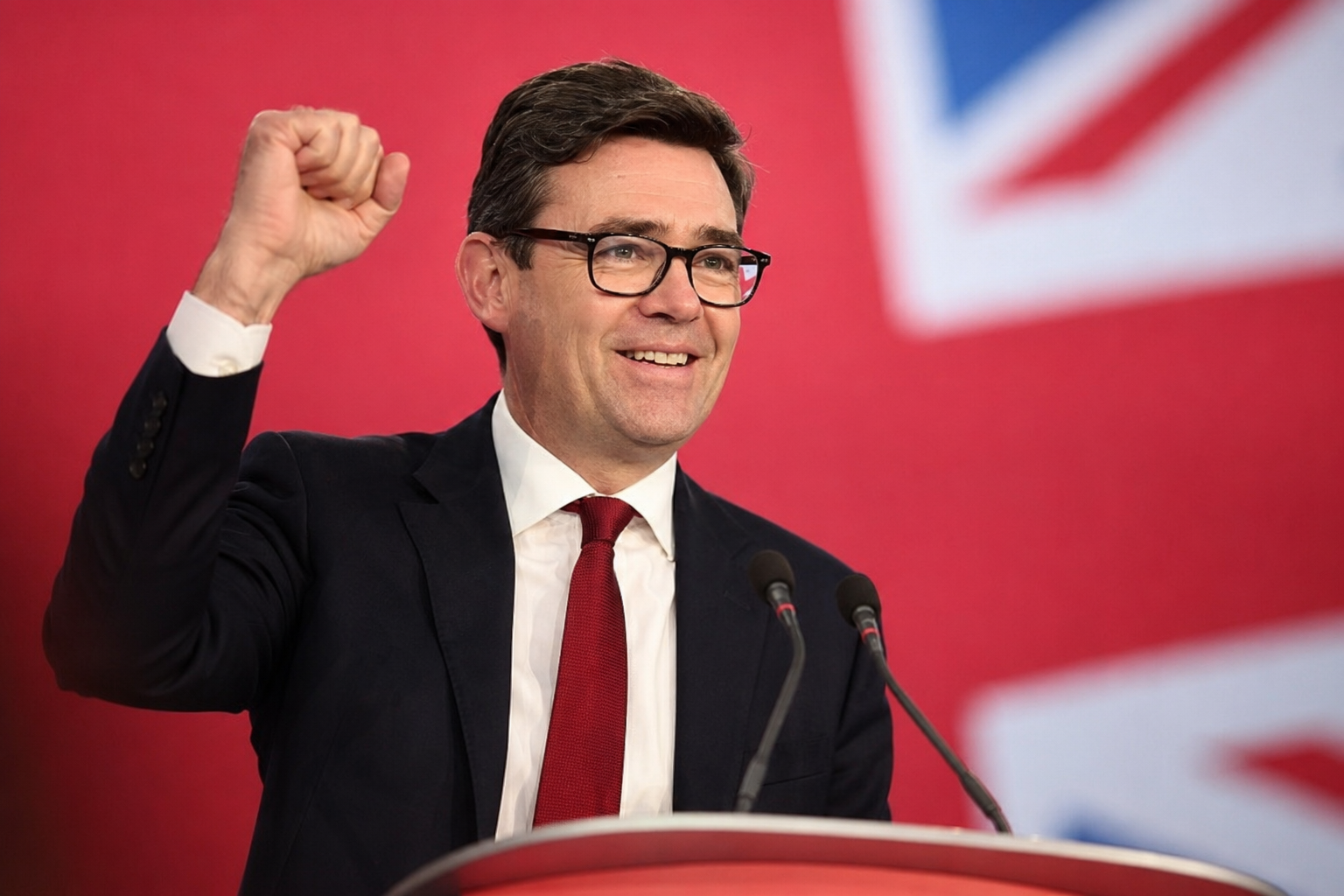
Andy Burnham has secured a convincing victory in the Makerfield by-election, winning 55% of the vote and becoming the new Member of Parliament (MP) for the constituency. The result has not only strengthened Burnham's political position but has also increased pressure on Prime Minister Keir Starmer, whose leadership is now facing renewed questions.
Burnham, who previously served as Mayor of Greater Manchester, won 24,927 votes. Reform UK's candidate, Robert Kenyon, finished second with 15,696 votes. The large winning margin of more than 9,000 votes surprised many political observers and immediately triggered discussions about the future direction of the Labour Party.
The Makerfield by-election attracted significant national attention because Burnham had already hinted that he could seek the Labour leadership if the opportunity arose. His victory is being viewed by many supporters as proof that he remains one of Labour's most popular politicians.
During his victory speech, Burnham said that many people believe politics is not working and suggested that the result could represent a turning point for the country. He also warned that Labour may be facing its "final chance to change," comments that many interpreted as a message to the party leadership.
Political analysts noted that Burnham's result was especially impressive because governing parties usually lose support in by-elections. Instead, Labour increased its vote share by 10 percentage points compared with the previous general election. This strong performance has encouraged those within Labour who believe the party needs a different leader to compete effectively against Reform UK.
Several Labour politicians reacted quickly to the result. Southport MP Patrick Hurley said Labour needed a "transition to something new." York MP Rachael Maskell argued that a leadership contest should happen soon and said Burnham was the best person to lead the party. Former government ministers and senior Labour figures also congratulated Burnham on his victory.
At the same time, Prime Minister Keir Starmer publicly congratulated Burnham, describing the result as a victory for hope and optimism. However, Starmer's allies insist that he has no intention of stepping down despite growing pressure from some sections of the party.
For Burnham to officially challenge Starmer for the Labour leadership, he would need the support of 20% of Labour MPs. Based on the current size of the parliamentary party, that would require the backing of 81 MPs. If a leadership contest takes place, Labour members and affiliated supporters would vote to choose the party's next leader.
Political commentators say the next few weeks could be crucial. If more Labour MPs openly support Burnham, pressure on Starmer could increase significantly. On the other hand, if Starmer maintains support among most MPs, he could survive the challenge and remain party leader.
The by-election also highlighted wider political trends. Reform UK improved its vote share slightly and once again demonstrated its ability to attract support in traditional Labour areas. Although Reform finished second, party leaders argued that many voters are increasingly dissatisfied with the current government.
Meanwhile, another major result came from Scotland, where the Conservatives won the Aberdeen South by-election. Conservative candidate Douglas Lumsden secured a comfortable victory, giving the party a rare boost after a difficult period. The Scottish National Party (SNP) managed to retain the seat of Arbroath and Broughty Ferry, preventing a complete Conservative sweep of the night's contests.
The Makerfield result has also created another political battle. Since Burnham is moving from his role as Mayor of Greater Manchester to Parliament, a new mayoral election will now be held. Both Labour and Reform UK are expected to compete strongly for the position.
Many political experts believe Burnham's success was based on his personal popularity. Polling during the campaign suggested Labour might have struggled to win the seat with a different candidate. Burnham managed to keep most Labour voters while also attracting support from people who had previously backed other parties, including some former Conservative, Liberal Democrat, and Green voters.
For now, Burnham has not officially launched a leadership challenge. However, his victory has dramatically changed the political conversation within Labour. What began as a local by-election has quickly become a national story about the future of the governing party and the future of Prime Minister Keir Starmer.
With Labour divided over its direction and Burnham's supporters increasingly confident, the coming days could prove decisive. Whether Starmer remains leader or faces a formal challenge, the Makerfield by-election has become one of the most significant political events of the year and may shape British politics for months to come.
Politics
Andy Burnham Wins Makerfield By-Election, Increasing Pressure on Prime Minister Keir Starmer
Summary
Andy Burnham has won the Makerfield by-election with a strong 55% of the vote, defeating Reform UK by more than 9,000 votes. His victory has sparked fresh debate about the future leadership of the Labour Party and increased pressure on Prime Minister Keir Starmer. Several Labour politicians have suggested that Burnham could be the person to lead the party in the future, while Starmer insists he will remain in office. The result has become one of the biggest political stories in the UK and could lead to major changes within Labour in the coming weeks.
Content

×
![]()