
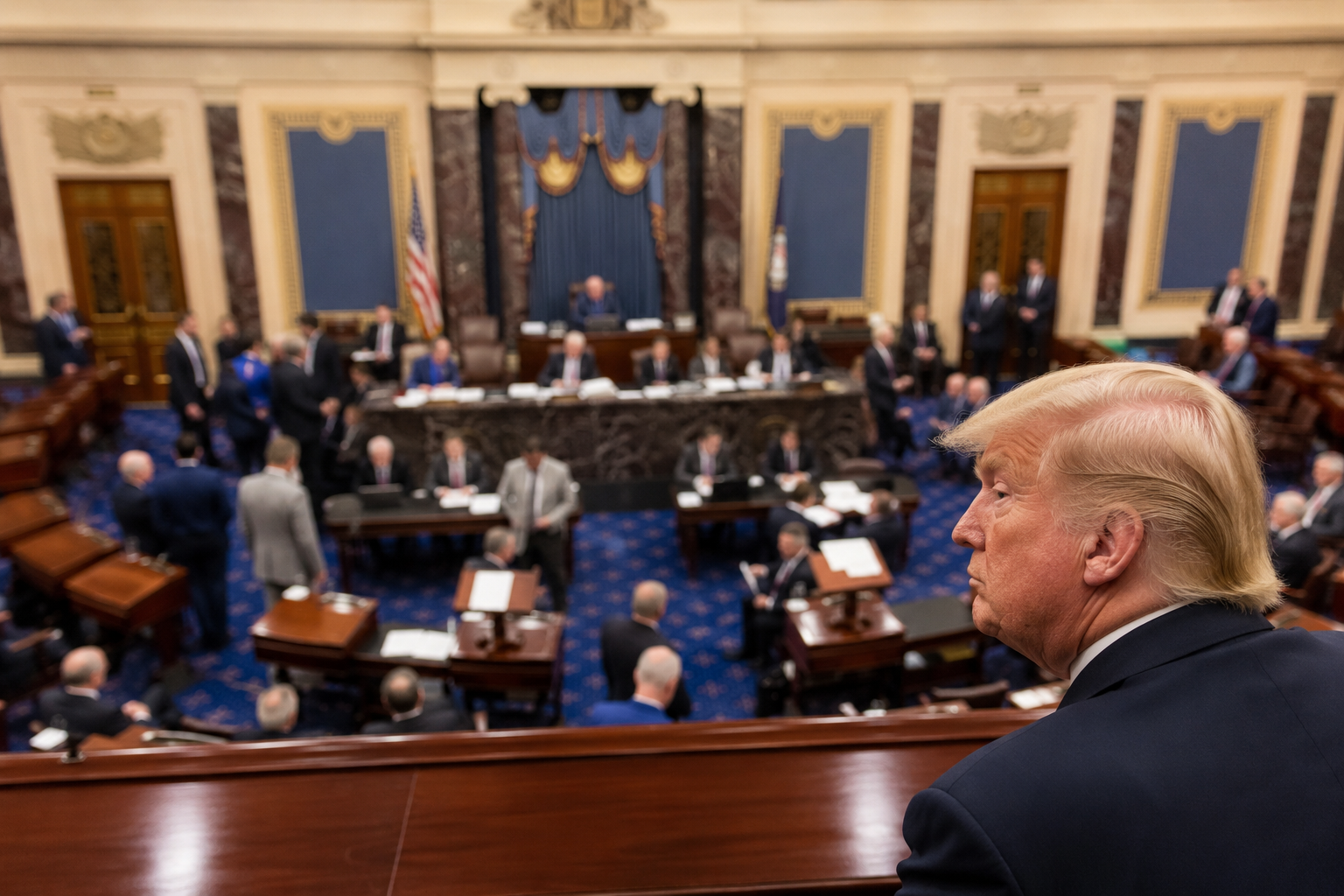
The United States Congress has passed a measure that criticizes President Donald Trump's handling of the war with Iran and calls for an end to military action unless Congress gives its approval.
The measure was approved by the Republican-controlled Senate in a close 50-48 vote. Several Republican senators joined Democrats in supporting the resolution, showing that concerns about the war exist in both major political parties. Earlier in June, the House of Representatives also approved the same measure with support from both Democrats and a small number of Republicans.
The resolution instructs President Trump to stop military operations against Iran or seek authorization from Congress before continuing. However, the measure is mostly symbolic because it does not have the force of law. Unlike normal legislation, it will not be sent to the president for approval or veto.
Even though it is symbolic, the vote is historically important. It is the first time since the War Powers Resolution of 1973 that both chambers of Congress have approved a resolution directing a president to end a military action. The War Powers Resolution was created to limit a president's ability to wage war without congressional approval and to ensure that Congress has a role in major military decisions.
The vote reflects growing concern in Washington about the impact of the conflict with Iran. Many lawmakers have expressed worries about the financial cost of the war, the risk of further escalation, and the effect on American families. Rising petrol prices have become a major issue, and public support for the conflict has reportedly declined in recent months.
A White House official dismissed the significance of the resolution, arguing that the United States is already operating under a ceasefire agreement reached with Iran on 7 April. According to the administration, there are currently no active hostilities requiring American forces to withdraw. The official also noted that two Republican senators who might have voted against the measure were absent during the vote.
Four Republican senators supported the resolution alongside Democrats. They argued that Congress should have a stronger voice in decisions involving war and military action. On the other side, Democratic Senator John Fetterman was the only member of his party to vote against the measure.
The vote highlights divisions within the Republican Party as it prepares for the upcoming midterm elections. The elections will determine whether Republicans can maintain control of Congress. In recent months, some Republican lawmakers have shown a willingness to challenge President Trump on important issues, including government spending and foreign policy.
The Senate vote was also notable because it was the tenth war powers vote forced by Democrats since the conflict began. Democratic lawmakers have repeatedly argued that Congress must play a larger role in decisions involving military action and national security.
At the same time, the Pentagon has requested approximately $80 billion from Congress, with most of the funding intended to support military operations connected to the Iran conflict. The large funding request has increased debate about the future of American involvement in the region.
Under federal law, military actions generally require congressional approval if they continue for more than 60 days. The US-Israel strikes on Iran began on 28 February. However, the Trump administration argues that the April ceasefire effectively restarted the legal timeline, giving the administration additional authority to continue certain operations if necessary.
The White House also has the option to extend military action for an additional 30 days if national security concerns are involved. This legal debate remains one of the central issues in the ongoing disagreement between Congress and the administration.
Despite these political disputes, there have been recent diplomatic efforts to reduce tensions. The United States and Iran are currently observing a ceasefire and working toward a broader agreement. Last week, leaders from both countries signed a memorandum of understanding aimed at preventing future conflict.
The agreement gives Washington and Tehran 60 days to negotiate a more comprehensive deal, particularly concerning Iran's nuclear program. Supporters hope that successful negotiations could lead to a lasting reduction in tensions and prevent further military confrontation.
For now, the congressional resolution serves as a powerful political message rather than a legal requirement. It demonstrates that many lawmakers from both parties want greater oversight of military decisions and are looking for a diplomatic path forward. Whether the vote will influence future US policy toward Iran remains uncertain, but it has clearly added pressure on the administration to focus on negotiations and avoid a return to war.
Summary
The US Congress has passed a measure telling President Donald Trump to stop military action against Iran unless he receives approval from Congress. The vote is seen as a rare bipartisan criticism of the war. Although the measure does not have the force of law, it increases pressure on the White House to end the conflict and work toward a lasting peace agreement with Iran.
Content


×
![]()