
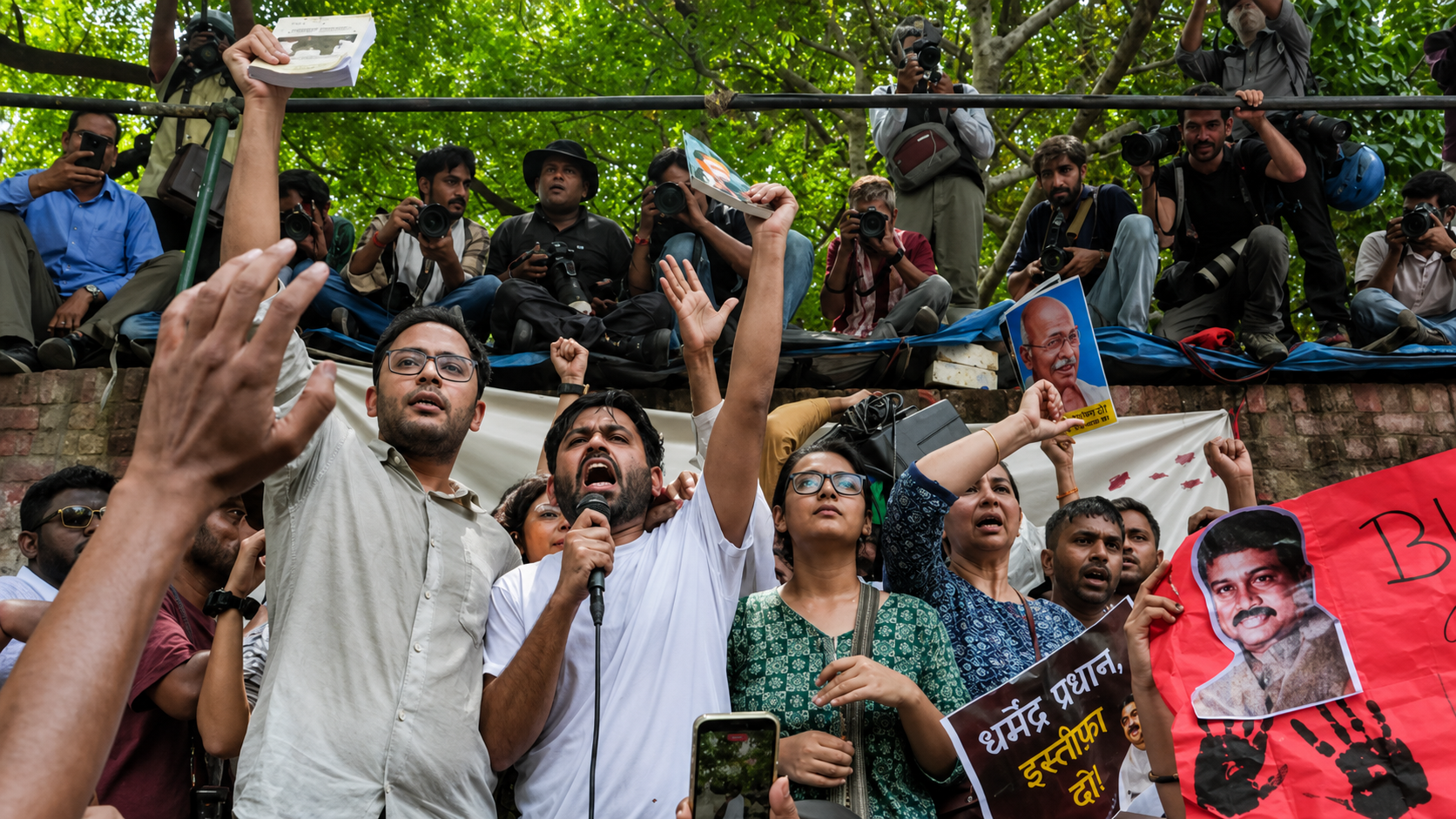
India's youth-led protest movement, known as the Cockroach Janta Party (CJP), has entered a new phase after Education Minister Dharmendra Pradhan resigned from his post. The resignation came after weeks of demonstrations led by students and young people demanding education reforms and accountability over exam paper leaks that affected millions of students across the country.
The protests took place mainly at Jantar Mantar in New Delhi, where thousands of students gathered to demand changes to India's education system. The movement quickly gained attention across the country, with many young people joining in support.
After the minister stepped down, the CJP announced that it was ending its protest camp. However, its leaders made it clear that this does not mean the movement is over. Speaking to supporters, CJP founder Abhijeet Dipke said the group would return and continue working for the rights of young people.
The resignation of the education minister is being seen by many political observers as a significant setback for Prime Minister Narendra Modi's government. Many analysts believe the protests showed that young people can influence national politics when they organize around a common cause.
The protesters had several key demands. Their biggest demand was the resignation of the education minister, which has now been achieved. They also asked for financial compensation for the families of students who died by suicide after exam paper leaks and repeated exam cancellations caused stress and uncertainty. According to the government, compensation will be provided within the limits of existing rules.
The CJP also demanded that no criminal cases be filed against protesters who took part in the demonstrations. Government representatives said that criminal cases against protesters in states governed by the ruling Bharatiya Janata Party (BJP) would be withdrawn and that no new cases would be pursued.
However, reports suggest that arrests have continued in some parts of India. Several people were reportedly detained in different states while trying to hold protests in support of the movement. This has raised concerns among activists, who believe that all peaceful protesters should be treated fairly.
Another important demand from the protesters was a public apology from the police and security forces for the violence that occurred during demonstrations on July 20. During that protest, many students were injured after police used force to stop crowds marching toward Parliament. Protest leaders say they are still seeking accountability for those events and may continue legal action against officials involved.
Now that the protest camp has ended, many people are asking what the Cockroach movement will do next. According to CJP leaders, they are taking time to rest and discuss their future plans. They say the movement will not only focus on education but will also work on other issues affecting ordinary people.
CJP spokesperson Vaishnavi Gaur said the group wants to meet citizens, students, and civil society organizations across India to better understand the country's biggest problems. The movement hopes to organize public meetings and discussions where people can share their concerns and suggest solutions.
The CJP has not yet decided whether it will become a political party. Its leaders say they want to grow slowly instead of rushing into electoral politics. Since the movement is only a few months old, they believe more planning and organization are needed before making such a major decision.
Political experts believe the future of the movement is still uncertain. Some analysts say the CJP has successfully united many young people but has not yet presented a detailed long-term roadmap. Others believe the movement has the potential to become an important voice for students and young voters if it remains organized.
India's opposition parties have welcomed the resignation of the education minister. Congress leader Rahul Gandhi praised the students for standing up for their rights and called for accountability over the police response to the protests. He urged the government to take action against those responsible for using force against demonstrators.
Other opposition leaders also described the resignation as a victory for India's younger generation. They said the protests highlighted the need for a fair and transparent education system where examination papers are secure and students can trust the process.
Many opposition politicians also demanded better job opportunities for young people, arguing that education reforms should be followed by policies that create employment and improve career prospects.
Although the protest camp has ended, the issues that brought students to the streets remain important for many families across India. Exam paper leaks, delayed examinations, and concerns about fairness continue to affect millions of students each year.
The Cockroach movement has shown how social media, youth participation, and peaceful public demonstrations can bring national attention to important issues. Whether the movement becomes a political force or remains a public campaign, its leaders say they will continue speaking for students and young people.
For now, the resignation of the education minister marks a major achievement for the protesters. But according to the CJP, this is only the beginning of a broader effort to push for reforms, accountability, and better opportunities for India's youth in the years ahead.
Summary
India's youth-led Cockroach Janta Party (CJP) has ended its weeks-long protests after Education Minister Dharmendra Pradhan resigned. The movement called the resignation a major victory but says its campaign is not over. Protest leaders now plan to expand their focus beyond education and continue raising issues affecting young people across the country.
Content

×
![]()