
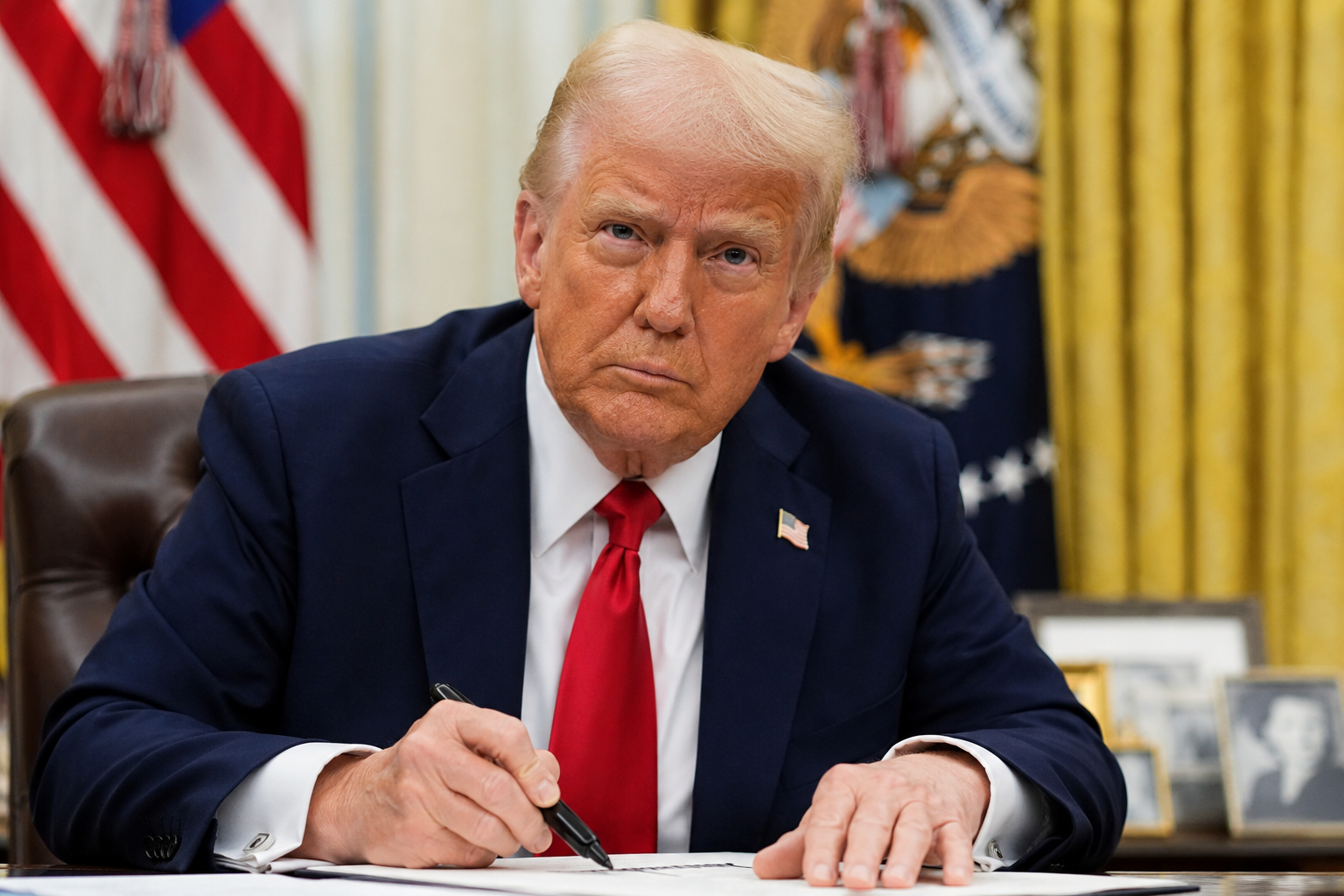
US President Donald Trump has signed two new executive orders as part of his effort to reduce birthright citizenship in the United States. These actions come only weeks after the US Supreme Court rejected his earlier attempt to end automatic citizenship for many babies born in the country.
Birthright citizenship is a long-standing rule in the United States. Under the 14th Amendment of the US Constitution, almost every child born on American soil automatically becomes a US citizen, regardless of their parents' nationality or immigration status. This policy has been in place for more than 150 years.
Trump's new executive orders take a different approach after his previous attempt was blocked by the courts. Instead of trying to completely end birthright citizenship, the new orders focus on certain groups of non-citizens and on people who travel to the United States mainly to have a baby.
The first executive order expands the list of people whose children would not automatically receive US citizenship. According to the order, this could apply when both parents are not US citizens and one parent belongs to specific categories. These include members of foreign terrorist groups, employees of foreign governments, people who tried to gain US citizenship through fraud, or people living in certain US territories where citizenship is not automatically granted under federal law.
Trump said these measures are necessary to protect the United States from people who misuse the country's immigration system. While signing the orders in the Oval Office, he said the changes should have been made years ago and that his administration is now taking action.
The second executive order focuses on birth tourism. Birth tourism is the practice of pregnant women traveling to the United States mainly so their babies will be born there and automatically become US citizens. Trump and his administration argue that some people use this process to gain future benefits connected to US citizenship.
During the announcement, Trump claimed that hundreds of thousands of babies have been born through birth tourism. However, researchers say the actual number is much lower. According to estimates from the Migration Policy Institute, around 22,000 to 26,000 babies are born each year in the United States through birth tourism. Government data also showed that about 9,600 births in 2024 were to mothers who listed foreign addresses.
Stephen Miller, Trump's homeland security adviser and deputy chief of staff for policy, supported the new orders. He said some people enter the United States as tourists but secretly plan to give birth in the country. According to Miller, these children later receive the rights and benefits of US citizens, including the ability to vote when they become adults.
Miller argued that the president has the legal authority to limit birth tourism under the Immigration and Nationality Act. He said this law allows the president to set certain restrictions on who can enter the United States.
Trump has been trying to change birthright citizenship since returning to office in 2025. On his first day back in the White House, he signed an executive order that aimed to end automatic citizenship for many children born in the United States. That order quickly faced legal challenges.
In June, the US Supreme Court ruled against Trump's earlier policy and confirmed that birthright citizenship remains protected under the Constitution. The decision was seen as a major setback for the administration's immigration plans.
While announcing the new executive orders, Trump criticized the Supreme Court's decision. He called it unfair and said his administration would continue looking for other legal ways to address the issue.
Legal experts believe the new executive orders may also face challenges in court. Gabriel Chin, a law professor at the University of California, Davis, said the president may have some authority to restrict people from entering the country for the purpose of birth tourism. However, he said that once a child is born in the United States, the president cannot simply decide that the child is not a US citizen because the Constitution already provides that protection.
Chin also described birth tourism as a very small issue compared to the millions of babies born in the United States every year. He said it is an unusual situation rather than a widespread problem.
The future of Trump's new executive orders is likely to be decided in the courts. Supporters say the measures will strengthen immigration rules and prevent abuse of the system. Critics argue that the orders could violate constitutional protections and are likely to face the same legal challenges as previous attempts.
For now, birthright citizenship remains the law in the United States, but the debate over immigration and citizenship is expected to continue as legal battles move forward.
Summary
US President Donald Trump has signed two new executive orders aimed at limiting birthright citizenship and stopping birth tourism. The first order expands the list of non-citizens whose children may not automatically receive US citizenship at birth. The second order targets people who travel to the US mainly to give birth so their child becomes an American citizen. Legal experts say parts of these orders could face court challenges because the US Constitution protects birthright citizenship.
Content
×
![]()