
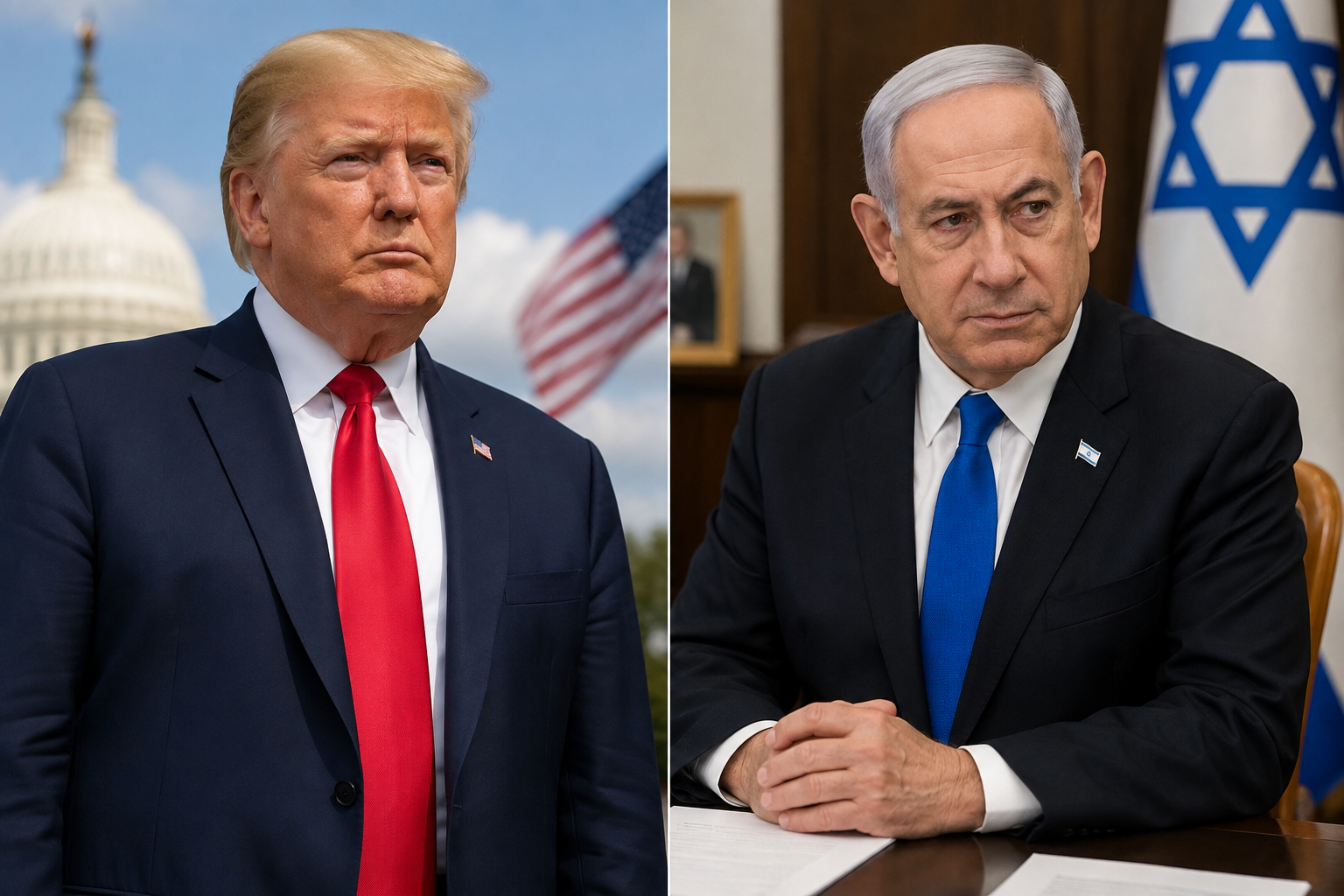
Israeli Prime Minister Benjamin Netanyahu has rejected a 15-point US plan for Gaza, saying Israel will not withdraw its troops until Hamas is completely and genuinely disarmed.
The disagreement is creating a new challenge for US President Donald Trump’s efforts to establish a long-term peace agreement in Gaza.
Trump’s plan includes several major steps aimed at ending the conflict. These include the disarmament of Hamas and other armed groups, the withdrawal of Israeli forces, the reconstruction of Gaza and the creation of an international body called the Board of Peace to help oversee the agreement.
However, Netanyahu says Israel cannot accept a military withdrawal before Hamas gives up its weapons.
Speaking at a cabinet meeting on Sunday, Netanyahu said Israel rejects the current 15-point document. He said the Israeli military would not withdraw from Gaza until Hamas was "genuinely disarmed".
Netanyahu also said Israel would continue taking action against what it considers threats to its soldiers and citizens.
His position directly conflicts with Hamas's demands.
Hamas has previously indicated that it is prepared to discuss giving up heavy weapons, but it has linked this step to conditions including an end to Israeli military operations and the withdrawal of Israeli forces from Gaza.
This has created a difficult situation because both sides are effectively asking for the other side to take the first major step.
Israel wants Hamas to disarm before Israeli forces leave Gaza. Hamas, meanwhile, wants Israel to stop military operations and withdraw its forces before fully giving up its weapons.
Trump's administration has been trying to move the agreement forward. Last month, Trump's Board of Peace said it had reached an understanding concerning the complete disarmament of Hamas and other armed groups in Gaza.
Trump described the development as an important step towards lasting peace and security.
But Netanyahu has made clear that Israel does not believe Hamas can simply promise to disarm. He said the disarmament must be real and not something that exists only on paper.
Netanyahu also said Israeli officials are continuing discussions with US representatives about possible ways to move forward.
According to the Israeli prime minister, some of the ideas being discussed with Washington are acceptable to Israel, while others are not. He said Israel would continue to defend its position during the negotiations.
The disagreement also comes at a politically sensitive time for Netanyahu.
Israel is expected to hold elections in the coming months, and Netanyahu faces pressure from members of his own government who oppose making major concessions to Hamas.
Some of his far-right political allies have called for the Gaza plan to be stopped or put to another cabinet vote.
National Security Minister Itamar Ben Gvir has also criticized the proposed agreement, describing the draft as unacceptable.
The opposition from Netanyahu's political partners could make it even harder for the Israeli government to approve any agreement that requires a significant military withdrawal from Gaza.
Trump's Gaza plan was announced as an effort to create a path toward ending the conflict and rebuilding the territory. The proposal involves several stages, including the disarmament of armed groups, an Israeli military withdrawal and international involvement in Gaza's reconstruction.
The plan also envisions the Board of Peace playing a role in overseeing the implementation of the agreement.
However, major questions remain about how the plan would actually work.
One of the biggest issues is who would be responsible for security in Gaza after Israeli forces withdraw and Hamas gives up its weapons.
Another major question is whether Israel and Hamas can agree on the order in which the different steps should happen.
The latest disagreement shows that reaching a final peace agreement may be much more difficult than announcing a roadmap.
For now, Netanyahu says Israel will not accept a withdrawal without genuine disarmament by Hamas. Hamas has maintained that disarmament must be connected to an end to Israeli attacks and the withdrawal of Israeli forces.
Unless both sides can reach a compromise on these conditions, Trump's Gaza peace plan could face another serious setback.
The situation also remains fragile because violence has continued in Gaza despite the ceasefire agreement reached last October. Further disagreements over military withdrawal, weapons and security could make it harder to achieve a lasting end to the conflict.
The coming weeks are therefore likely to be important for Trump's peace efforts, as US, Israeli and Palestinian representatives try to find a way to bridge the differences over Hamas's weapons and the future presence of Israeli forces in Gaza.
Summary
Israeli Prime Minister Benjamin Netanyahu has rejected a key part of US President Donald Trump’s Gaza peace plan. Netanyahu says Israel will not withdraw its forces from Gaza until Hamas is fully disarmed. Hamas, however, has linked its disarmament to an Israeli military withdrawal and an end to attacks. The disagreement could create another major obstacle to Trump’s plan for ending the Gaza war and rebuilding the territory.
Content
×
![]()