
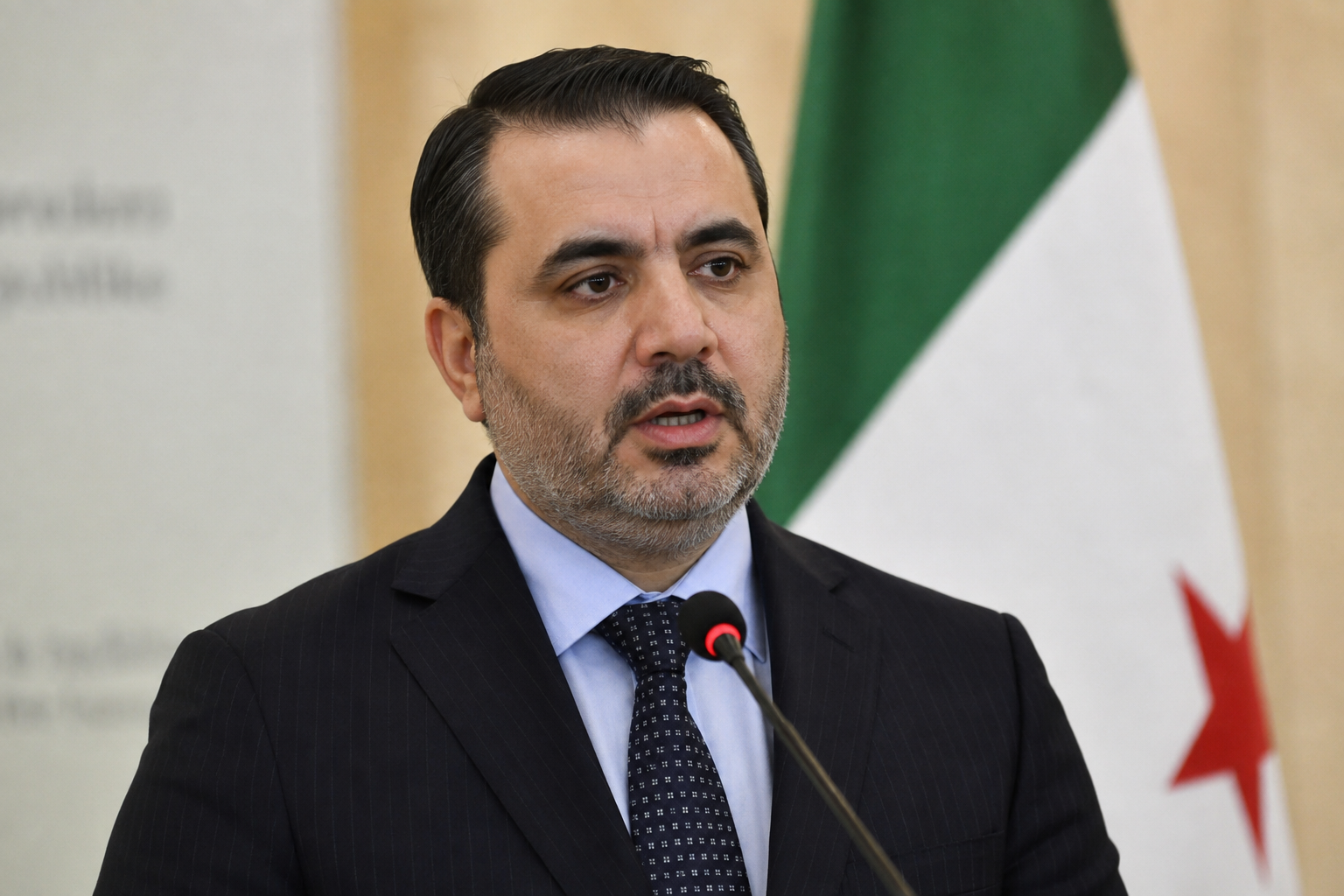
Syria’s Foreign Minister Asaad al-Shaibani has said that his country does not currently trust Israel, as talks between the two sides over a possible security agreement remain frozen.
Speaking to Reuters, al-Shaibani said there is no date yet for when negotiations could restart. He explained that direct contact between Syria and Israel stopped after Israel bombed Syria’s Abu al-Duhur airbase last week.
“We do not trust Israel currently,” the Syrian foreign minister said, reflecting the deep tensions between the two sides.
Despite the breakdown in talks, al-Shaibani said Syria expects negotiations to resume at some point. According to him, the United States is also trying to bring the two sides back to the negotiating table.
He said Washington is “trying continuously to put pressure on Israel to return to the dialogue table”.
The talks were focused on a possible security agreement between Syria and Israel. Al-Shaibani said that earlier this year, the two sides had reached agreement on paper on almost all major parts of a possible deal. However, he said Syria later concluded that Israel did not have a genuine desire to put the agreement into action.
“We did not see they had the real will to reach an agreement,” he said.
According to al-Shaibani, Syria’s main priority is to stop Israeli attacks and military actions inside Syrian territory before moving towards a wider security agreement.
“Then perhaps we can open the topics of peace and the Golan,” he added.
The Golan Heights is one of the major and long-running issues between Syria and Israel. Any future discussions about peace could therefore involve difficult negotiations over the disputed territory and other security concerns.
Al-Shaibani strongly criticised Israel’s use of military force. He argued that Israel has tried to achieve security through attacks and military power but has not succeeded in creating lasting security.
“Israel has tried to maintain its security through brute force, and it hasn’t succeeded,” he said.
Instead, the Syrian foreign minister said Damascus is offering a different approach based on dialogue and diplomacy.
“Syria is extending its hand for understandings, for peace, for diplomacy,” he said.
The proposed security deal would reportedly require Israel to stop carrying out attacks inside Syria. It would also be connected to Israel withdrawing from territory it seized following the fall of former Syrian President Bashar al-Assad.
The draft agreement also included plans for several different security zones inside Syrian territory near the Israeli border. One proposed area would serve as a buffer zone where only United Nations personnel would be present. Other zones would allow Syrian forces to deploy, but with different levels of military presence depending on the location.
Supporters of such an agreement hope that these arrangements could reduce the risk of clashes and create a more stable situation along the border. However, the plan cannot move forward unless both sides return to negotiations and agree to implement the terms.
For now, the future of the talks remains uncertain. Syria says it is willing to continue pursuing diplomacy, but al-Shaibani made clear that Damascus believes Israel must first show a real commitment to an agreement.
His comments highlight the continuing distrust between Syria and Israel. While there appears to have been progress on paper earlier this year, recent Israeli attacks and the suspension of direct contact have pushed the two sides further apart.
The United States is now trying to encourage a return to dialogue, but there is still no confirmed date for negotiations to restart. Until then, Syria says its immediate goal remains stopping Israeli military action, while leaving the door open for future discussions on security, peace and the Golan Heights.
Summary
Syria’s Foreign Minister Asaad al-Shaibani says his country currently does not trust Israel, as negotiations over a possible security agreement remain frozen. He said contact stopped after Israel bombed Syria’s Abu al-Duhur airbase last week. Al-Shaibani accused Israel of lacking a real willingness to reach an agreement and relying too heavily on military force. However, he said Syria remains open to diplomacy and peace, while Washington is continuing to pressure Israel to return to negotiations.
Content


×
![]()