
A major trade dispute between the United States and Canada is becoming more serious after President Donald Trump threatened to impose much higher tariffs on Canadian vehicles.
Trump said the United States could increase tariffs on cars, trucks and automotive parts coming from Canada to 50% starting on 1 January. The proposed rate would be double the current 25% tariff on Canadian vehicles.
The latest threat came after trade negotiations between the two neighbouring countries collapsed. Both Washington and Ottawa had been working for weeks to reach an agreement, and officials had previously suggested that a deal was possible. However, the talks broke down at the last moment, with both sides blaming each other.
Canadian Prime Minister Mark Carney said the United States had made demands that Canada could not accept. According to Carney, Canada had been patient and willing to negotiate, but it would not agree to a deal at any cost.
“We could not accept what the US has offered, nor could we give what they asked,” Carney said.
Trump, however, accused Canada of taking advantage of the United States for years. In a post on Truth Social, he said Canada had imposed high tariffs on American farmers and warned that companies could avoid tariffs by building their vehicles in the United States.
US Vice-President JD Vance also blamed Canada for the failure of the talks. He said Canadian negotiators made what he described as unreasonable demands at the last minute. US Trade Representative Jamieson Greer made similar comments, saying the two sides had been close to an agreement before negotiations suddenly fell apart.
Canada strongly disagrees with this version of events. Carney said the US had asked for too much while offering too little in return.
In response to fresh US tariffs imposed on Canadian goods, Carney announced that Canada would retaliate. He said Canada would match the new US tariffs “dollar for dollar” beginning on 8 September. The Canadian measures are expected to affect products including steel, dairy products, household appliances and electronics.
The dispute is particularly important because the US and Canadian economies are deeply connected. Canada sends more than three-quarters of its exported goods to the United States, while the US is also one of Canada's biggest sources of imported products.
The automobile industry is especially vulnerable. Car manufacturing in North America depends on supply chains that cross the borders of the United States, Canada and Mexico several times. Vehicle parts may move between the three countries before a final car or truck is completed.
This means higher tariffs could significantly increase production costs. Companies may then pass those extra costs on to customers, leading to more expensive vehicles.
Carney warned that Trump's proposed 50% tariffs could hurt American workers as well as Canadians. He pointed out that Canada is an important customer for US-made vehicles and said workers in several American states depend on trade with Canada.
The Canadian prime minister also said the US and Canada could still reach a mutually beneficial agreement, but any deal must respect Canada's sovereignty and national interests.
Meanwhile, political leaders across Canada have called for a strong response. Some have warned that the tariffs could lead to job losses and serious economic damage. Others have urged Canada to remain united and expand trade relationships with countries outside the United States.
The crisis has also created uncertainty for small businesses. Canadian companies that depend heavily on American customers fear that higher tariffs will make their products too expensive in the US market. Businesses on both sides of the border are now preparing for possible losses if the trade conflict continues.
For now, there is still time for negotiations. Trump's proposed new 50% tariffs on Canadian vehicles would not begin until 1 January, leaving several months for both countries to try to reach an agreement.
However, if no deal is reached, the dispute could develop into one of the most serious trade conflicts in recent history between the United States and Canada, two countries that have long been close allies and major trading partners.
Summary
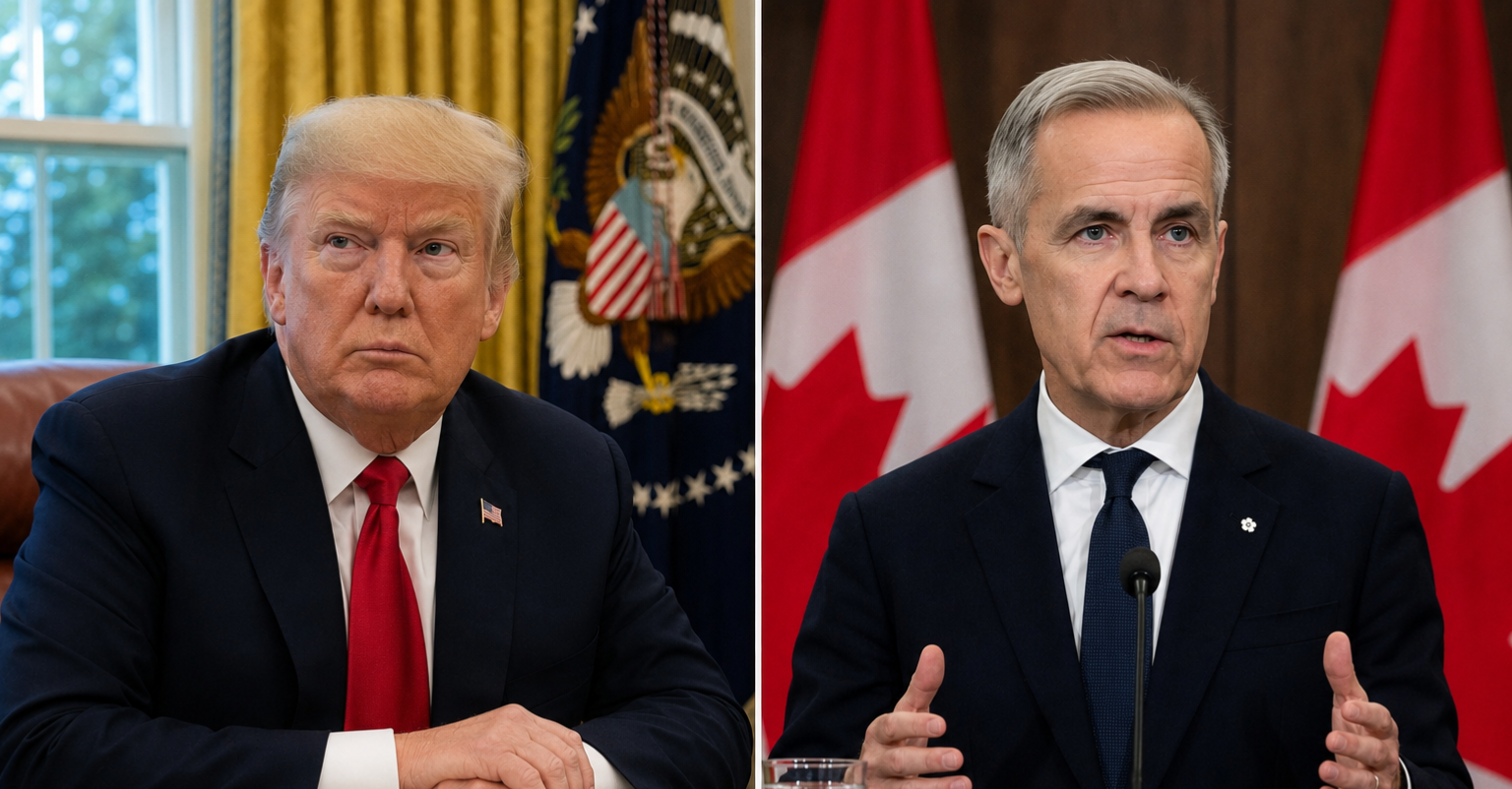
US President Donald Trump has threatened to raise tariffs on Canadian cars, trucks and auto parts to 50% from 1 January after trade talks between the United States and Canada collapsed. Canadian Prime Minister Mark Carney has strongly criticised the move and says Canada will respond by matching new US tariffs “dollar for dollar” from 8 September. The dispute has increased tensions between the two close allies and could hurt businesses, workers and consumers on both sides of the border.
Content




×
![]()