
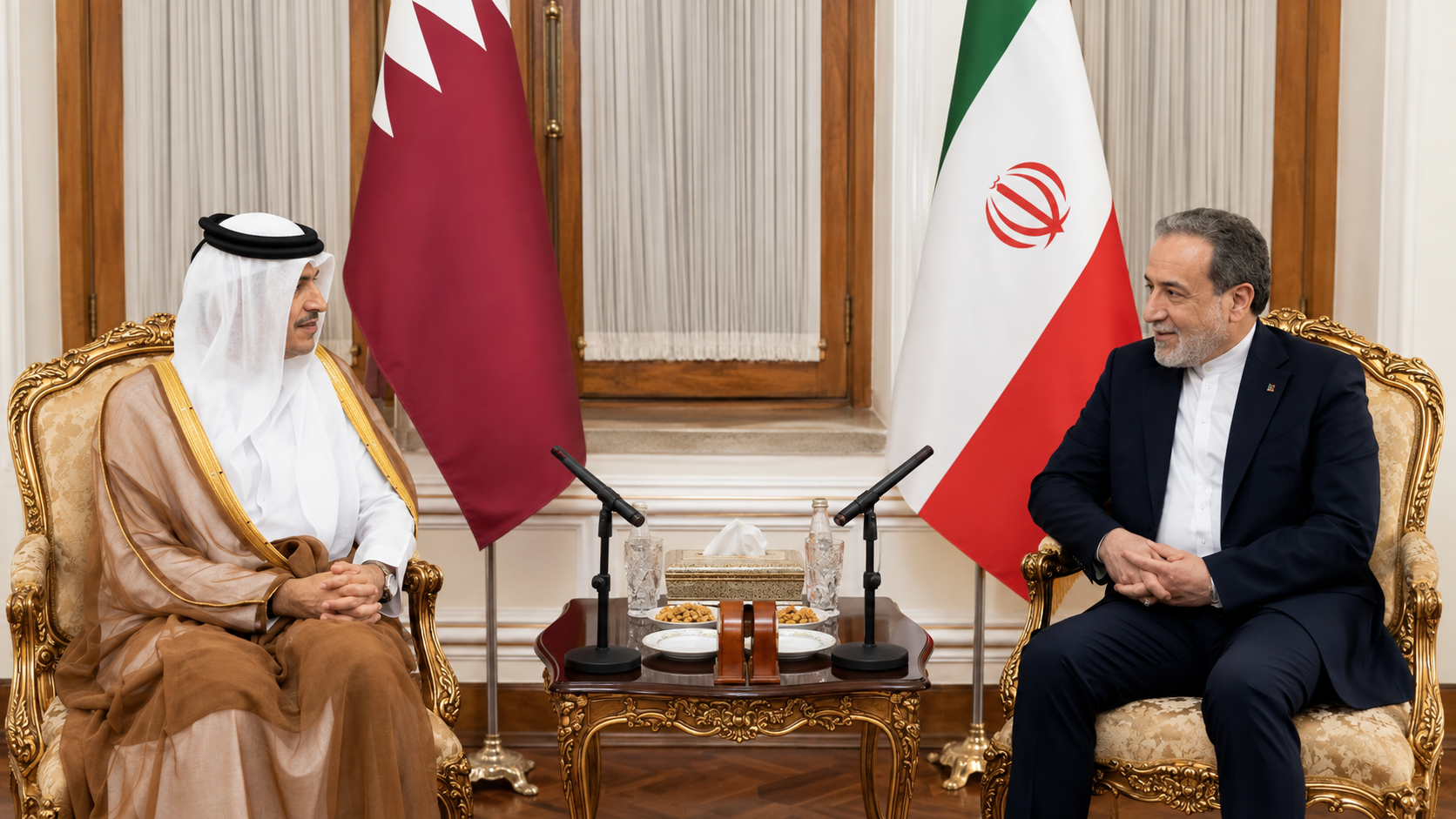
Qatar’s Prime Minister Sheikh Mohammed bin Abdulrahman Al-Thani visited Tehran on August 27, 2026, as regional efforts continue to reduce tensions around the Strait of Hormuz.
According to Qatar University assistant professor Abdulla Banndar Al-Etaibi, the visit gives the Qatari leader an important opportunity to understand whether Iran is truly serious about making practical agreements that allow ships to move safely through the strategic waterway.
The main question is whether different Iranian institutions are following the same policy. Iran’s government and Oman announced on Wednesday that they had agreed on a new temporary shipping route in the strait. However, the Islamic Revolutionary Guard Corps, or IRGC, later made separate statements claiming that it had full control over the waterway, including regional waters connected to Oman.
This has raised questions about whether there is a united Iranian position.
During the Tehran meetings, Sheikh Mohammed is expected to assess whether Iran’s government, military and other powerful institutions can all support and enforce whatever agreements are made. This is important because an agreement is only useful if all sides involved are willing and able to follow it.
Freedom of navigation through the Strait of Hormuz is a major international concern. The waterway is one of the world’s most important routes for energy shipments and global trade. Any uncertainty, restrictions or military tensions there can affect oil supplies, shipping companies and economies around the world.
Qatar, which has close ties with Iran and also works with other regional and international partners, could play an important diplomatic role. The visit may help Doha understand whether further negotiations can produce a clear and reliable arrangement.
Sheikh Mohammed also met Iranian Foreign Minister Abbas Araghchi and members of the Iranian leadership during his visit. The discussions are expected to focus on regional security, shipping and the need to prevent further escalation.
For Qatar, the key issue is simple: whether Iran is united enough internally to make promises that can actually be implemented. The answer could determine how successful future diplomatic efforts will be in protecting safe navigation and reducing tensions in the Strait of Hormuz.
Summary
Qatar’s Prime Minister Sheikh Mohammed bin Abdulrahman Al-Thani has visited Tehran to discuss tensions over the Strait of Hormuz and assess whether Iran’s different power centers are united behind a new agreement on shipping. The visit comes after Oman and Iran announced a temporary shipping route, while Iran’s Revolutionary Guard made separate claims about controlling the waterway. Qatar wants to know whether Iran is serious about guaranteeing safe navigation.
Content


×
![]()