
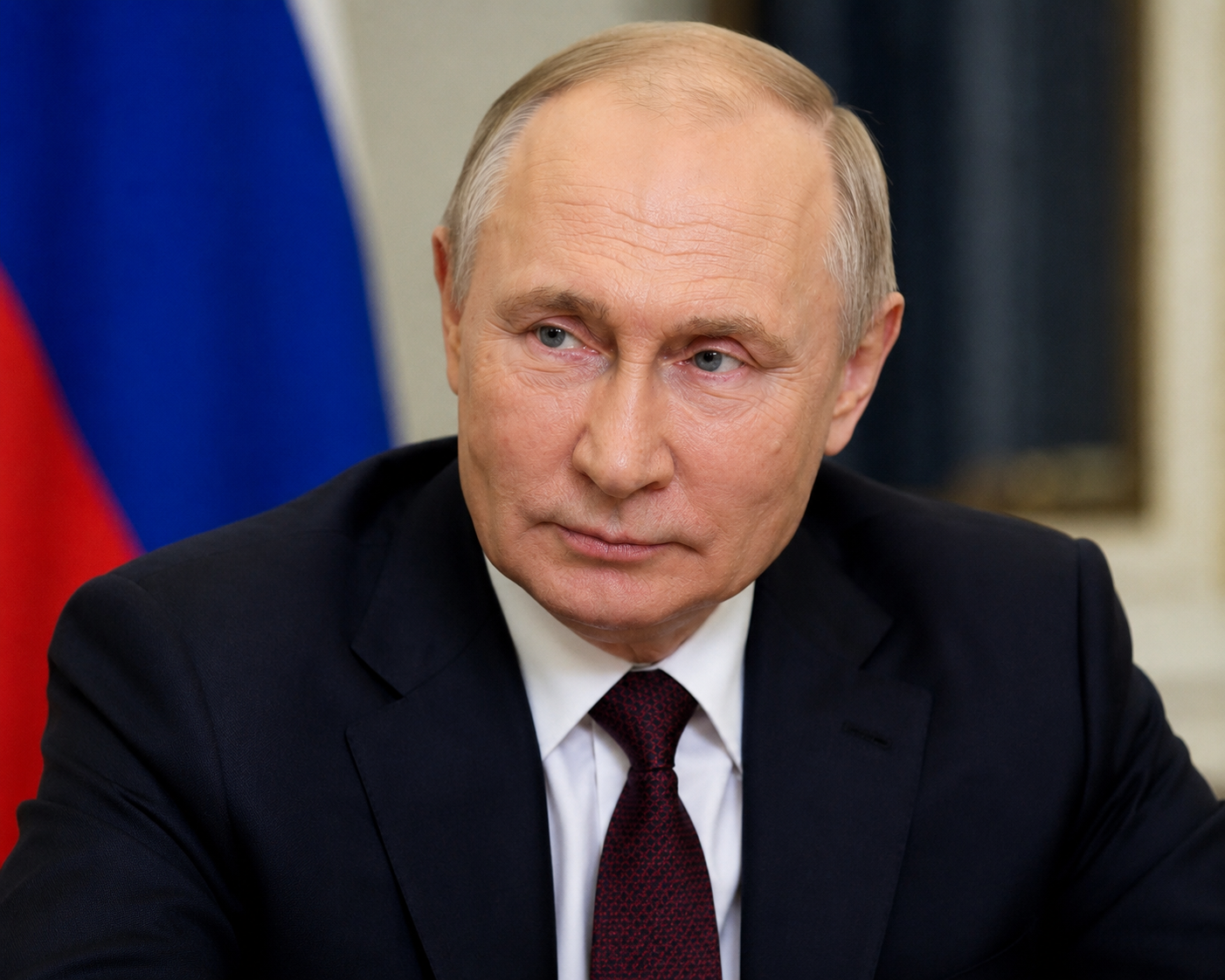
Russian President Vladimir Putin has again used a sharp historical reference to make a point about Western policies toward Russia.
When asked why the United States could continue dealing with Russian nuclear fuel while other countries faced pressure over buying Russian energy, Putin responded with the Latin expression “Quod licet Iovi, non licet bovi.” The phrase translates roughly to “What is permitted to Jupiter is not permitted to a cow.”
Putin used the saying to argue that powerful countries can sometimes apply different rules to themselves and to others.
The issue is connected to Russia’s major role in the global nuclear-fuel and energy markets. Russia has long been an important supplier of enriched uranium used by nuclear power plants around the world. The United States historically depended heavily on Russian enrichment, with the U.S. Department of Energy saying Russia supplied around 20–25% of U.S. enriched uranium needs.
However, the situation has changed since Russia’s full-scale invasion of Ukraine. In May 2024, the United States passed a law banning imports of Russian uranium products. The restrictions began taking effect in August 2024, although the U.S. government can issue temporary waivers when alternative supplies are unavailable or when imports are considered in the national interest.
Washington says the goal is to reduce dependence on Russia and strengthen the American nuclear-fuel supply chain. The U.S. has also committed billions of dollars to developing domestic uranium enrichment and other nuclear-fuel capabilities.
Putin’s comment therefore reflects a broader Russian argument: that Western countries criticize Russia’s energy exports while still making exceptions when Russian supplies are important to their own economies.
The debate highlights how difficult it is for countries to completely separate their economies from Russian commodities. Energy, uranium and other raw materials remain deeply connected to global markets, even amid sanctions and geopolitical tensions.
Summary
Russian President Vladimir Putin has used a famous Latin phrase to criticize what he describes as Western double standards toward Russia. The phrase, “Quod licet Iovi, non licet bovi,” means “What is allowed for Jupiter is not allowed for the cow.” In simple terms, Putin was suggesting that powerful countries sometimes allow themselves to do things they criticize others for doing.
Content


×
![]()