
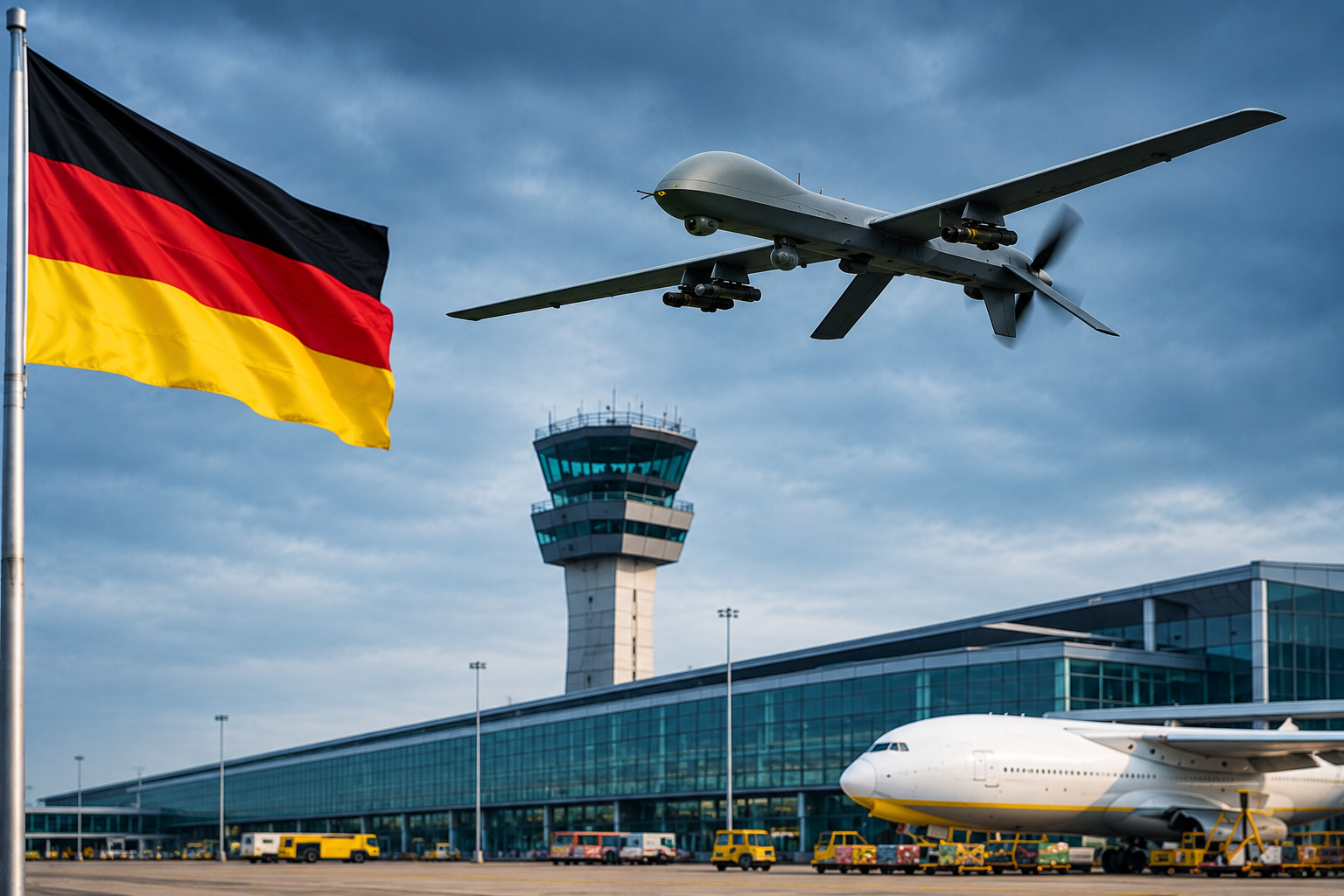
Germany has accused Russia of being behind a drone attack at Leipzig/Halle Airport, increasing tensions between Berlin and Moscow.
The incident happened on 4 August at the airport in eastern Germany. A drone carrying an explosive device was discovered on the airport grounds, close to Ukrainian cargo planes. The device did not explode, apparently because its detonator was faulty.
German investigators also believe that another drone may have collided with a cargo aircraft near the airport. About 10 days later, a third drone was reportedly discovered near the airport.
German Interior Minister Alexander Dobrindt said investigators had found evidence linking the attack to Russia. He described the incident as part of what Germany considers a wider pattern of Russian “hybrid operations” across Europe.
Dobrindt said Germany should expect further attempts to target the country. He said the investigation of the equipment used in the attack, together with intelligence information, pointed to Russian involvement.
Germany has responded with several new measures against Russia. Foreign Minister Johann Wadephul announced plans to close the Russian consulate in Bonn. Germany will also end the contract for the Russian House in Berlin, which German officials and security experts have previously linked to alleged espionage and Russian propaganda activities.
Berlin also plans to introduce tighter entry controls for Russian citizens. Germany said it would increase pressure on Russia's so-called shadow fleet, a group of older oil tankers believed to be used to help Russia avoid Western sanctions.
Wadephul said Russia's ambassador to Germany, Sergei Nechayev, had been summoned to the German Foreign Ministry. The Russian government quickly rejected Germany's accusations and said it would respond to the German measures.
Russian Foreign Ministry spokeswoman Maria Zakharova said Moscow would respond with similar measures. She also accused Berlin of supporting terrorism because of Germany's military and economic assistance to Ukraine.
The airport involved in the incident is strategically important. Leipzig/Halle Airport is used by the German military and NATO partners to transport military equipment. It is also an important base for Ukraine's Antonov Airlines, which carries large amounts of air cargo.
NATO Secretary General Mark Rutte expressed support for Germany and said the alliance stood in full solidarity with Berlin. European Commission President Ursula von der Leyen also said Europe remained united against Russian aggression and indicated that additional sanctions were being prepared.
The incident comes as Germany faces growing concerns about possible Russian activity inside Europe. German authorities have reported drone sightings near airports, military facilities and industrial locations.
The German government has warned that the country faces daily hybrid threats, including espionage, cyberattacks, sabotage and other forms of interference.
The situation is also politically sensitive. Germany is one of Ukraine's strongest European supporters, while the far-right Alternative for Germany (AfD) opposes continued military support for Kyiv and favors rebuilding relations with Moscow.
In a separate incident, German police are investigating explosive and incendiary devices discovered near a power substation in Brandenburg. A power line was damaged and temporarily disrupted electricity supplies, although authorities have not yet said who was responsible.
The Leipzig airport case could therefore become an important test of Germany's ability to protect critical infrastructure and respond to suspected Russian operations.
Summary
Germany says Russia was responsible for a failed drone attack at Leipzig/Halle Airport last month. A drone carrying explosives was found near Ukrainian cargo planes, but it failed to detonate. Berlin says the incident fits a wider pattern of Russian “hybrid” operations in Europe and has announced tougher measures against Moscow.
Content




×
![]()