
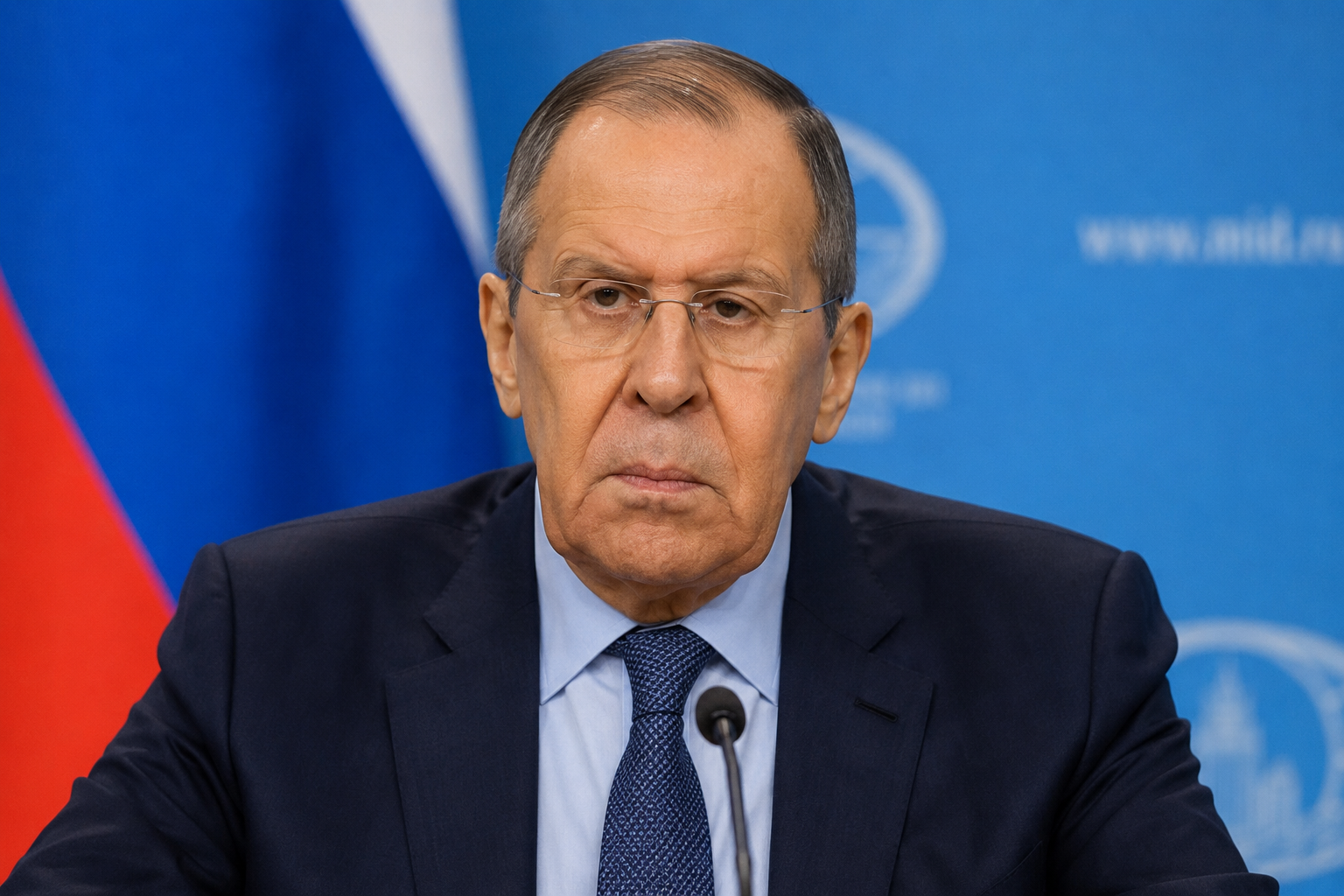
Russian Foreign Minister Sergey Lavrov has sharply criticized NATO and European countries, saying their policies have played a major role in creating today’s tensions between Russia and the West.
Lavrov argued that NATO should have dissolved after the collapse of the Soviet Union, just as the Warsaw Pact military alliance was dissolved. According to him, there was no longer a clear reason for NATO to continue after the end of the Cold War.
He said NATO first used the war in Afghanistan as a reason to keep the alliance active. Lavrov argued that after NATO’s withdrawal from Afghanistan, the alliance then needed a new reason to justify its existence.
According to Lavrov, the West eventually presented Russia as the new major threat, replacing the former Soviet threat. He described this as an attempt to keep NATO united and expand its military role.
Lavrov also made strong claims about Europe’s role in world history. He said that for more than 500 years, Europe had been a major source of conflicts and problems affecting the world. He linked Europe to the two World Wars and argued that European policies have also contributed to the current crisis surrounding Ukraine.
His comments about Ukraine were also highly critical. Lavrov said that when European officials visit Ukraine, they are often taken to Bucha, a town near Kyiv that became internationally known after Russian forces withdrew in 2022 and reports emerged of civilians being killed.
Lavrov questioned why Russia allows what he described as “political tourism” connected to Bucha. His comments reflect Russia’s continuing rejection of Western interpretations of events surrounding the town.
The Russian foreign minister also addressed Russia’s historical relationship with empire. He acknowledged that Russia and Russian statehood have imperial origins. However, he argued that the different peoples living within the Russian Federation, and previously within the Soviet Union, were not treated as colonial provinces in the same way as European colonial territories.
Lavrov’s statements are part of Russia’s broader criticism of NATO, European governments and Western policy toward Ukraine. Western governments, however, strongly dispute Russia’s interpretation of NATO’s role and argue that countries have the right to choose their own security alliances.
Summary
Russian Foreign Minister Sergey Lavrov has strongly criticized NATO and European countries, arguing that NATO should have ended after the collapse of the Soviet Union. He also blamed Europe for many major conflicts in history and defended Russia against accusations of having a colonial past. Lavrov further criticized Western visits to Bucha in Ukraine, calling them “political tourism.” His comments reflect Russia’s broader argument that NATO expansion and Western policies have contributed to tensions with Moscow.
Content
×
![]()