
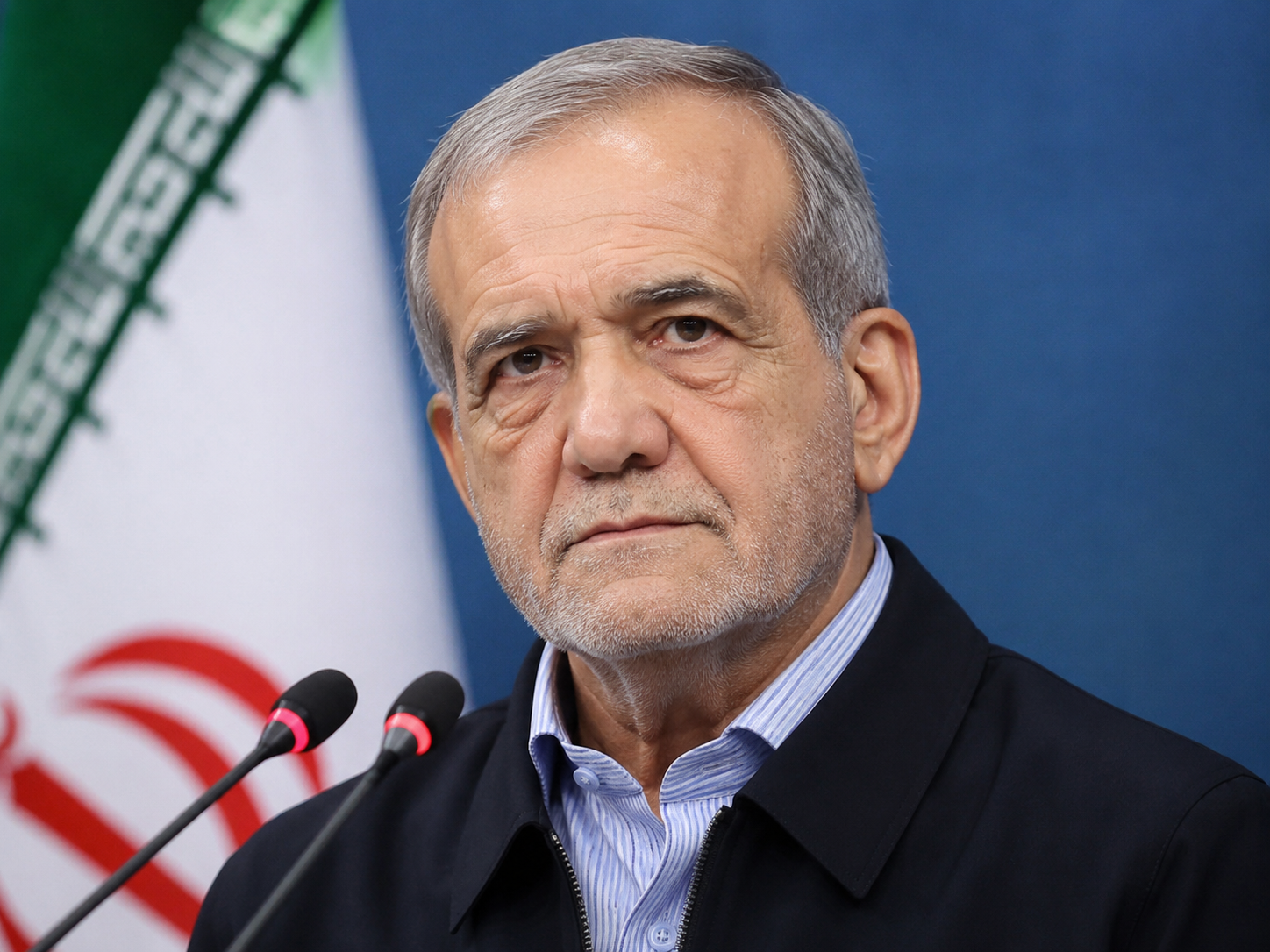
Iranian President Masoud Pezeshkian has called for national unity as Iran faces growing economic pressure from the United States and continuing military tensions.
Pezeshkian said Iran’s enemies are trying to create divisions inside the country through sanctions, war and economic pressure. He argued that staying united could help Iran deal with these challenges and prevent further unrest.
The United States announced a tougher sanctions campaign against Iran last month. Washington described the campaign as an “Economic D-Day” and said its goal is to cut off the financial resources supporting the Iranian government and the Islamic Revolutionary Guard Corps (IRGC).
The new pressure is already adding to Iran’s economic problems. The Iranian currency has fallen to a record low. When markets opened on Saturday, the US dollar was worth more than 2.25 million Iranian rials.
Iran is also struggling with serious fuel and energy problems. Fuel smuggling, damaged or poorly maintained oil and gas infrastructure, and inefficient vehicles have contributed to shortages.
The government is planning to increase the price of one category of petrol supplied to private vehicles. Monthly fuel quotas are also expected to be reduced.
However, Pezeshkian has warned that a larger increase in petrol prices could create even more problems. Higher fuel prices would increase transportation and delivery costs, which could push the prices of food and other everyday goods even higher.
Inflation is already putting pressure on Iranian families. Many people are struggling with the rising cost of basic goods and services.
The economic situation is also connected to Iran’s ongoing military confrontation with the United States. The conflict has damaged Iran’s economy and affected its oil exports.
The US military has also targeted oil tankers linked to Iran. Washington has restricted Iranian tankers from leaving the country’s southern coast as part of efforts to reduce Iran’s ability to export crude oil.
Iran has said it could return to commitments under a previous understanding with Washington if the United States also returns to its commitments. However, there is currently little sign that the wider confrontation is ending.
Iranian authorities are increasingly concerned about public anger and possible protests.
The country experienced major protests in 2019 and 2020 after fuel prices increased. Those protests later developed into wider demonstrations against the government.
Pezeshkian has acknowledged that people are already under significant pressure. He has warned that adding more economic pressure could push people beyond their limit.
Iranian officials have therefore been paying close attention to issues such as unemployment, living costs, fuel prices and the wider economy.
Iran’s police chief has ordered security forces to remain prepared for possible unrest. Officials have also warned that Iran’s enemies could use economic problems as an opportunity to encourage protests.
The head of Iran’s judiciary has warned that people accused of actions considered harmful to national security could face severe punishment.
Iranian Parliament Speaker Mohammad Bagher Ghalibaf has described the streets and wider social environment as another important battlefield, alongside military, diplomatic and economic challenges.
Authorities have also taken action against businesses and individuals accused of supporting protests.
One prominent businessman, Sadegh Saedinia, was recently sentenced to at least 12.5 years in prison and had assets confiscated after authorities accused him of supporting nationwide protests. His businesses had posted messages supporting a strike during the demonstrations.
Iranian authorities have described the protests as an attempted coup supported by the United States, Israel and their allies. Western governments and other observers have disputed or challenged many of Tehran’s claims about the protests.
Pezeshkian’s message shows that Iran’s leadership is worried about the combined effect of economic hardship, military pressure and public dissatisfaction.
The government wants to avoid measures that could trigger a new wave of protests while also trying to deal with fuel shortages and other economic problems.
For ordinary Iranians, the biggest concerns remain rising prices, falling currency value, fuel costs, unemployment and shortages.
The situation could become more difficult if US sanctions and the military confrontation continue.
For now, Pezeshkian is asking Iranians to remain united, while his government tries to manage the country’s worsening economic situation and growing pressure from Washington.
Summary
Iranian President Masoud Pezeshkian has called on the Iranian people and government officials to remain united as the United States increases economic and military pressure on Tehran. Iran is facing tougher US sanctions, problems with fuel supplies, rising inflation and a sharp fall in the value of its currency. Iranian officials are also warning about the possibility of new protests and unrest.
Content
×
![]()